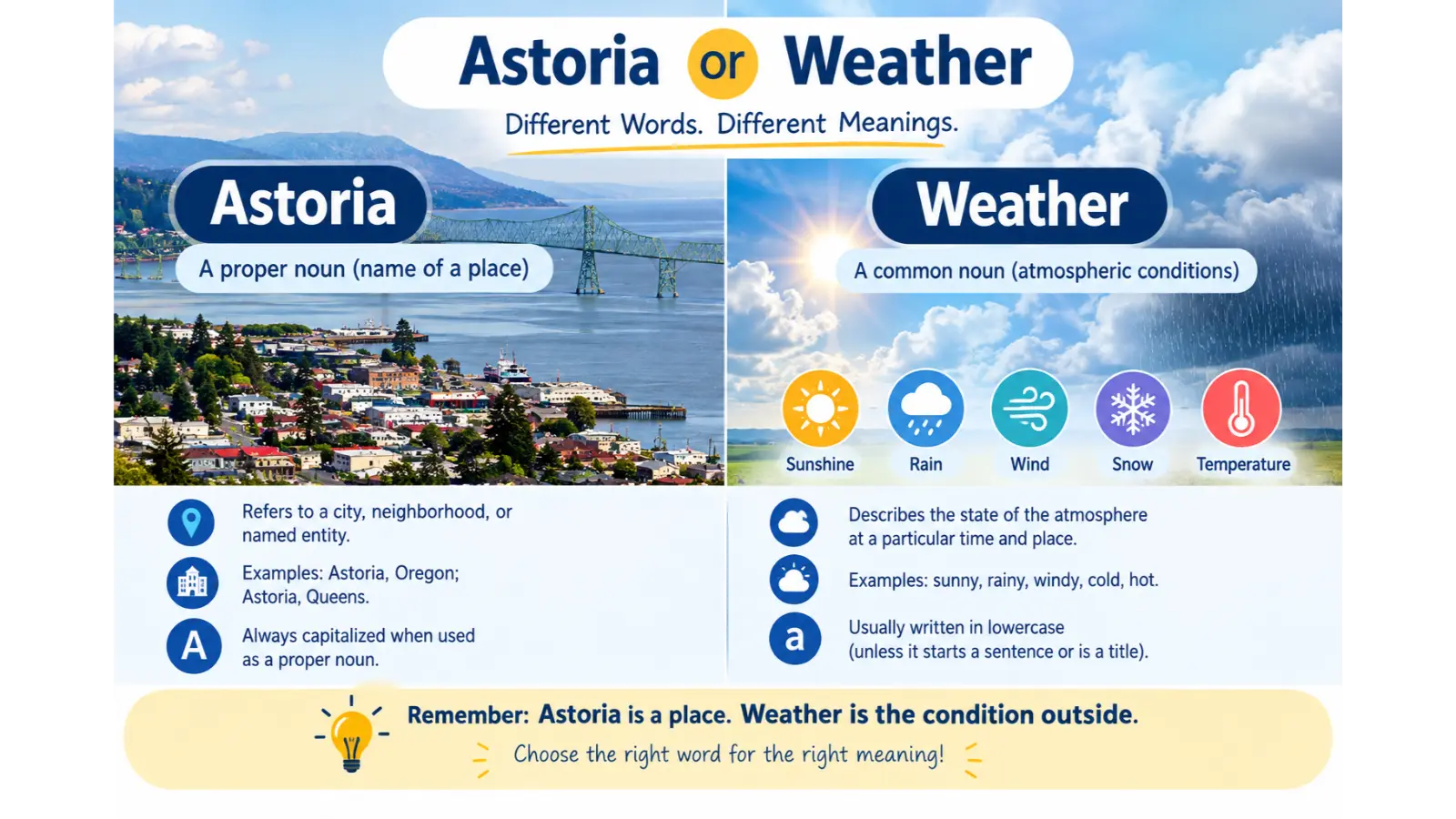
The words Astoria and weather may appear in similar searches, but they have completely different meanings. Astoria is a proper noun commonly used as a place name, while weather refers to atmospheric conditions such as rain, sunshine, wind, and temperature. Understanding their meanings helps you identify which word fits your sentence.
Astoria can refer to several places, including Astoria, Oregon, in the United States, and the Astoria neighborhood in Queens, New York City. Weather, on the other hand, describes the conditions outside at a particular time or place. The correct choice depends on whether you are referring to a location or discussing the atmosphere.
Quick Answer: Astoria or Weather?
Astoria is a proper noun, often used as the name of a place. Weather is a common noun that describes atmospheric conditions.
Use Astoria when naming a specific location.
Example: Astoria is a coastal city in Oregon.
Use weather when talking about conditions such as rain, snow, wind, or sunshine.
Example: The weather is sunny today.
These words are not alternative spellings of the same word. They serve different purposes in English and cannot replace one another.
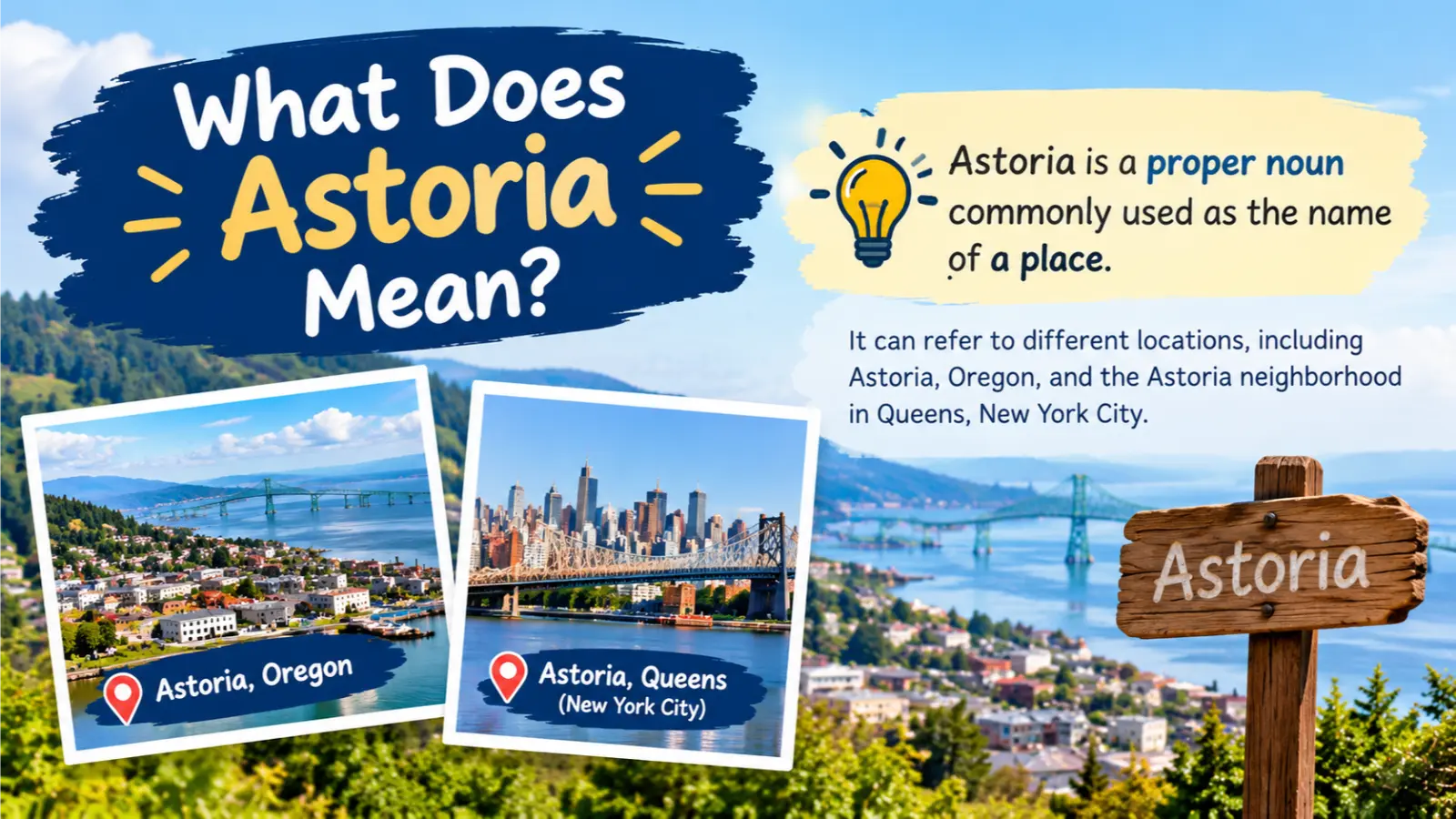
What Does Astoria Mean?
Astoria is a proper name associated with different places and establishments. One well-known example is Astoria, Oregon, a city near the mouth of the Columbia River in the northwestern United States. Another is Astoria, a neighborhood in the New York City borough of Queens.
Because Astoria is a proper noun, it begins with a capital letter when referring to a specific place or named entity.
Examples:
- We visited Astoria during our trip to Oregon.
- My friend lives in Astoria, Queens.
- Astoria has a history connected to maritime trade.
- The hotel is located near the center of Astoria.
The exact meaning depends on the context. If someone mentions Astoria without additional details, you may need to ask which location or named entity they mean.
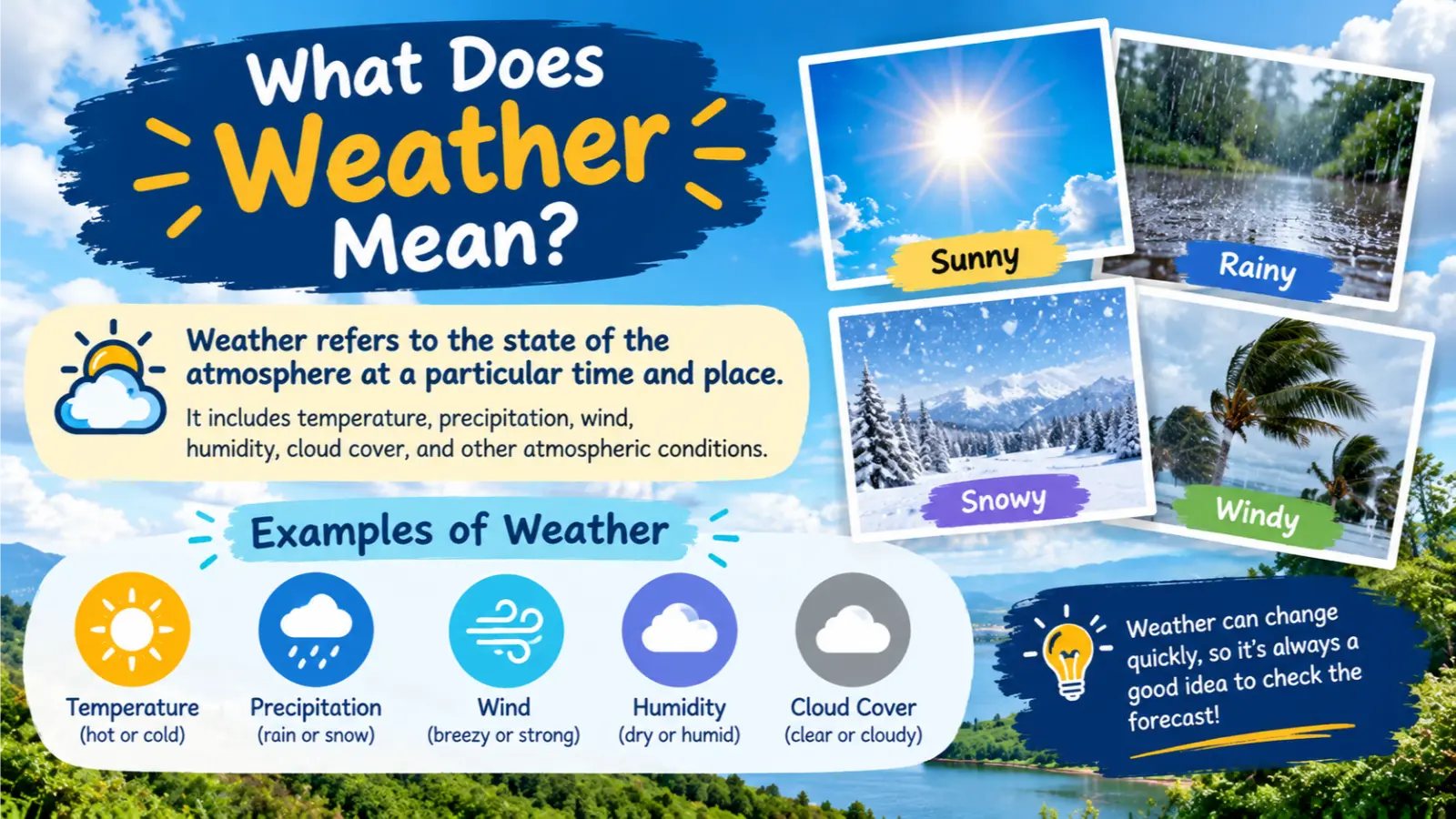
What Does Weather Mean?
Weather describes the state of the atmosphere at a particular location and time. It includes temperature, precipitation, wind, humidity, cloud cover, and other atmospheric conditions.
Unlike Astoria, the word weather is a common noun and is generally written in lowercase unless it begins a sentence or appears in a title.
Examples:
- The weather is pleasant this morning.
- We stayed indoors because of the rainy weather.
- The weather forecast predicts strong winds.
- Cold weather can make outdoor activities less comfortable.
Weather can change throughout the day. A place may experience sunshine in the morning and rain later in the afternoon.
Astoria vs Weather: Key Differences
| Feature | Astoria | Weather |
|---|---|---|
| Word type | Proper noun when naming a place | Common noun |
| Meaning | A name, often associated with a location | Atmospheric conditions |
| Capitalization | Capitalized when used as a proper name | Usually lowercase |
| Example | Astoria is in Oregon. | The weather is cloudy. |
| Main use | Identifying a place or named entity | Describing atmospheric conditions |
The key difference is that Astoria identifies something by name, while weather describes conditions in the atmosphere.
Origin and Background of Astoria and Weather
The two words have different linguistic backgrounds.
Astoria: The name Astoria is associated with John Jacob Astor, an American businessman whose fur-trading enterprise established a settlement near the Columbia River in the early nineteenth century. The settlement later developed into Astoria, Oregon.
Weather: The English word weather comes from Old English weder, which referred to atmospheric conditions and related phenomena. The word has evolved over time but retains its central meaning.
Their origins help explain why the words belong to different categories. Astoria functions as a name, whereas Weathers identifies a natural phenomenon.
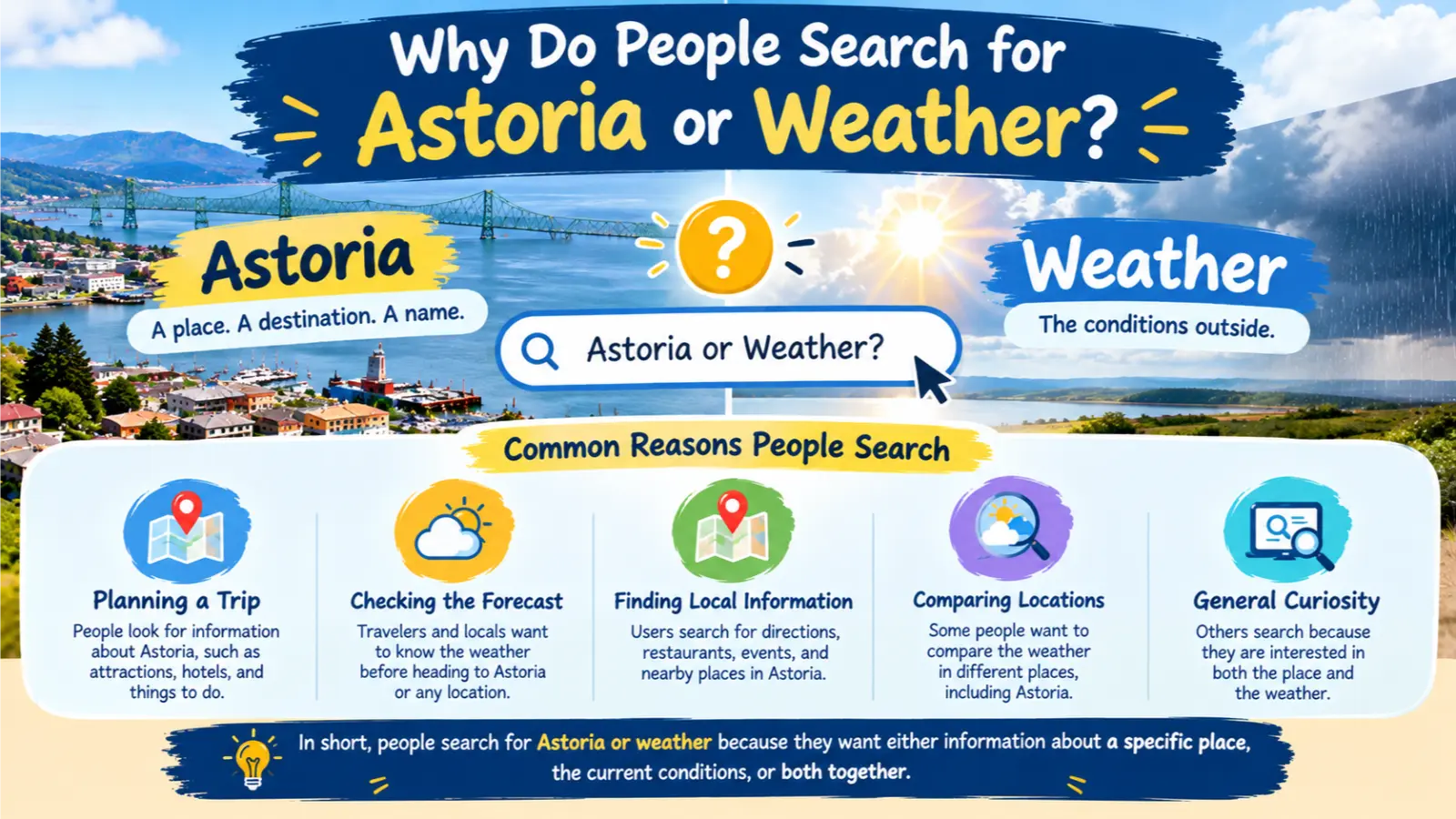
Why Do People Search for Astoria or Weather?
A search containing both terms may reflect an interest in the Weathers conditions of a place named Astoria. For example, someone planning a visit to Astoria, Oregon, might want to know whether it will rain, how cold it will be, or what conditions to expect.
Other possible reasons include:
- Planning a trip to Astoria.
- Checking the local weather forecast.
- Looking for travel information about Astoria.
- Comparing weather conditions across different locations.
- Searching for information that includes both terms.
If you want to know the Weathers in Astoria, specify the location in your search, such as “Astoria, Oregon weather forecast” or “Astoria, Queens Weathers.” This makes your search more precise.
Dictionary Guidance: Are Astoria and Weather Synonyms?
No. Astoria and weather are not synonyms, and dictionaries would not treat them as interchangeable words.
A dictionary entry for weather explains atmospheric conditions. The meaning of Astoria depends on the particular place, person, business, or other entity being referenced.
For accurate usage, consult a standard English dictionary for the word Weathers and a reliable geographical or historical reference for the specific Astoria you mean.
Using the right reference matters because a general dictionary may not provide all the information needed to identify a particular place.
Examples of Astoria and Weather in Real Sentences
The following examples demonstrate how both words can appear naturally in the same sentence.
- The weather in Astoria, Oregon, can be rainy during parts of the year.
- We checked the weather before driving to Astoria.
- Astoria is a destination for travelers interested in coastal scenery and history.
- The weather forecast helped us decide when to visit Astoria.
- My family enjoyed the cool Weathers during our stay in Astoria.
- The Weathers in Astoria, Queens, may differ from conditions in Astoria, Oregon.
These examples show that the words can be used together when a location and its atmospheric conditions are both relevant.
Common Mistakes to Avoid
One common mistake is treating Astoria and Weathers as alternative spellings. They are different words with unrelated meanings.
Another mistake is failing to capitalize Astoria when referring to a specific place.
Incorrect: We visited astoria last summer.
Correct: We visited Astoria last summer.
A separate error is confusing weather with whether. These words sound alike but have different meanings.
- Weather refers to atmospheric conditions.
- Whether introduces alternatives or expresses uncertainty.
Example: We will visit Astoria whether the Weathers is sunny or cloudy.
In this sentence, both whether and weather are correct, but each has a different grammatical role.
An Easy Way to Remember the Difference
Use this simple memory trick.
Astoria = a name.
Think of a particular city or neighborhood called Astoria.
Weather = conditions outside.
Think of sunshine, rain, wind, clouds, or snow.
If you are naming a destination, use Astoria. If you are describing the atmosphere, use weather. If you are discussing atmospheric conditions in a particular destination, you can use both words together.
For example: “The weather in Astoria is cloudy today.”
Professional Writing Recommendation
In professional writing, choose words according to their meaning and context. Capitalize Astoria when it refers to a specific place or named entity. Use lowercase weather in ordinary sentences unless standard capitalization rules require otherwise.
When writing travel articles, local guides, news reports, or weather updates, identify the location clearly. Several places may share the name Astoria, so specifying the state, region, or neighborhood helps readers understand the information.
For example, “Weather in Astoria, Oregon” is more precise than simply writing “Astoria weather” when your article focuses specifically on the Oregon city.
Clear wording, accurate location details, and correct capitalization make content easier to understand and more useful to readers.
Frequently Asked Questions
Is Astoria the Same as Weather?
No. Astoria is a proper name commonly used for places, while weather refers to atmospheric conditions such as rain, sunshine, and wind.
What Does Astoria Mean?
Astoria is a name associated with several locations and other named entities. One well-known example is Astoria, Oregon, in the United States.
What Does Weather Mean in English?
Weather refers to atmospheric conditions at a particular time and place, including temperature, wind, precipitation, and cloud cover.
Should Astoria Always Be Capitalized?
When referring to a specific place or named entity, Astoria should be capitalized because it is a proper noun. The word may follow different capitalization rules in unusual contexts, such as stylized branding.
How Can I Check the Weather in Astoria?
Search for the specific location, such as Astoria, Oregon, or Astoria, Queens, followed by “weather forecast.” Choosing the correct location helps you find relevant local conditions.
Are Weather and Whether the Same Word?
No. They are homophones in many varieties of English, meaning they sound alike but have different meanings. Weather refers to atmospheric conditions, while whether introduces alternatives or uncertainty.
Conclusion
Astoria and weather have different meanings and uses in English. Astoria is a proper name commonly associated with places, while weather describes atmospheric conditions such as rain, sunshine, wind, and temperature.
Neither word is an alternative spelling of the other. Choose Astoria when identifying a specific place and weather when discussing atmospheric conditions. If your goal is to find a forecast for a particular location, combining both terms in a search, such as “Astoria, Oregon weather,” provides clearer results.