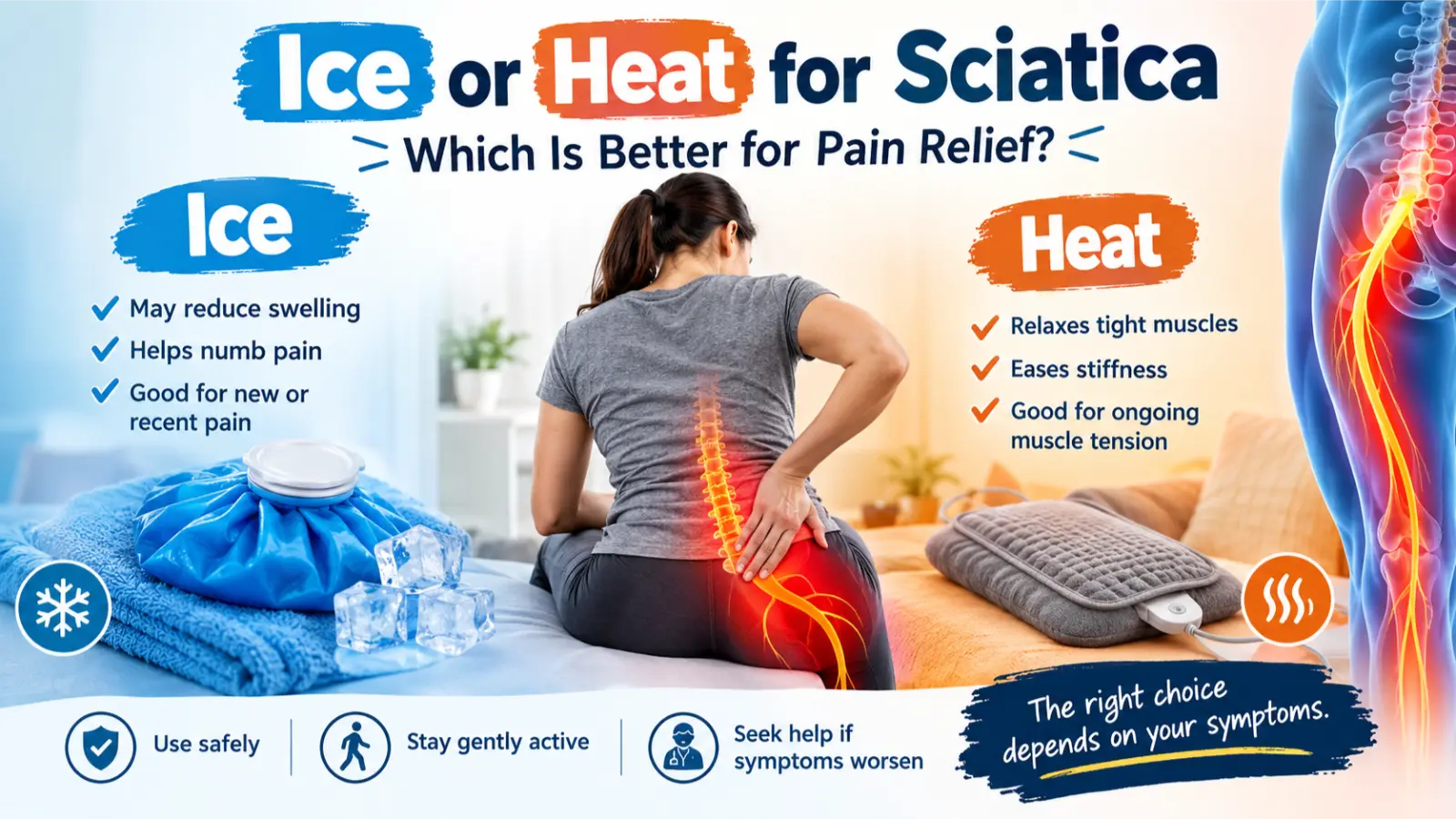
Sciatica can cause pain, tingling, numbness, or discomfort that travels from the lower back down one leg. If you are dealing with these symptoms, you may wonder whether ice or heat for sciatica offers better relief. Both therapies can help manage discomfort, but the right choice depends on your symptoms and what feels most comfortable.
Ice may help reduce pain and calm irritation, especially during a flare up, while heat can relax tight muscles and ease stiffness. In this guide, we will explain the differences between ice and heat for sciatica, when to use each option, and how to apply them safely. Understanding these simple methods can help you manage symptoms more comfortably, although they do not treat every underlying cause of sciatica.
But which is better, ice or heat for sciatica? The answer depends on your symptoms and how your body responds. Ice may help numb painful areas, while heat can relax tight muscles and reduce stiffness. Understanding when and how to use each option can help you manage discomfort more safely.
What Is Sciatica?
Sciatica refers to pain caused by irritation or compression of the sciatic nerve or the nerve roots that contribute to it. The sciatic nerve travels from the lower back through the buttocks and down each leg.
Common symptoms of sciatica include:
- Sharp or shooting pain that travels down the leg.
- Burning sensations in the lower back or buttock.
- Tingling or pins and needles.
- Numbness in parts of the leg or foot.
- Muscle weakness in the affected leg.
Sciatica may develop because of a herniated disc, spinal narrowing, or other conditions that irritate the nerve. Ice and heat can help manage discomfort, but they do not necessarily correct the underlying cause.
Ice or Heat for Sciatica: What Is the Difference?
Ice and heat work differently, so choosing the right option depends on your symptoms.
Ice Therapy for Sciatica
Ice therapy uses cold temperatures to temporarily numb painful areas. It may also help reduce swelling associated with a recent injury or irritation.
Ice may be worth trying when your pain has recently started or the affected area feels tender. However, sciatica is not always caused by inflammation, so cold therapy may not help everyone.
Heat Therapy for Sciatica
Heat therapy uses gentle warmth to relax muscles and ease stiffness. It can be particularly comforting when tight muscles around the lower back or buttock contribute to your discomfort.
Heat may be useful when your back feels stiff after sitting or when gentle warmth makes movement more comfortable.
Ice vs. Heat for Sciatica
| Feature | Ice Therapy | Heat Therapy |
|---|---|---|
| Main purpose | Temporarily numbs pain | Relaxes tight muscles |
| May help with | New pain and tenderness | Muscle tightness and stiffness |
| Application method | Wrapped cold pack | Warm pack or warm shower |
| Typical session | Up to 15–20 minutes | About 15–20 minutes |
| Main precaution | Never apply ice directly to skin | Avoid excessive heat and burns |
Neither treatment is universally better. Choose the option that provides relief without making your symptoms worse.
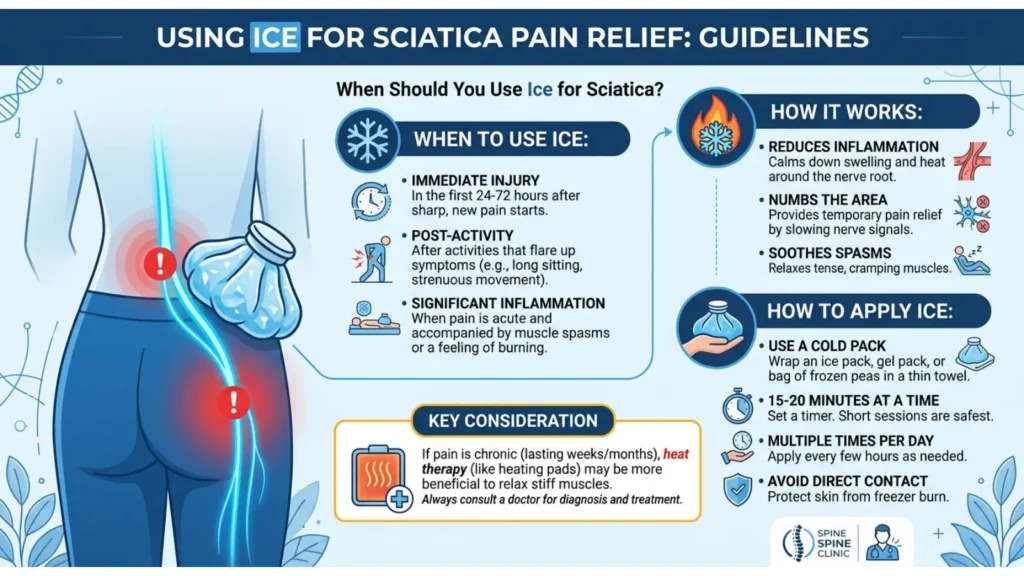
When Should You Use Ice for Sciatica?
Ice may be helpful when your pain has recently started or the painful area feels irritated and tender. Cold therapy can temporarily reduce pain sensations, making movement more comfortable.
Consider trying ice if:
- Your pain began after a recent strain or injury.
- The painful area feels tender.
- Cold therapy provides noticeable relief.
- You want temporary relief after an activity that aggravates your symptoms.
How to Apply Ice Safely
Follow these steps when using a cold pack for sciatic pain.
- Wrap an ice pack or a bag of frozen vegetables in a thin towel.
- Place it gently over the painful area, such as your lower back or buttock.
- Leave it in place for approximately 15–20 minutes at most.
- Remove it sooner if your skin becomes painful, excessively cold, or uncomfortable.
- Allow your skin to return to its normal temperature before applying ice again.
Never place ice directly against your skin because it can cause cold injury. Avoid using ice on areas with reduced sensation unless a healthcare professional advises you otherwise.
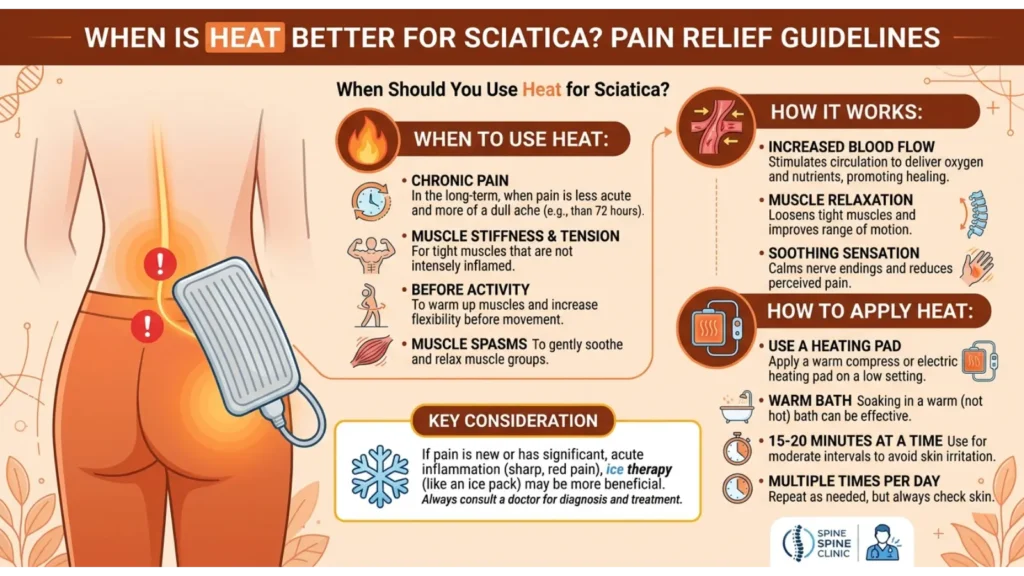
When Is Heat Better for Sciatica?
Heat may be a better choice when muscle tightness or stiffness contributes to your discomfort. Gentle warmth can relax surrounding muscles and make everyday movements feel easier.
Heat may be worth trying when:
- Your lower back feels stiff after sitting.
- Your buttock muscles feel tight.
- Gentle warmth makes movement more comfortable.
- Cold therapy does not provide relief.
Heat does not directly remove pressure from a compressed nerve. However, it may help relieve muscle discomfort that occurs alongside sciatica.
How to Apply Heat Safely
Use the following steps to apply heat without irritating your skin.
- Choose a warm, not hot, heating pad or heat pack.
- Place a protective layer between the heat source and your skin.
- Apply the pack for approximately 15–20 minutes.
- Check your skin regularly for redness or discomfort.
- Remove the pack if it becomes too hot or causes irritation.
Never sleep with a heating pad or leave a heat source against your skin for extended periods. If you have reduced sensation or poor circulation, ask a healthcare professional before using heat.
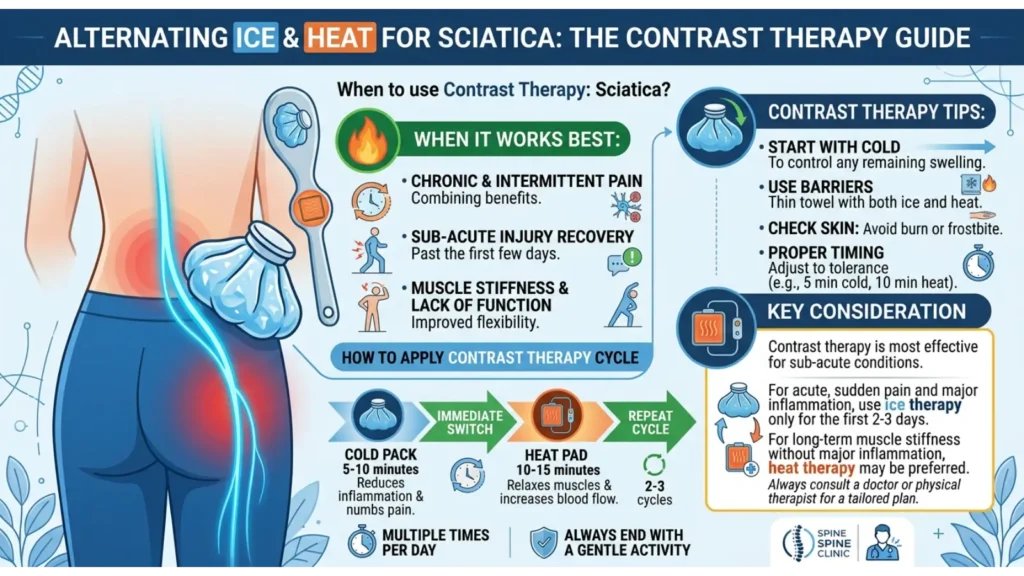
Can You Alternate Ice and Heat for Sciatica?
Yes, some people find that trying both treatments separately helps them manage different symptoms. For example, ice may feel soothing when an area is tender, while heat may be more comfortable when the muscles feel tight.
You do not need to alternate them if one option already provides relief.
Try one treatment first and observe how your symptoms respond. If it helps, continue using it safely. If it increases pain or causes skin irritation, stop using it.
Always follow the recommended application times and allow your skin to return to a comfortable temperature between treatments. If you are unsure which option is appropriate, ask a healthcare professional.
Common Mistakes to Avoid When Using Ice or Heat
Although ice and heat are common home treatments, incorrect use can cause additional problems.
Applying Ice Directly to the Skin
Direct contact with ice can damage the skin. Always wrap a cold pack in a towel or another suitable protective covering.
Using Excessive Heat
A heating pad that is too hot can cause burns. Use gentle warmth and check your skin throughout the session.
Keeping Packs on for Too Long
Longer treatment sessions do not necessarily provide better results. Follow the recommended time limits and allow your skin to recover between applications.
Staying in Bed for Too Long
Prolonged inactivity may delay recovery for some people with sciatica. Gentle movement and regular changes of position are generally preferable to extended bed rest, provided movement does not cause severe or worsening symptoms.
Ignoring Worsening Symptoms
Increasing pain, new weakness, or persistent numbness should not be treated with ice or heat alone. These symptoms may require medical assessment.
Expecting Ice or Heat to Cure Sciatica
Ice and heat can provide temporary relief, but they do not necessarily treat the underlying cause of nerve irritation or compression.
Other Ways to Relieve Sciatica Pain
Ice and heat are only two parts of managing sciatica. Depending on the cause and severity of your symptoms, other approaches may also help.
Gentle Walking
Short walks may help you remain active without putting unnecessary strain on your body. Start slowly and avoid movements that significantly worsen your symptoms.
Changing Positions Regularly
Sitting or standing in one position for extended periods may aggravate discomfort. Take regular movement breaks and find comfortable positions that reduce pressure on your back.
Appropriate Stretching and Exercise
A physiotherapist can recommend exercises based on your symptoms and physical condition. Avoid forcing stretches that increase pain, tingling, numbness, or weakness.
Professional Medical Advice
A healthcare professional can assess the cause of your symptoms and discuss appropriate treatments. Depending on the diagnosis, treatment may include physical therapy, medication, or other interventions.
When Should You Seek Medical Help?
Many cases of sciatica improve with time and appropriate care, but certain symptoms require prompt attention.
Seek emergency medical care if you experience:
- New or rapidly worsening weakness in one or both legs.
- Numbness around your genitals, inner thighs, or the area around your anus.
- Difficulty starting urination or an inability to urinate.
- Loss of bladder or bowel control.
These symptoms may indicate a serious problem involving the nerves in the lower spine.
Arrange a medical appointment if your pain is severe, continues to worsen, interferes with normal activities, or does not improve with home care. Do not rely on ice or heat alone when symptoms are persistent or concerning.
Frequently Asked Questions
Is Ice or Heat Better for Sciatica?
Neither treatment is best for everyone. Ice may temporarily numb painful areas, while heat can relax tight muscles and ease stiffness. Choose the option that provides safe and noticeable relief.
How Long Should I Apply Ice for Sciatica?
You can generally apply a wrapped cold pack for up to 15–20 minutes at a time. Remove it sooner if you experience discomfort or unusual skin changes.
Can I Use a Heating Pad for Sciatica While Sleeping?
No. Avoid sleeping with a heating pad because prolonged exposure can cause burns. Use it only while awake and follow the manufacturer’s safety instructions.
Should I Use Ice or Heat for Sciatica in the Buttock?
Either option may help, depending on your symptoms. Ice may provide temporary numbing, while heat may ease muscle tightness. Stop any treatment that worsens your discomfort.
Does Ice or Heat Cure Sciatica Permanently?
No. Both treatments may provide temporary symptom relief, but neither necessarily resolves the underlying cause. Effective treatment depends on what is irritating or compressing the nerve.
Is Walking Good for Sciatica?
Gentle walking can help many people remain active during recovery. Begin with short distances and adjust your activity according to your symptoms. Seek professional guidance if walking causes significant pain or weakness.
Should I Use Ice or Heat for Sciatica During Pregnancy?
If you are pregnant and experiencing sciatic pain, ask your healthcare professional which treatments are appropriate for you. Gentle temperature therapy may help some people, but safe positioning and proper application are important.
Conclusion
Choosing between ice or heat for sciatica depends on your symptoms and personal response. Ice may help numb new or tender pain, while heat can relax tight muscles and ease stiffness. Some people find relief by trying both treatments separately.
Use cold packs and heat sources carefully, stay gently active as tolerated, and seek medical advice if your symptoms persist or worsen. Remember that these treatments are intended to provide temporary relief rather than cure the underlying cause of sciatica.