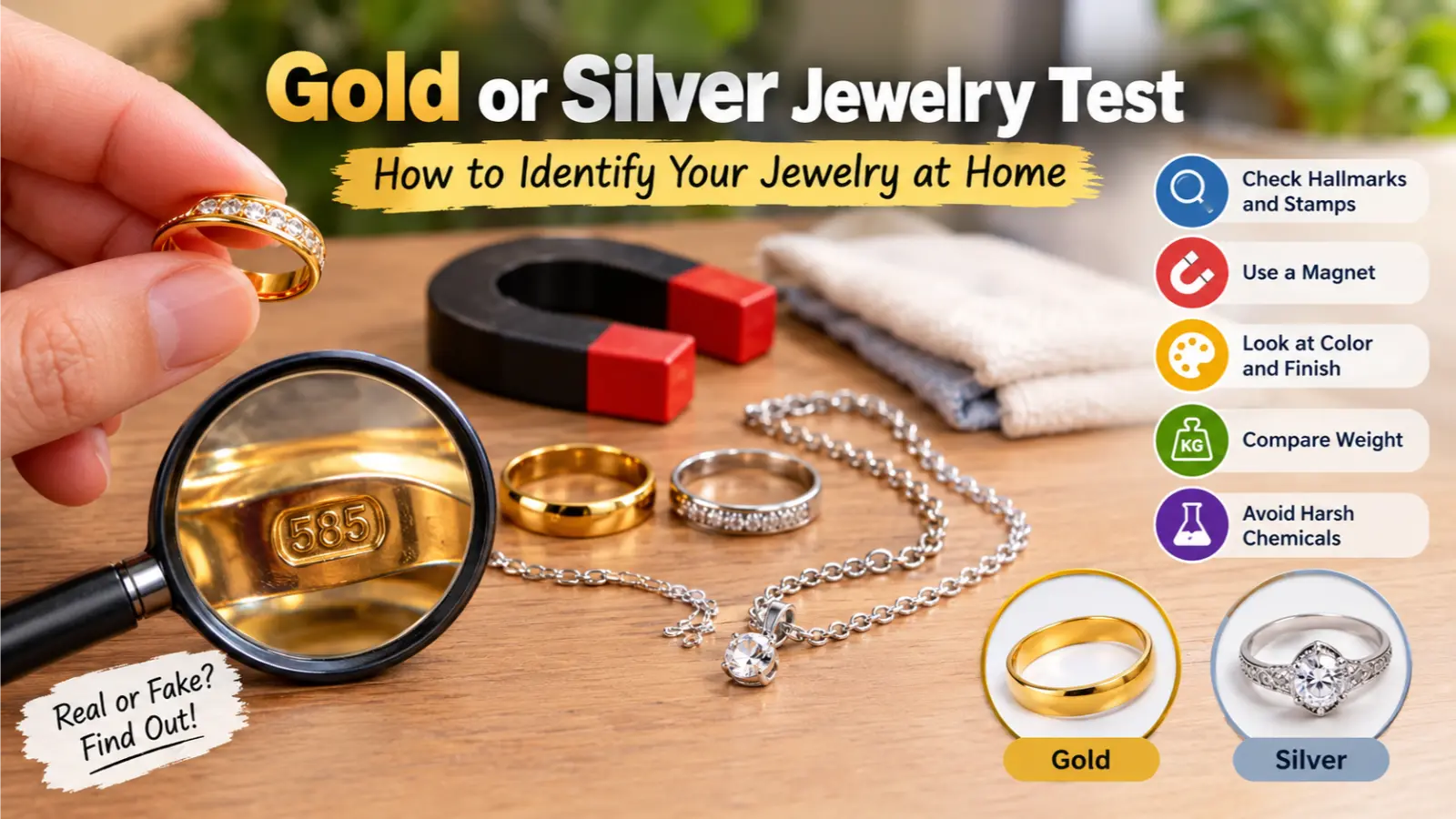
A gold or silver jewelry test can help you identify the metal used in a ring, necklace, bracelet, or pair of earrings. Whether you have inherited a piece of jewelry or purchased it from a local shop, understanding a few simple testing methods can help you make a more informed decision.
You can start by checking the jewelry’s hallmark, color, weight, and surface condition. You can also use a magnet as an initial screening tool. Our website makes it easy to explore helpful guides like this one, so you can learn practical tips and make confident decisions about your jewelry.
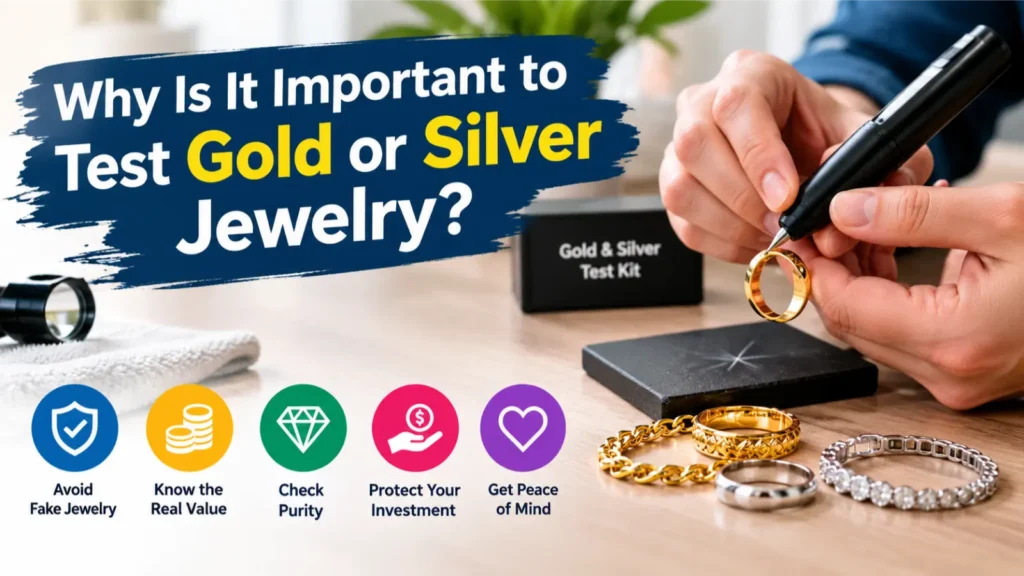
Why Is It Important to Test Gold or Silver Jewelry?
Testing jewelry helps you understand what a piece may be made of before selling it, buying it, or keeping it as a valuable possession. Gold and silver have different properties, market values, and care requirements.
Some jewelry contains solid precious metal, while other pieces have a thin gold or silver coating over a different metal. These items can look similar at first glance, making identification difficult without careful inspection.
A basic test can provide useful clues, but no single home method can confirm every piece of jewelry. Professional testing may be necessary when authenticity or value matters.
How to Check Jewelry Hallmarks and Stamps
One of the easiest ways to begin identifying jewelry is to look for a hallmark. A hallmark is a number, letter, or symbol stamped onto a piece to indicate its metal content or manufacturer.
Gold jewelry may carry marks such as 375, 585, 750, or 916. These commonly indicate 9-karat, 14-karat, 18-karat, and 22-karat gold, respectively, in systems where those markings are used.
Silver jewelry may carry marks such as 925, 900, or 800. The 925 mark commonly indicates sterling silver containing 92.5% silver.
Use a magnifying glass and good lighting to inspect the inside of a ring, the clasp of a necklace, or the back of a pendant. Remember that stamps can be missing, worn away, or misleading. A hallmark alone does not guarantee authenticity.
How to Use a Magnet for a Jewelry Test
A magnet test is a simple first step when checking whether jewelry might contain certain other metals.
Bring a strong magnet close to the jewelry without scratching its surface. If the piece is strongly attracted to the magnet, it may contain a magnetic metal such as iron or some types of steel.
Pure gold and pure silver are not strongly magnetic under ordinary conditions. However, this does not mean that every nonmagnetic piece is genuine gold or silver.
Clasps, springs, and other small components may contain different metals from the main body of the jewelry. Some genuine pieces can therefore show limited magnetic attraction in certain areas.
Important: A magnet test cannot prove that jewelry is real gold or silver. Use it only as an initial screening method.
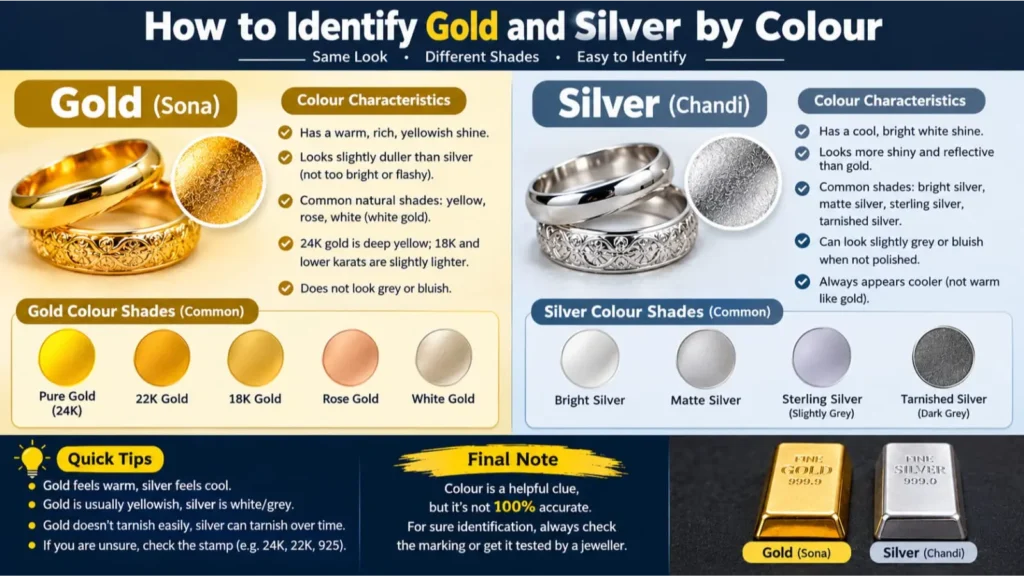
How to Identify Gold and Silver by Color
Color can provide clues, but it should never be your only method of identification.
Gold usually has a warm yellow appearance, although genuine gold jewelry can also be white or rose-colored. Silver typically has a bright, cool, white metallic appearance.
Look carefully for uneven coloring, especially around edges, scratches, clasps, and areas that experience frequent contact with skin or clothing. If a yellow-colored piece shows a different metal underneath, it may have a gold coating rather than being solid gold.
Silver can develop a dark tarnish over time because it reacts with sulfur-containing substances in the environment. Gold generally resists tarnishing better, although gold alloys and plated jewelry may change appearance.
Cleaning products, polishing, lighting, and age can affect how jewelry looks. For this reason, color is a clue rather than proof of metal content.
How Weight Can Help You Compare Gold and Silver
Gold is denser than silver, so two solid pieces of the same size and similar design may have noticeably different weights.
Gold has a density of approximately 19.3 grams per cubic centimeter, while pure silver has a density of approximately 10.5 grams per cubic centimeter. These figures describe the pure metals, not every jewelry alloy.
If two rings have nearly identical dimensions and construction, the gold ring may feel heavier than the silver ring. However, jewelry can contain hollow sections, gemstones, internal supports, or other metals that change its weight.
Do not judge authenticity by weight alone. A heavy item is not necessarily genuine, and a lightweight piece is not automatically fake.
How to Recognize Gold-Plated and Silver-Plated Jewelry
Plated jewelry has a thin layer of one metal over another material. It can look attractive and may be less expensive than jewelry made from solid precious metal.
Gold-plated pieces may show a base metal where the coating has worn away. Silver-plated pieces can also reveal a different-colored metal underneath as the surface layer becomes thinner.
Inspect areas that receive frequent friction, such as ring bands, bracelet edges, necklace clasps, and pendant backs. Look for differences in color or visible wear.
Some items carry marks such as GP, GEP, or HGE to indicate particular forms of gold plating or electroplating. Marking systems vary, and a stamp should be interpreted in context.
Avoid scratching jewelry to reveal the metal beneath. Doing so can damage the piece, reduce its resale value, and expose materials that may irritate the skin.
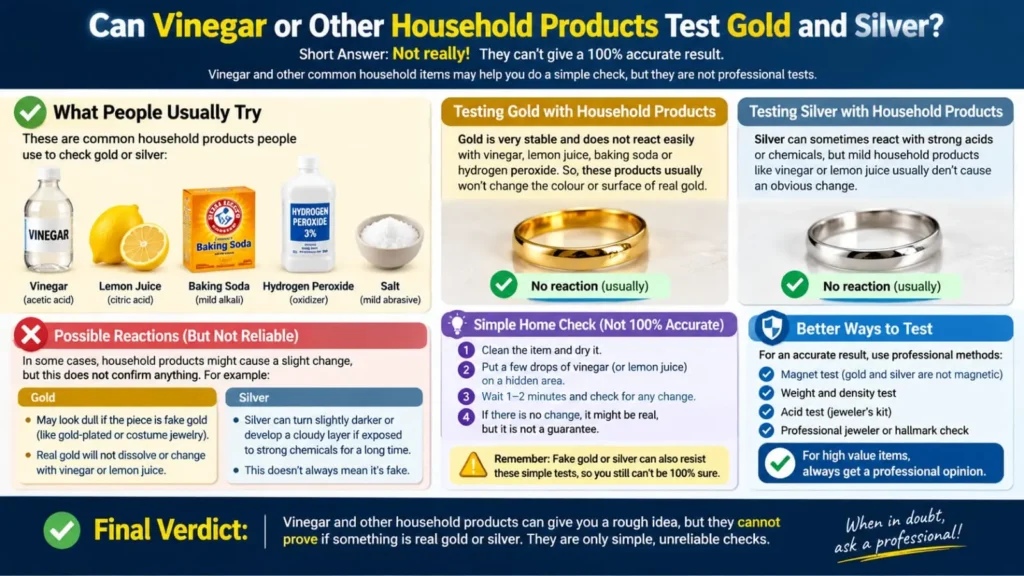
Can Vinegar or Other Household Products Test Gold and Silver?
Many online guides suggest using vinegar, bleach, acids, or other household chemicals to test jewelry. These methods can be unreliable and may damage the item.
Vinegar is not a dependable way to confirm that jewelry is genuine gold or silver. A reaction, color change, or lack of visible change does not provide conclusive proof of authenticity.
Bleach and harsh chemicals can damage silver, gold alloys, plating, gemstones, pearls, and decorative finishes. Acid testing can also damage jewelry if performed incorrectly.
For valuable, antique, sentimental, or plated items, avoid chemical experiments. A professional jeweler can recommend an appropriate test that minimizes the risk of damage.
Gold vs Silver Jewelry: Key Differences
Gold and silver differ in appearance, density, durability, and resistance to tarnishing. Understanding these differences can help you decide what to inspect when testing a piece.
- Color: Gold commonly has a warm yellow tone, while silver usually has a cool, white metallic appearance.
- Density: Pure gold is considerably denser than pure silver.
- Tarnishing: Silver commonly develops dark tarnish, while gold is generally more resistant to tarnishing.
- Hallmarks: Gold often uses karat or fineness markings, while sterling silver commonly carries a 925 mark.
- Value: Gold and silver have different market prices, and the value of a specific piece depends on its metal content, weight, condition, and other factors.
- Plating: Both gold and silver can be used as surface coatings over other materials.
These differences can help you narrow down the possibilities, but none can independently establish authenticity.
Common Mistakes When Testing Jewelry at Home
Home testing becomes less useful when people rely on assumptions instead of checking several clues.
Avoid these common mistakes:
- Assuming that a 925 stamp always guarantees genuine sterling silver.
- Believing that nonmagnetic jewelry must be real gold or silver.
- Treating color as definitive proof of metal content.
- Using bleach, abrasive cleaners, or unverified chemical tests.
- Scratching jewelry to expose the metal underneath.
- Comparing the weight of pieces with different sizes or designs.
- Ignoring gemstones, hollow sections, and plated components.
- Selling valuable jewelry before confirming its metal content.
A better approach is to inspect the hallmark, observe the surface, consider the item’s construction, and seek professional verification when necessary.
When Should You Ask a Professional Jeweler?
Professional testing is the best option when you need reliable information about jewelry’s metal content or financial value.
A jeweler may use electronic testing equipment, X-ray fluorescence analysis, or other suitable methods to assess the metal. The appropriate method depends on the item, its construction, and the level of certainty required.
X-ray fluorescence, commonly called XRF, can help identify the elements present near the tested surface. However, surface readings may not always reveal the composition of the entire piece, especially when plating is involved.
Ask the jeweler whether the test can distinguish solid precious metal from plated material and whether it may affect the item’s finish. If you intend to sell the jewelry, consider obtaining an independent assessment before accepting an offer.
Frequently Asked Questions
How can I test gold or silver jewelry at home?
Start by checking the hallmark, examining the color and surface, and using a magnet as an initial screening tool. These methods provide clues but cannot conclusively prove authenticity.
Does real gold stick to a magnet?
Pure gold is not strongly attracted to an ordinary magnet. However, magnetic components or other metals in jewelry can affect the result. A lack of magnetic attraction does not prove that a piece is genuine gold.
How can I tell if silver jewelry is real?
Look for a 925 hallmark, inspect the piece for signs of plating, and consider whether tarnishing is present. These clues are useful, but professional testing may be needed to confirm the silver content.
Is a 925 stamp proof that jewelry is real silver?
No. A 925 stamp commonly indicates sterling silver, which contains 92.5% silver, but stamps can be inaccurate or counterfeit. Testing is the more reliable way to confirm the metal content.
Can toothpaste test gold or silver jewelry?
Toothpaste is not a reliable authenticity test. Its abrasive ingredients may scratch or dull delicate surfaces, so it is better to avoid using it to test precious metals.
Which is more valuable, gold or silver?
Gold generally has a higher market value per unit of weight than silver, but the value of an individual piece depends on its purity, weight, design, condition, and any gemstones it contains.
Can a jeweler test jewelry without damaging it?
Many professional methods are non-destructive or minimally invasive. However, no single method is suitable for every item, so ask the jeweler about possible risks before testing.
Conclusion
A gold or silver jewelry test can help you learn more about a ring, necklace, bracelet, or other precious-looking item. Checking hallmarks, observing color, comparing weight, and using a magnet can provide useful initial clues.
However, home tests cannot guarantee that a piece is genuine. Plated jewelry and counterfeit stamps can make identification difficult, even when an item looks convincing.
For the most dependable result, consult a qualified jeweler who can select an appropriate testing method. Careful inspection and professional verification can help you protect your jewelry and make better decisions when buying, keeping, or selling it.