Baby ringworm or eczema can be confusing for parents because both conditions may cause itchy, red, dry, or irritated skin. However, they have different causes and require different treatments. Understanding their common symptoms can help parents know what to look for and when to seek medical advice.
Ringworm is a fungal skin infection that can spread between people and animals. Eczema is an inflammatory skin condition that often causes recurring patches of dry, sensitive, and itchy skin. Although these conditions may look similar, recognizing their differences is an important first step toward getting the right care.
Important: A baby’s rash cannot always be identified by appearance alone. A healthcare professional can examine the affected skin and recommend appropriate treatment.
Quick Answer: Is It Ringworm or Eczema?
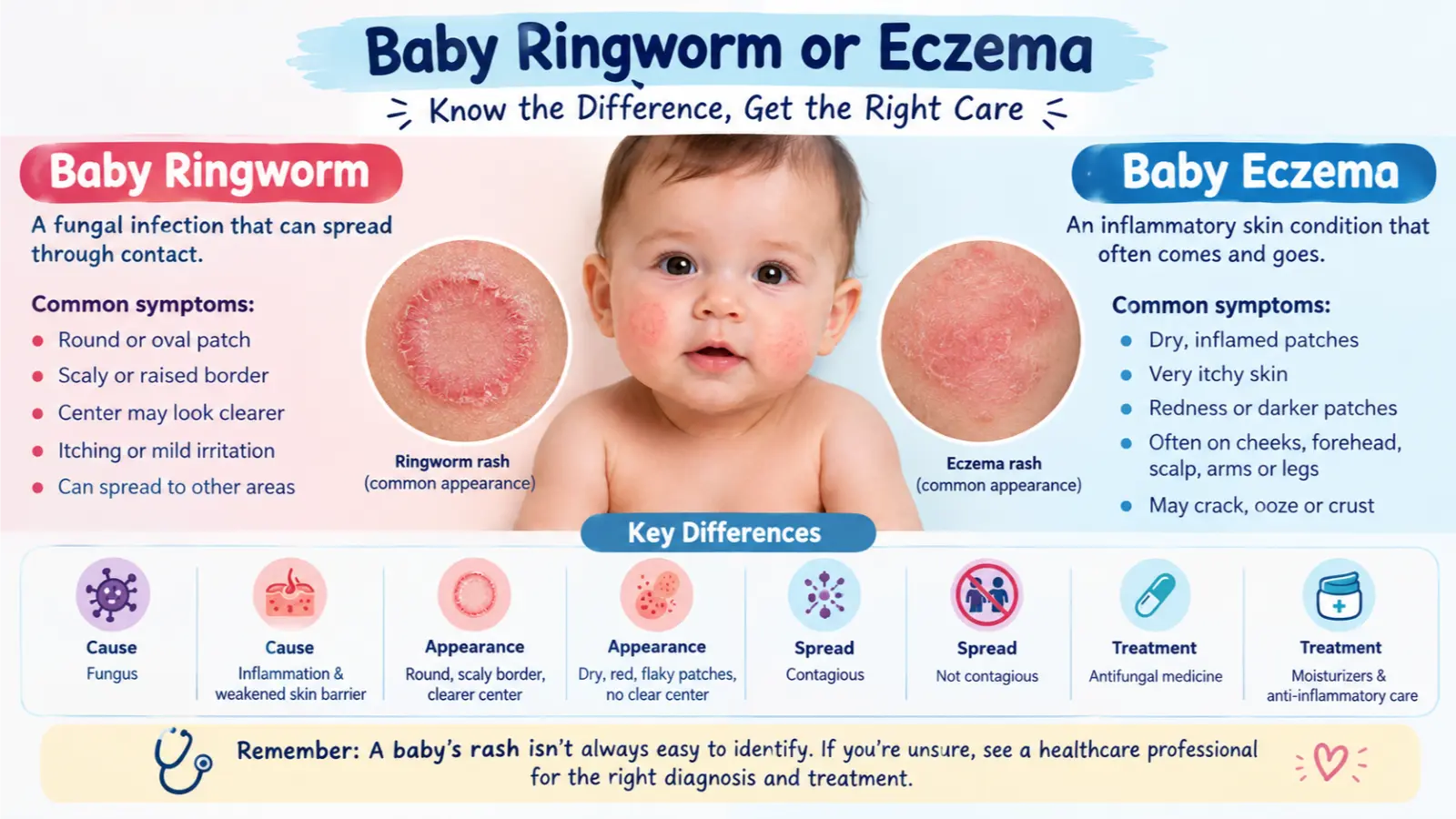
Baby ringworm often appears as a round, expanding patch with a scaly or raised outer edge. The center may look clearer than the surrounding skin. Baby eczema usually causes dry, itchy, inflamed patches that may appear on the cheeks, forehead, scalp, arms, or legs.
Ringworm is caused by a fungus and can spread through contact. Eczema is not contagious and often comes and goes over time. However, both conditions can look different from their typical descriptions, especially in babies.
What Is Ringworm in Babies?
Ringworm is a common fungal infection of the skin. Despite its name, a worm does not cause this condition. The infection develops when certain fungi grow on the outer layers of the skin.
In babies, ringworm may appear on the face, arms, legs, trunk, or scalp. A typical body ringworm rash forms a circular or oval patch with a scaly border. The patch may gradually expand as the infection spreads.
Babies can develop ringworm after contact with an infected person, animal, or contaminated object. Shared towels, clothing, bedding, and other items can sometimes spread the infection.
Ringworm affecting the scalp may cause scaling, broken hairs, or patches of hair loss. Scalp ringworm needs medical evaluation because treatment often requires oral antifungal medicine rather than cream alone.
What Is Eczema in Babies?
Eczema, particularly atopic dermatitis, is an inflammatory skin condition that makes the skin dry, sensitive, and itchy. It is common in infants and may develop during the first months of life.
Baby eczema often appears on the cheeks, forehead, scalp, and outer surfaces of the arms and legs. The affected areas may look red, rough, flaky, or darker than the surrounding skin. On some occasions, scratching causes cracks, oozing, or crusting.
Eczema is associated with a weakened skin barrier, genetic factors, and environmental triggers. Fragranced products, harsh soaps, heat, and rough fabrics may worsen symptoms in some babies.
Unlike ringworm, eczema is not contagious. It may improve and then return, so parents may notice repeated flare-ups in the same areas.
Baby Ringworm vs. Eczema: Key Differences
| Feature | Ringworm | Eczema |
|---|---|---|
| Main cause | Fungal infection | Skin inflammation and barrier dysfunction |
| Typical appearance | Often round with a scaly outer edge | Dry, inflamed, itchy patches |
| Center of rash | May look clearer | Usually does not have a classic clear center |
| Itching | Can be itchy | Often very itchy |
| Spread | Can spread through contact | Not contagious |
| Pattern | May gradually expand outward | Often flares up and improves |
| Common baby locations | Face, body, limbs, or scalp | Cheeks, forehead, scalp, arms, and legs |
| Treatment | Antifungal treatment, depending on location | Moisturizers and clinician-recommended treatment |
These are common patterns, not definitive diagnostic rules. A clinician may need to examine the rash or perform a simple skin test to distinguish the conditions.
How to Recognize Baby Ringworm Symptoms
Parents may notice several features that suggest ringworm.
- A round or oval patch that slowly becomes larger.
- A raised, rough, or scaly border.
- A center that appears less inflamed than the outer edge.
- Itching or mild irritation around the affected area.
- New patches appearing on other parts of the body.
- Scaling, broken hairs, or hair loss when the scalp is affected.
Ringworm does not always form a perfect circle. Its appearance can vary depending on the body area, skin tone, and previous treatment.
Because ringworm is contagious, parents should avoid sharing towels and clothing with others while the infection is being assessed and treated.
How to Recognize Baby Eczema Symptoms
Baby eczema may cause a different pattern of skin irritation.
- Dry or rough patches that persist or return.
- Frequent itching, rubbing, or scratching.
- Redness or darker patches of inflamed skin.
- Flaky skin on the cheeks, forehead, or limbs.
- Irritation that worsens after exposure to certain soaps, fabrics, or environmental triggers.
- Cracked, weepy, or crusted skin during more severe flare-ups.
Eczema can affect different areas as a baby grows. Its appearance may also vary according to skin tone. Some babies experience mild dryness, while others develop more widespread inflammation.
If the rash becomes painful, develops pus, forms yellow crusts, or does not improve with the usual care plan, a doctor should assess it for possible infection or another diagnosis.
Why Baby Ringworm and Eczema Get Confused
Both conditions can produce itching, scaling, and changes in skin color. These overlapping symptoms make it difficult for parents to identify the cause without a medical examination.
Ringworm may not always look like a classic ring, particularly on the face or scalp. Eczema can also create round patches that resemble a fungal infection.
Another source of confusion is that eczema can become infected or irritated after scratching. This may change its appearance and make the rash look different from an ordinary eczema flare.
A healthcare professional may examine the rash, ask about its development, and check for other symptoms. If ringworm is suspected, the clinician may examine skin scrapings or hair samples to help confirm the diagnosis.
Treatment for Baby Ringworm
Treatment depends on the location and severity of the fungal infection. A clinician may recommend an antifungal cream for certain skin infections. Ringworm affecting the scalp generally requires prescription oral antifungal medication.
Parents should follow the healthcare professional’s instructions and complete the recommended treatment course. Stopping treatment too early may allow the infection to return.
Avoid applying steroid creams to a suspected fungal rash unless a healthcare professional specifically recommends them. Steroids can mask symptoms and allow some fungal infections to worsen.
Do not use adult medications, home remedies, or essential oils on a baby’s skin without checking their safety with a qualified healthcare professional.
Treatment for Baby Eczema
Eczema treatment focuses on protecting the skin barrier, reducing itching, and controlling inflammation.
Helpful skin-care practices include:
- Apply a fragrance-free moisturizer suitable for babies regularly.
- Use short, lukewarm baths and a gentle, fragrance-free cleanser.
- Pat the skin dry rather than rubbing it.
- Apply moisturizer while the skin is still slightly damp.
- Choose soft clothing and avoid products that irritate the baby’s skin.
- Ask a healthcare professional before using medicated creams, particularly steroid creams, on an infant.
Some babies need prescription treatment to control inflammation. The correct medicine and strength depend on the child’s age, affected body area, and severity of symptoms.
Moisturizers can help eczema, but they do not treat a fungal infection. This is why identifying the cause of the rash matters.
When Should You Take Your Baby to a Doctor?
Arrange a medical assessment if you suspect ringworm or if your baby’s rash persists, spreads, or repeatedly returns. A doctor should also examine a rash that affects the scalp or causes patches of hair loss.
Seek prompt medical care if the rash becomes painful, develops pus or yellow crusting, forms blisters, or spreads rapidly. These symptoms may indicate an infection or another condition requiring treatment.
Seek urgent medical attention if your baby has a fever with a concerning rash, appears unusually unwell, or develops widespread blisters or peeling skin. A baby younger than three months with a temperature of 38°C (100.4°F) or higher needs immediate medical assessment.
Do not delay care if you are worried about your baby’s condition.
Common Mistakes Parents Should Avoid
Assuming every circular rash is ringworm. Eczema and other skin conditions can also form round patches.
Using the same treatment for both conditions. Antifungal medicines treat fungal infections, while eczema requires skin-barrier care and sometimes anti-inflammatory treatment.
Using steroid cream without checking the diagnosis. Steroids may hide or worsen certain fungal infections.
Ignoring scalp symptoms. Scalp ringworm can cause hair loss and usually requires treatment by mouth.
Waiting too long when symptoms worsen. Rapid spreading, pus, fever, or significant discomfort should prompt medical assessment.
Frequently Asked Questions
Can a baby have ringworm and eczema at the same time?
Yes. A baby can have eczema and develop a fungal infection independently. A clinician can help determine whether one or both conditions are present.
Is baby ringworm more dangerous than eczema?
Neither condition is automatically more serious in every case. Ringworm requires appropriate antifungal treatment, while eczema may need ongoing skin care and inflammation control. Scalp involvement or signs of infection deserve particular attention.
Does baby ringworm go away on its own?
It may persist or spread without appropriate treatment. A healthcare professional can recommend the correct antifungal medicine based on the location and severity of the infection.
Can eczema spread from one baby to another?
No. Eczema itself is not contagious. Ringworm, however, can spread through contact with infected skin, animals, or contaminated items.
Can I use eczema cream on suspected ringworm?
Do not assume that an eczema cream will treat ringworm. Some steroid-containing creams can hide or worsen fungal infections. Have the rash assessed before using medicated products.
How can I tell if a rash is healing?
A healing rash may become less itchy, less inflamed, and smaller over time. However, improvement alone does not confirm the diagnosis. Follow the recommended treatment plan and contact a healthcare professional if the rash spreads or fails to improve.
Conclusion
Baby ringworm or eczema can look similar, but the causes and treatments are different. Ringworm is a contagious fungal infection that often produces an expanding, scaly patch, while eczema commonly causes recurring areas of dry, inflamed, itchy skin.
Parents should avoid diagnosing a baby’s rash based on appearance alone or using the same medication for both conditions. If the rash spreads, affects the scalp, becomes painful, or shows signs of infection, seek medical advice. A correct diagnosis helps your baby receive the safest and most effective care.