The fav full form is favorite in American English and favourite in British English. People commonly use fav as a short and informal version of these words.
You may see fav in text messages, social media posts, online comments, and casual conversations. For example, someone might write, “This is my fav song” or “My fav place to visit.”
However, fav is not always suitable for formal writing. In professional emails, academic work, and official documents, writing the complete word is usually the better choice.
Quick Answer
Fav is an informal abbreviation of:
- Favorite — American English
- Favourite — British English
For example:
This is my fav movie.
In formal writing, use the full word:
This is my favorite movie.
or:
This is my favourite movie.
Fav Full Form: Comparison Table
| Term | Full Form | English Variety | Where to Use It |
| Fav | Favorite / Favourite | Informal | Texts, chats, social media |
| Favorite | Full word | American English | Formal and informal writing |
| Favourite | Full word | British English | Formal and informal writing |
The meaning remains the same. The main difference is the spelling used in American and British English.
What Does “Fav” Mean?
Fav means something that a person likes more than other things of the same type.
For example:
Pizza is my fav food.
This means:
Pizza is my favorite food.
You can use fav for many things, including:
- Fav food
- Fav movie
- Fav song
- Fav color
- Fav person
- Fav place
- Fav book
- Fav memory
The abbreviation is especially common in casual online communication.
What Is the Full Form of Fav?
The full form of fav is usually favorite or favourite.
Favorite
Favorite is the standard American English spelling.
Examples:
Blue is my favorite color.
This is my favorite book.
Favourite
Favourite is the standard British English spelling.
Examples:
Blue is my favourite colour.
This is my favourite book.
Both words have the same meaning.
Favorite vs. Favourite: What Is the Difference?
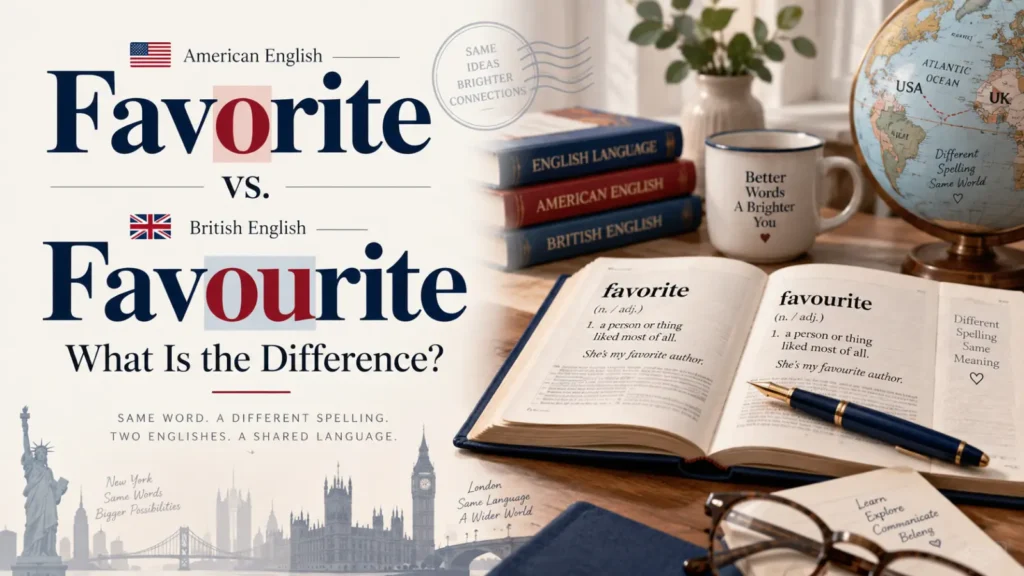
The difference is mainly based on the variety of English you use.
Favorite is preferred in American English.
Favourite is preferred in British English and is also commonly used in several other English-speaking regions that follow British spelling conventions.
The abbreviation fav can refer to either word.
For example:
My fav movie
This phrase does not show whether the writer normally uses American or British spelling. The full form depends on the writer’s preferred English style.
Origin of “Fav”
Fav developed as a shortened form of favorite and favourite.
English speakers often shorten commonly used words in informal communication. Similar shortened forms include:
- Info for information
- Admin for administration or administrator
- Photo for photograph
- Bio for biography
In the same way, fav became a quick and convenient way to write favorite or favourite.
The growth of texting, social media, and online messaging has made this short form more common in everyday communication.
Why Do People Use “Fav”?
People use fav because it is short, simple, and easy to understand.
It is especially popular when space or speed matters.
For example:
My fav outfit!
Instead of writing:
My favorite outfit!
The shorter form can also make a message sound more casual and friendly.
You will often see it in:
- Instagram captions
- TikTok comments
- Text messages
- Online chats
- Social media posts
- Informal reviews
Is “Fav” a Correct Word?
Yes, fav is widely understood and commonly used as an informal shortened form.
However, it does not fit every writing situation.
In casual communication, fav is usually acceptable:
That is my fav restaurant.
In formal communication, the complete word is better:
That is my favorite restaurant.
The choice depends on your audience and the tone of your writing.
Dictionary Preference and Modern Usage
Major dictionaries recognize favorite and favourite as standard English words. The spelling you choose depends mainly on whether you follow American or British English.
Fav is a shortened informal form used widely in modern communication. Its popularity has increased because online conversations often favor shorter words and quick expressions.
Still, the full form remains the safer choice when clarity, formality, or professional presentation matters.
Real-Life Examples of “Fav”
Here are some common examples:

Social media
This is my fav photo from the trip.
Text message
What’s your fav movie?
Casual conversation
That café is my fav place in town.
Online comment
This is one of my fav songs!
Product review
This is my favorite feature of the app.
In casual writing, fav works naturally. In a formal review or professional document, favorite or favourite usually sounds more appropriate.
Common Mistakes With “Fav”
Using “fav” in formal documents
Avoid writing:
My fav experience was working with customers.
A more professional version is:
My favorite experience was working with customers.
Mixing British and American spelling
Choose one style and remain consistent.
For example, avoid writing:
My favourite color is blue.
Instead, use either:
My favorite color is blue.
Or:
My favourite colour is blue.
Using “fav” when the audience may not understand it
Although fav is widely recognized, abbreviations may not suit every audience. When writing for formal, international, or professional readers, the full word is often clearer.
Easy Memory Trick
Remember this simple rule:
Fav = Favorite or Favourite
Think of fav as the first part of the full word.
Fav + orite = Favorite
or, in British English:
Fav + ourite = Favourite
Another easy reminder is:
Fav is for casual writing.
When the writing is important or formal, use the complete word.
Should You Use “Fav” in Professional Writing?
In most professional situations, avoid using fav.
Use:
- Favorite for American English
- Favourite for British English
For example, in a business email, write:
Please share your favorite project from the past year.
Instead of:
Please share your fav project from the past year.
The full word looks more polished and professional.
However, fav may be acceptable in informal workplace chats, social media content, or marketing aimed at a young and casual audience.
The key is to match your language to your audience.
When Should You Use “Fav”?
Use fav when:
- Sending text messages
- Chatting with friends
- Writing casual social media posts
- Commenting online
- Creating informal captions
- Using a friendly tone
For example:
My fav weekend activity is watching movies.
When Should You Use “Favorite” or “Favourite”?
Use the full word when writing:
- Professional emails
- Resumes
- Academic assignments
- Business reports
- Official documents
- Formal articles
- Applications
For American English:
What is your favorite subject?
For British English:
What is your favourite subject?
Frequently Asked Questions
What is the full form of fav?
The full form of fav is favorite in American English or favourite in British English.
What does fav mean?
Fav means a person’s preferred or most liked thing, person, place, or activity.
Is fav short for favorite?
Yes. Fav is commonly used as an informal short form of favorite.
Is fav short for favourite too?
Yes. Fav can also be used as a shortened form of favourite.
Is fav a formal word?
No. Fav is mainly used in casual and informal communication.
Should I write favorite or favourite?
Use favorite if you follow American English. Use favourite if you follow British English.
Can I use fav in a professional email?
It is usually better to use favorite or favourite in a professional email. Fav may sound too casual.
What is the plural of fav?
The plural form is favs when referring to multiple favorites.
For example:
These are some of my favs.
Conclusion
The fav full form is favorite or favourite. Fav is a short and informal version that people commonly use in texts, chats, and social media.
Use favorite when following American English and favourite when following British English.
For casual communication, fav is quick and natural. However, for academic, professional, or formal writing, using the full word is the better choice.
The easiest rule to remember is simple: Fav is casual, while favorite and favourite are suitable for standard writing.
Discover More:
How Do You Spell Sence? Sence or Sense?
Written vs Wrote: What Is the Difference?

Alex Wordsmith is a comparison research writer and content specialist at WordComparre.com. He focuses on analyzing word meanings, spelling variations, grammar distinctions, and language usage to help readers make informed writing choices. Through clear explanations and practical examples, Alex simplifies complex language topics for students, writers, and professionals. His goal is to make English learning easier, more accurate, and accessible for everyone.