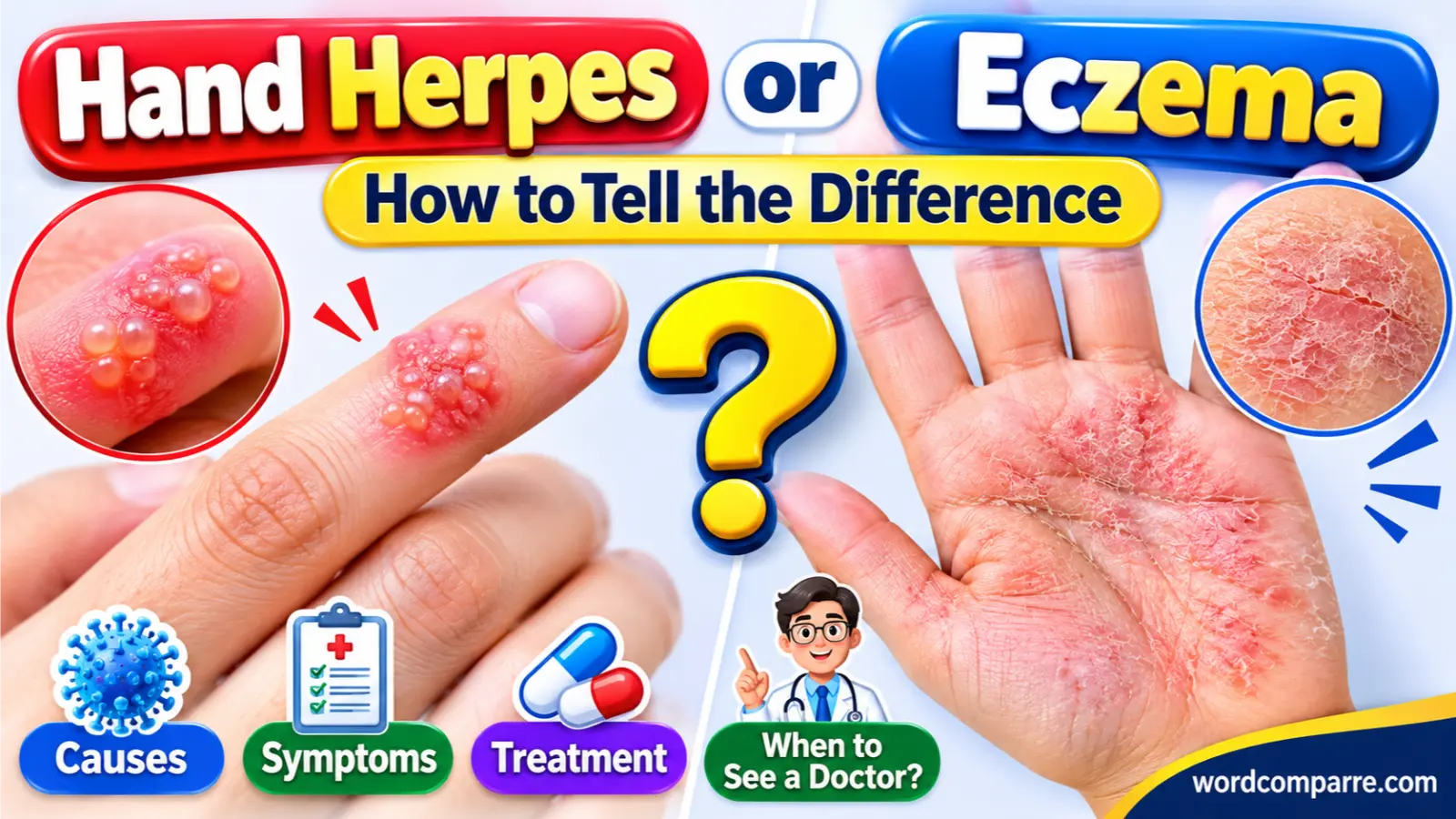
Hand herpes or eczema can be difficult to distinguish because both conditions may cause redness, irritation, itching, and small fluid-filled blisters. However, they are two different skin conditions with different causes, symptoms, and treatments. Understanding the difference between hand herpes or eczema can help you recognize warning signs and know when to seek medical advice.
Hand herpes, medically known as herpetic whitlow, is a viral infection caused by the herpes simplex virus (HSV). In contrast, hand eczema is an inflammatory skin condition that often develops because of irritants, allergens, or an underlying tendency toward eczema. Although their symptoms sometimes overlap, certain features can help distinguish them.
What Is Hand Herpes?
Hand herpes is a viral infection that usually affects a finger or thumb. Its medical name is herpetic whitlow. It develops when the herpes simplex virus enters the skin, often through a small cut or damaged area.
The infection may occur after direct contact with an active cold sore or another area infected with herpes. Both HSV-1 and HSV-2 can cause herpetic whitlow.
Common Symptoms of Hand Herpes
People with hand herpes may experience:
- Painful, fluid-filled blisters on a finger or thumb.
- Redness and swelling around the affected area.
- Tingling or burning before blisters appear.
- Tenderness and discomfort when touching the skin.
- Fever or feeling generally unwell in some cases.
- Blisters that eventually break, dry, and heal.
Unlike many ordinary skin irritations, herpetic whitlow can cause significant pain. It may also return because the herpes virus remains in the body after the initial infection.
What Is Hand Eczema?
Hand eczema is a common inflammatory skin condition that affects the palms, fingers, and other areas of the hands. It can develop when the skin becomes irritated or reacts to certain substances.
Frequent handwashing, cleaning products, detergents, chemicals, and allergens can trigger or worsen hand eczema. People with a history of eczema may also have a greater risk of developing it.
Common Symptoms of Hand Eczema
Hand eczema can cause several noticeable skin changes, including:
- Dry, rough, or flaky skin.
- Red or darker irritated patches.
- Persistent itching.
- Burning or stinging sensations.
- Small, itchy fluid-filled blisters.
- Cracked skin that may bleed.
- Swelling and inflammation.
Some people experience occasional flare-ups, while others have symptoms that continue for months or longer.
Hand Herpes or Eczema: What Are the Main Differences?
Although hand herpes and eczema can look similar, their underlying causes and typical symptoms are different.
| Feature | Hand Herpes | Hand Eczema |
|---|---|---|
| Main cause | Herpes simplex virus | Skin inflammation |
| Type | Viral infection | Inflammatory skin condition |
| Common location | Usually one finger or thumb | Palms, fingers, or both hands |
| Blisters | Often painful clusters | Often small and itchy |
| Itching | May occur | Common |
| Pain | Often noticeable or intense | Usually associated with cracks or inflammation |
| Contagious | Yes, through direct contact with infected areas | No |
| Duration | Often heals within 2–3 weeks | May continue or return over time |
| Recurrence | Can return because HSV remains in the body | Can flare up after exposure to triggers |
These are general patterns rather than guaranteed differences. A healthcare professional may need to examine the affected skin to determine the actual cause.
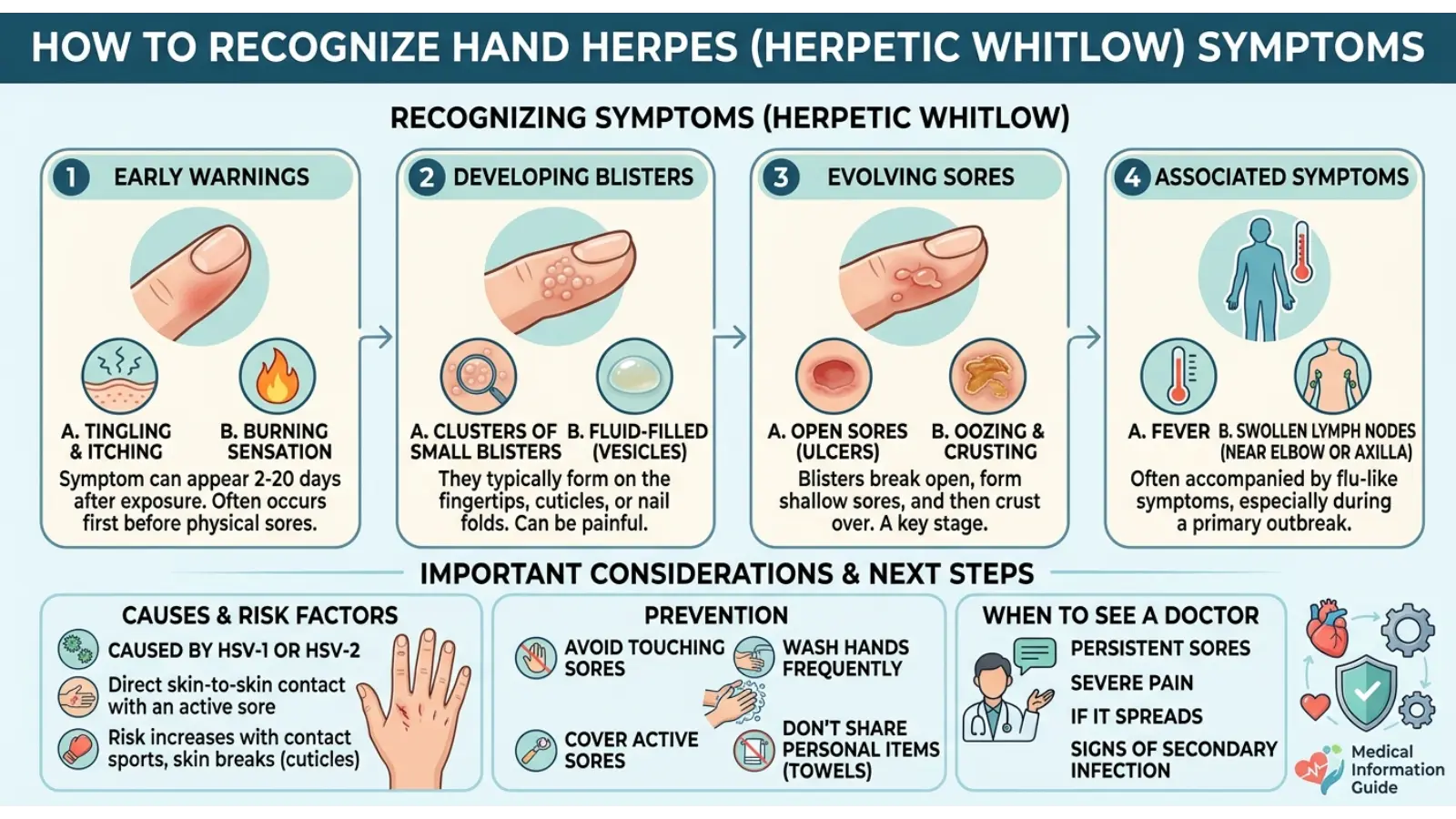
How to Recognize Hand Herpes Symptoms
One important clue is the type of discomfort that develops before the blisters appear.
Herpetic whitlow may begin with tingling, burning, or pain before visible skin changes develop. Afterward, small blisters may appear around the fingertip or near the nail.
The affected finger may become swollen, red, and tender. In some cases, several blisters join together and form a larger affected area.
Another important feature is exposure to herpes. For example, touching an active cold sore and then touching broken skin on a finger may spread the virus.
However, exposure history alone cannot confirm an infection. A medical examination and, when needed, a laboratory test can help establish the diagnosis.
How to Recognize Hand Eczema Symptoms
Hand eczema often develops differently. It may begin with dry, irritated skin that gradually becomes rough, itchy, and inflamed.
Some people notice symptoms after washing dishes, using cleaning products, handling chemicals, or washing their hands frequently.
Dyshidrotic eczema is one type that can produce tiny, intensely itchy blisters on the palms and sides of the fingers.
As the condition progresses, the skin may peel, crack, or become painful. Unlike herpetic whitlow, hand eczema is not caused by a virus and cannot spread from one person to another.
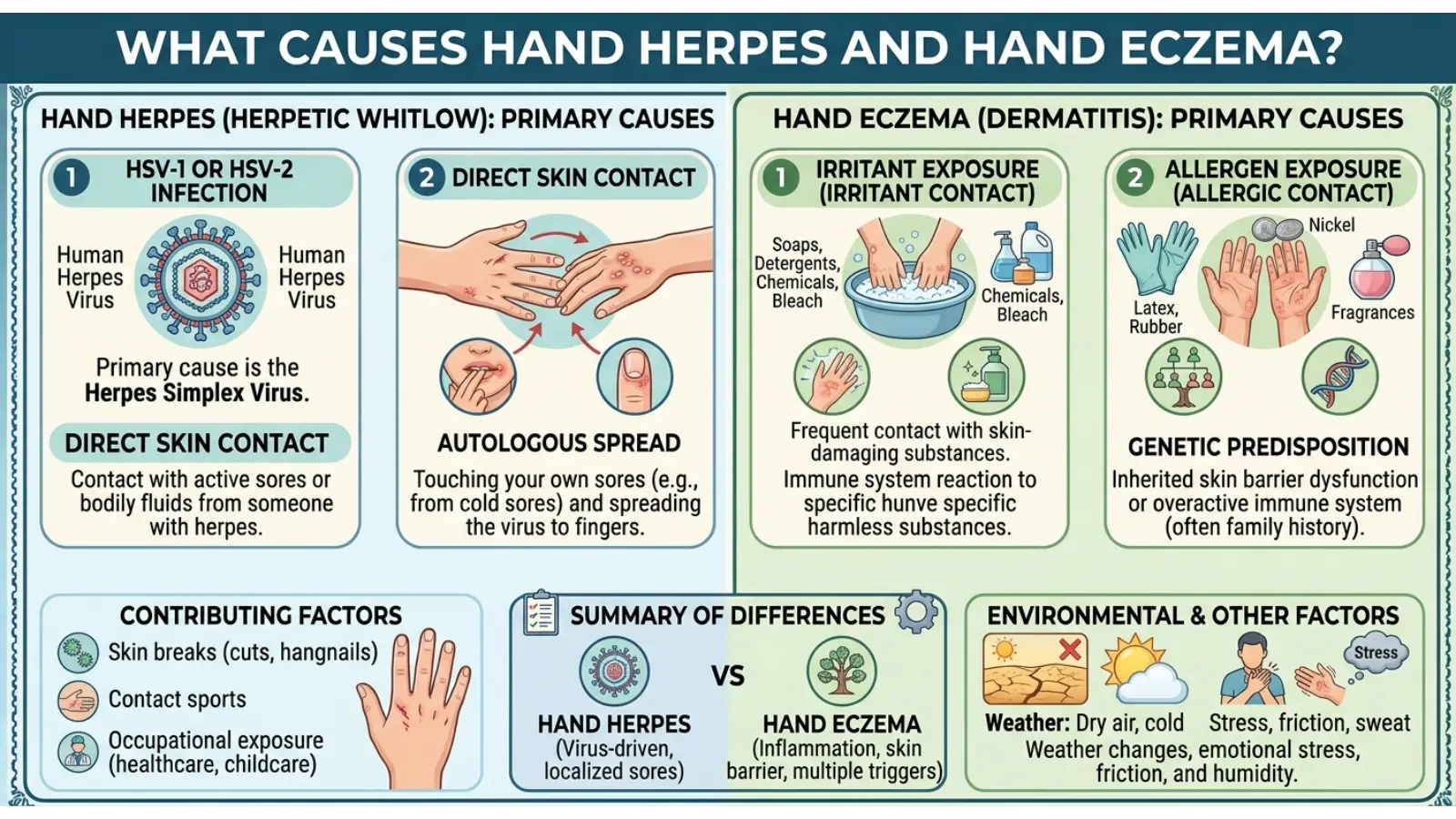
What Causes Hand Herpes and Eczema?
Understanding the causes is important because the two conditions require different approaches.
Causes of Hand Herpes
Hand herpes develops when the herpes simplex virus infects the skin.
Possible sources of exposure include:
- Direct contact with an active cold sore.
- Contact with infected oral or genital herpes lesions.
- Touching an infected area and transferring the virus to broken skin.
- Having damaged skin that allows the virus to enter.
The virus can remain in the body after the infection heals, which explains why some people experience repeated episodes.
Causes of Hand Eczema
Hand eczema can develop from several environmental and personal factors.
Common triggers include:
- Frequent exposure to water.
- Soaps and detergents.
- Household cleaning products.
- Industrial chemicals and solvents.
- Allergic reactions to certain materials.
- Repeated friction or skin irritation.
- A personal history of eczema.
Identifying and avoiding the trigger is an important part of managing hand eczema.
How Are Hand Herpes and Eczema Diagnosed?
A dermatologist or healthcare professional can evaluate the affected skin and ask about your symptoms, medical history, and possible exposure to irritants or herpes.
For suspected hand herpes, a clinician may recommend a swab test or PCR test to detect the herpes simplex virus.
For suspected hand eczema, diagnosis often involves examining the skin and reviewing possible triggers. Allergy patch testing may help when allergic contact dermatitis is suspected.
Other skin conditions, including fungal infections, psoriasis, and bacterial infections, can also cause similar symptoms.
Therefore, it is important not to rely entirely on photographs or online symptom comparisons.
Treatment Options for Hand Herpes
Treatment for herpetic whitlow focuses on managing pain, protecting the affected area, and reducing the duration of the infection when appropriate.
A healthcare professional may prescribe antiviral medication, particularly when treatment begins early.
Helpful precautions include:
- Keep the affected area clean.
- Cover active blisters with a suitable dressing.
- Avoid touching or squeezing the blisters.
- Wash your hands after accidental contact with the affected area.
- Avoid touching your eyes or other sensitive areas.
- Avoid direct skin contact with other people using the infected finger.
Important: Never try to pop, squeeze, or drain suspected herpes blisters. This can spread the infection and cause additional complications.
Treatment Options for Hand Eczema
Hand eczema treatment aims to reduce inflammation, repair the skin barrier, and prevent future flare-ups.
Common treatment approaches include:
- Moisturizers: Help restore skin moisture and protect the skin barrier.
- Gentle cleansers: Reduce irritation from ordinary soaps.
- Protective gloves: Help limit contact with detergents and chemicals.
- Topical corticosteroids: A healthcare professional may recommend these to reduce inflammation.
- Trigger avoidance: Identifying and avoiding irritating substances can help prevent flare-ups.
For persistent or severe eczema, a dermatologist may recommend additional treatments.
Do not start steroid creams on unexplained blisters without medical advice, because an infection may require a different treatment.
Common Mistakes When Comparing Hand Herpes or Eczema
People sometimes confuse these conditions because both can produce blisters and irritated skin. However, several common assumptions can lead to mistakes.
Mistake 1: Assuming every blister means herpes.
Small blisters can also occur with dyshidrotic eczema and other skin conditions.
Mistake 2: Assuming itching always means eczema.
Herpes infections can also cause itching, tingling, and burning.
Mistake 3: Thinking eczema is contagious.
Hand eczema is not contagious. It does not spread through ordinary contact with another person.
Mistake 4: Popping blisters to relieve discomfort.
This is particularly dangerous when herpetic whitlow is possible because it can spread the virus.
Mistake 5: Using the same treatment for both conditions.
Antiviral medication treats herpes infections, while eczema management focuses on controlling inflammation and protecting the skin barrier.
When Should You See a Doctor?
You should seek medical advice if you develop unexplained blisters, painful swelling, or a persistent rash on your hands.
Early evaluation is particularly important if you suspect herpetic whitlow because antiviral treatment may be more effective when started within the first 48 hours.
Contact a healthcare professional promptly if:
- You develop painful clusters of blisters.
- Your finger becomes increasingly swollen or painful.
- You develop a fever.
- The affected area becomes increasingly red or warm.
- You have a weakened immune system.
- The symptoms spread or become worse.
Seek urgent medical attention if you experience rapidly spreading redness, severe swelling, or signs of a serious infection.
Simple Ways to Remember the Difference
A few basic points can help you remember the general differences between hand herpes and eczema.
- Herpes: Think of a viral infection that often causes painful clusters of blisters on a finger.
- Eczema: Think of irritated skin that often becomes dry, itchy, inflamed, or cracked.
- Herpes: Can spread through direct contact with infected areas.
- Eczema: Does not spread from person to person.
- Herpes: May return because the virus remains in the body.
- Eczema: Often flares up after exposure to irritants or allergens.
These memory tips are useful for understanding the conditions, but they cannot replace a professional diagnosis.
Frequently Asked Questions
Can hand herpes look like eczema?
Yes. Hand herpes and eczema can both cause redness, irritation, and fluid-filled blisters. However, herpes often produces painful clusters of blisters on a finger, while eczema commonly causes itchy, dry, or inflamed skin.
Is hand herpes contagious?
Yes. Herpetic whitlow can spread through direct contact with infected skin or fluid from active lesions. Avoid touching the affected area and keep active blisters covered.
Can eczema cause blisters on the fingers?
Yes. Dyshidrotic eczema can cause small, intensely itchy blisters on the sides of the fingers and palms. These blisters are not caused by herpes.
How long does hand herpes last?
A first episode of herpetic whitlow generally heals within two to three weeks without treatment. Antiviral medication may help shorten the illness when started early.
Can hand eczema go away permanently?
Some cases improve significantly when the triggering irritants or allergens are avoided. However, chronic hand eczema can return, particularly when the skin is repeatedly exposed to triggers.
Can hand herpes turn into eczema?
No. Herpes and eczema are separate conditions. A herpes infection does not turn into eczema, although both conditions can affect the same person.
Should I use eczema cream on suspected hand herpes?
Do not assume that an eczema cream will treat herpes. Some creams, particularly corticosteroids, may be inappropriate for an untreated infection. Ask a healthcare professional before applying medication to unexplained blisters.
Is hand herpes the same as genital herpes?
Both are caused by the herpes simplex virus, but they affect different body areas. Herpetic whitlow refers specifically to a herpes infection affecting a finger or thumb.
Conclusion
Understanding the difference between hand herpes or eczema is important because these conditions have different causes and require different treatments. Hand herpes is a contagious viral infection that often causes painful blisters, while hand eczema is a noncontagious inflammatory skin condition that commonly causes itching, dryness, irritation, and cracking.
Although their symptoms can overlap, recognizing their general patterns can help you understand what might be happening to your skin. If you notice painful blisters, persistent irritation, or unusual swelling, consult a healthcare professional for an accurate diagnosis and appropriate treatment. Avoid squeezing blisters or using prescription creams without medical guidance.