Misspelled vs. Misspelt is an important spelling comparison that explains the difference between these two accepted English words. Both spellings mean writing a word incorrectly, but their usage varies between British and American English. American English generally prefers misspelled, whereas British English commonly uses misspelt. Knowing the difference will help you choose the correct spelling for your readers.
Misspelled vs. Misspelt is a common English spelling comparison that explains two correct forms of the same word. When comparing Misspelled vs. Misspelt, the main difference is their regional usage. American English generally prefers misspelled, while British English commonly accepts misspelt as an alternative. Both spellings have the same meaning: writing a word incorrectly.
Understanding Misspelled vs. Misspelt can help you choose the right spelling for your audience. In this guide, we will explore Misspelled vs. Misspelt, including their meanings, grammar rules, British and American English differences, and practical sentence examples for everyday, academic, and professional writing.
Misspelled vs. Misspelt: Quick Answer
The words misspelled and misspelt are both accepted past-tense and past-participle forms of the verb misspell. They mean that someone has written a word incorrectly.
The main difference is regional preference:
- Misspelled: The standard and more common choice in American English.
- Misspelt: A traditional British English form, also understood internationally.
- Misspelled in British English: Also completely correct and widely used.
For example:
- American English: She misspelled my name on the application.
- British English: She misspelt my name on the application.
Both sentences are grammatically correct and communicate the same information.
What Does Misspelled Mean?
Misspelled is the past tense and past participle of the verb misspell. It describes writing a word with incorrect letters or using an incorrect spelling.
The word combines the prefix mis-, meaning wrongly or incorrectly, with spell, meaning to write or name the letters of a word in the correct order.
People commonly use misspelled when discussing spelling mistakes in school assignments, business documents, online content, personal messages, and official records.
Examples of Misspelled in Sentences
- The student misspelled several words in the examination.
- I accidentally misspelled your surname in the email.
- The editor corrected every misspelled word in the article.
- She misspelled the company name on the official form.
- The computer identified a misspelled word in my document.
In each example, misspelled describes an incorrect spelling.
What Does Misspelt Mean?
Misspelt is another accepted past-tense and past-participle form of misspell. It has the same meaning as misspelled: to write a word incorrectly.
This spelling is traditionally associated with British English and is particularly familiar in British publications and everyday writing.
However, it is not an incorrect or outdated form. It remains a legitimate spelling that readers can understand.
Examples of Misspelt in Sentences
- The teacher noticed a misspelt word in the student’s homework.
- My name was misspelt on the invitation.
- Several words were misspelt in the original document.
- The newspaper published an article with a misspelt headline.
- She realised that she had misspelt the address.
These sentences demonstrate how misspelt works naturally in British English.
British English vs. American English Spelling
The most important distinction between these two forms is their regional preference.
American and British English sometimes use different forms of irregular verbs. The difference between misspelled and misspelt follows a similar pattern.
| English Variety | Preferred Form | Alternative |
|---|---|---|
| American English | Misspelled | Misspelt is understood |
| British English | Misspelt or misspelled | Both are correct |
| Australian English | Both forms are recognised | Follow the chosen style guide |
| Canadian English | Both forms are recognised | Follow the publication’s convention |
American writers generally choose misspelled because it follows the regular -ed pattern. British writers have traditionally used misspelt, although the -ed form is also common.
Therefore, neither spelling should automatically be considered wrong.
What Do Major Dictionaries Say?
Dictionaries are useful resources when two spellings appear different but have the same meaning. Major English dictionaries recognise both forms of misspell.
Cambridge Dictionary
The Cambridge Dictionary identifies misspelled as a past-tense and past-participle form and labels misspelt as a UK variant. Its entry confirms that both forms describe spelling a word incorrectly.
Oxford Learner’s Dictionaries
Oxford lists both misspelled and misspelt as acceptable past forms of the verb misspell. Its American English entry also recognises both variants.
Merriam-Webster
Merriam-Webster is an important reference for American English spelling. American writers generally follow misspelled as the conventional form.
For practical writing, these references support the same conclusion: both spellings are valid, but regional preference matters.
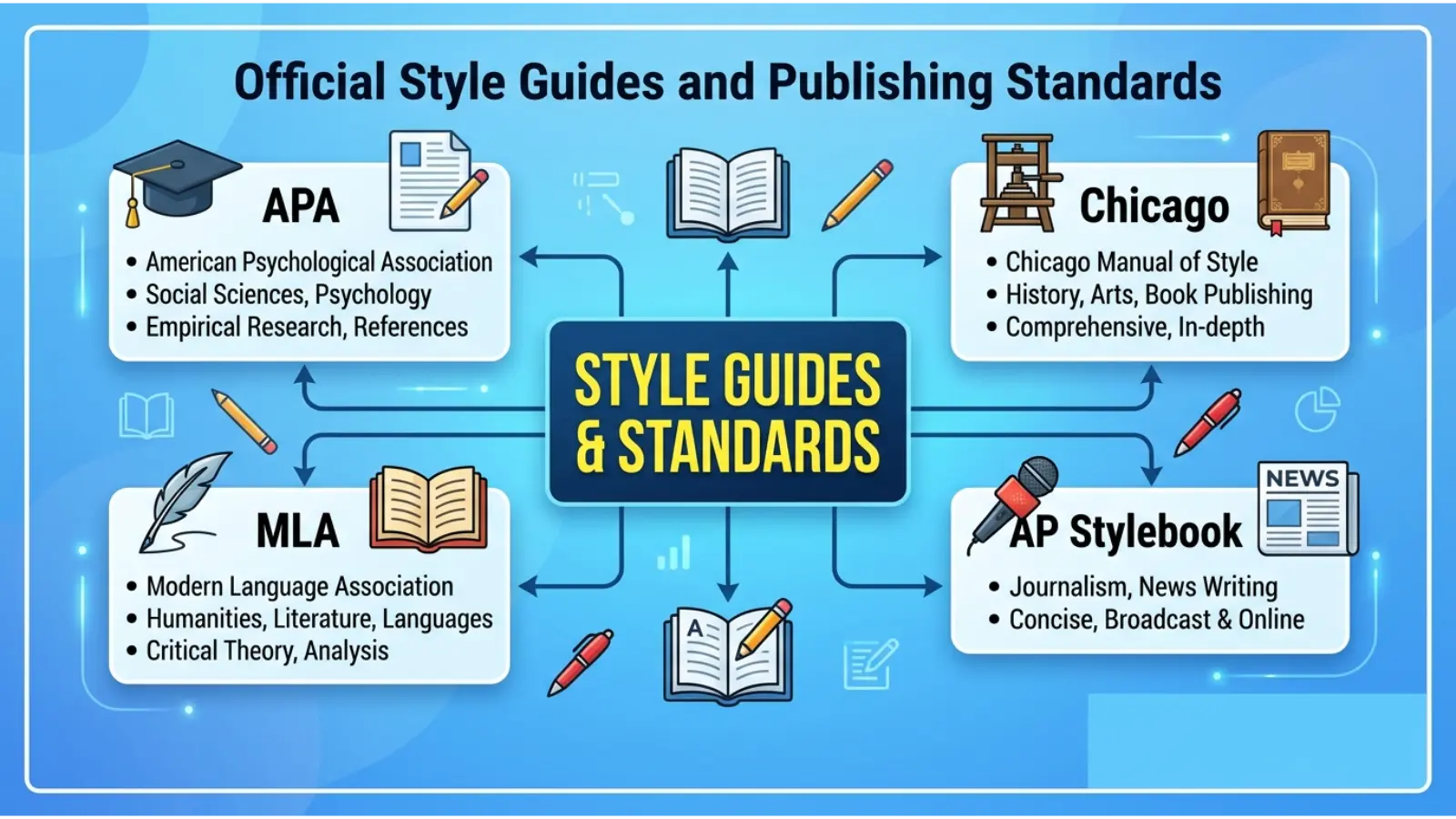
Official Style Guides and Publishing Standards
Professional writers should follow the spelling conventions required by their organisation, publisher, or intended audience.
A consistent spelling system makes documents easier to read and gives professional content a polished appearance.
British Publishing Standards
British publishers commonly recognise traditional British forms such as misspelt. However, individual publishers may prefer the regular -ed form.
For example, the UK Government’s GOV.UK style guidance recommends British English spelling throughout its content. Writers should follow the relevant house style when preparing official material.
American Publishing Standards
American publishers generally prefer misspelled. The Merriam-Webster dictionary is a useful reference for checking American spelling conventions.
The Microsoft Style Guide also recommends US spelling when writing for American audiences.
International Publishing
International publishers may accept either spelling. The most important requirement is consistency throughout the document.
For instance, if a publication follows British English, using misspelt may be appropriate. If it follows American English, misspelled is usually the better choice.
Which Form Should You Use in Academic Writing?
Academic writing requires accuracy, clarity, and consistency. Choosing between misspelled and misspelt should depend on your university’s requirements or the publisher’s preferred style.
If your institution follows American English, use misspelled. If it follows a British English convention, either form may be acceptable, depending on its guidelines.
Consider these examples:
- American academic writing: The researcher identified several misspelled terms in the original questionnaire.
- British academic writing: The researcher identified several misspelt terms in the original questionnaire.
Both examples are correct.
Before submitting an academic paper, check the university handbook, journal instructions, or dissertation guidelines. Following one recognised spelling convention is more important than choosing one variant for every English-speaking region.
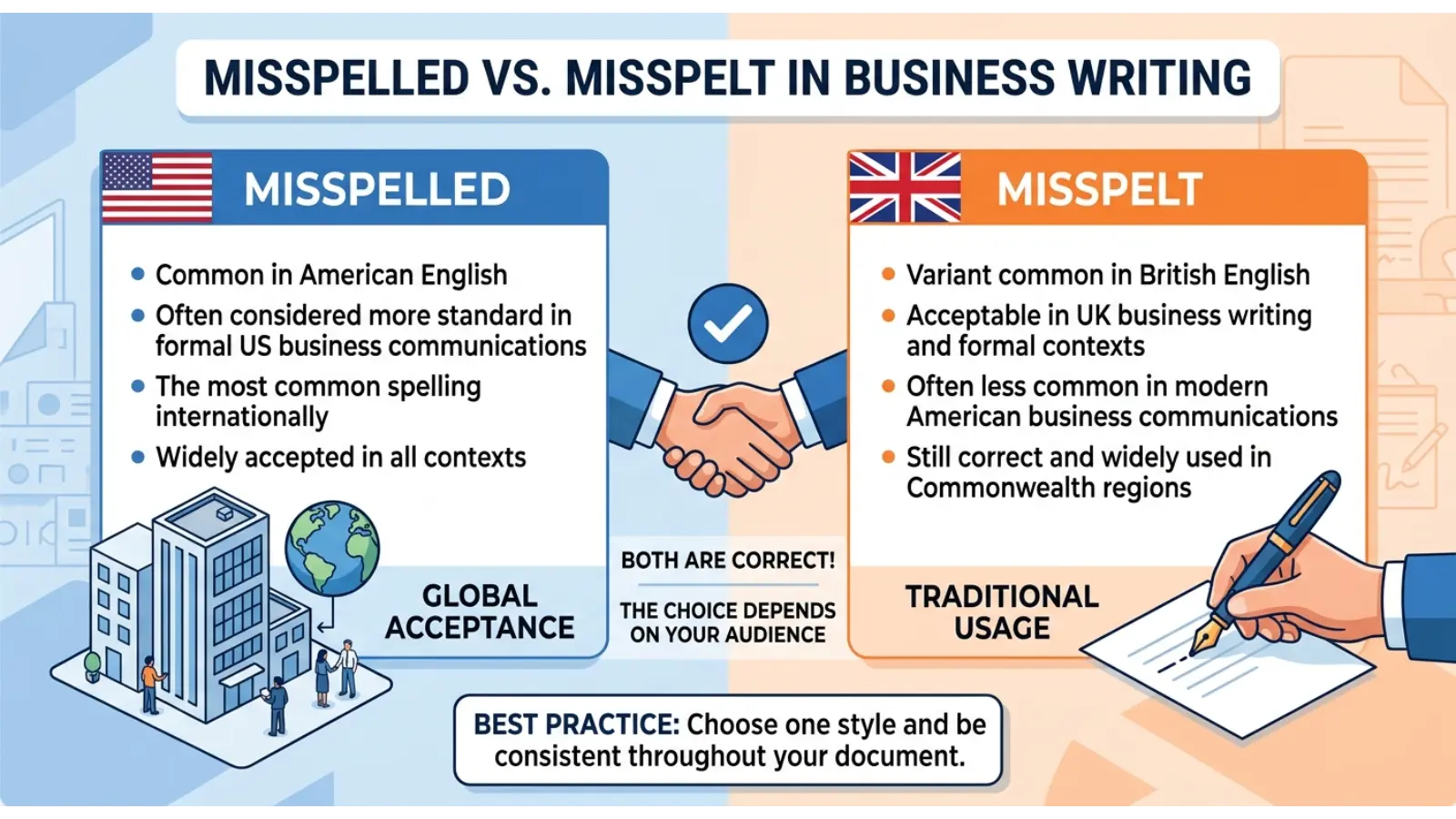
Misspelled or Misspelt in Business Writing
Business communication requires professional and consistent language. Both forms are suitable, but the choice should match the organisation’s preferred English variety.
For American businesses, misspelled is generally the safer choice. For British organisations, misspelt is a familiar option.
Here are some practical examples:
- The customer’s surname was misspelled in the invoice.
- The employee noticed a misspelt word in the contract.
- Please correct the misspelled product name before publication.
- The company apologised for the misspelt name on the certificate.
When communicating with international customers, consistency is especially useful. Avoid switching between British and American spelling conventions without a reason.
Real-World Examples of Misspelled and Misspelt
Understanding sentence examples makes it easier to recognise how these spellings work in everyday situations.
Education
- The teacher corrected the misspelled words in the student’s essay.
- The examiner highlighted several misspelt terms in the answer sheet.
Workplace Communication
- I noticed that the client’s name was misspelled in the report.
- The manager found a misspelt word in the presentation.
Online Writing
- The website editor removed every misspelled word from the article.
- Several misspelt words appeared in the original blog post.
Personal Communication
- Sorry, I misspelled your name in my previous message.
- I realised that I had misspelt your surname.
Official Documents
- The passport application contained a misspelled address.
- The applicant reported a misspelt name on the certificate.
These examples show that both forms can be used naturally without changing the meaning.
History of Misspelled and Misspelt
The difference between misspelled and misspelt is connected to the historical development of English verb forms.
English has several verbs that allow both regular and irregular past forms. For example, writers may use learned or learnt, dreamed or dreamt, and spelled or spelt.
The verb spell developed both the regular past form spelled and the shorter irregular form spelt. Adding the prefix mis- produces the corresponding forms misspelled and misspelt.
Over time, American English generally favoured regular -ed endings in these verbs. British English retained more traditional -t forms, although regular forms also became widely accepted.
Today, both variants remain part of modern English. Their use reflects regional preferences rather than a difference in meaning.
Current Usage and International Communication
Modern English communication takes place across websites, social media, educational platforms, international businesses, and digital publications.
As a result, readers regularly encounter both British and American spelling conventions.
Misspelled is generally the more familiar choice in American English, while misspelt remains an established British variant.
For international websites, either form can work. However, choosing one spelling convention and applying it consistently helps maintain a professional writing style.
If your primary readers are in the United States, misspelled is the practical recommendation. If your audience is mainly in the United Kingdom, misspelt is a natural traditional choice.
Common Mistakes to Avoid
Although both forms are correct, writers sometimes make mistakes when using them.
Assuming Misspelt Is Incorrect
Misspelt is a recognised English spelling. It should not automatically be treated as a spelling error.
Assuming Misspelled Is Only American
Misspelled is also accepted in British English. It is not restricted to American writing.
Mixing Regional Conventions
Switching between different spelling styles without a reason can make a document inconsistent. Choose a suitable convention and maintain it.
Confusing the Verb and Noun
Misspell is a verb, while misspelling is a noun.
For example:
- Correct: She misspelled the word.
- Correct: There is a misspelling in the sentence.
Understanding this grammatical difference helps prevent unnecessary errors.
Frequently Asked Questions
Is Misspelled or Misspelt Correct?
Both are correct. Misspelled is generally preferred in American English, while misspelt is a traditional British English variant.
Is Misspelt British or American?
Misspelt is traditionally associated with British English. However, it is understood in other English-speaking regions.
Do Americans Use Misspelt?
Americans generally prefer misspelled. Although misspelt is recognised, it is less common in standard American writing.
Do British People Use Misspelled?
Yes. British writers use both misspelled and misspelt. The choice often depends on personal preference and the publication’s style guide.
Is Misspelt Grammatically Correct?
Yes. Misspelt is a grammatically correct past-tense and past-participle form of misspell.
What Is the Present Tense of Misspelled?
The present-tense form is misspell. For example, “Some people misspell difficult words.”
What Is the Noun Form of Misspell?
The noun form is misspelling. It describes an incorrect spelling or the act of spelling a word incorrectly.
Which Spelling Is Best for an American Audience?
Misspelled is the recommended choice for American readers because it follows conventional American usage.
Which Spelling Is Best for a British Audience?
Both are acceptable in British English. However, misspelt is a traditional British form and is a suitable choice when following that convention.
Conclusion
Choosing between misspelled and misspelt depends mainly on your preferred English variety. Both are correct past-tense and past-participle forms of misspell, and neither changes the meaning of a sentence.
American English generally favours misspelled, while British English traditionally accepts misspelt alongside misspelled. For academic, business, and online writing, follow your publication’s spelling guidelines and remain consistent.
Ultimately, you can use either form confidently. The best choice is the one that suits your audience and writing style.