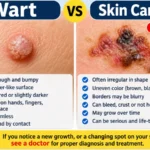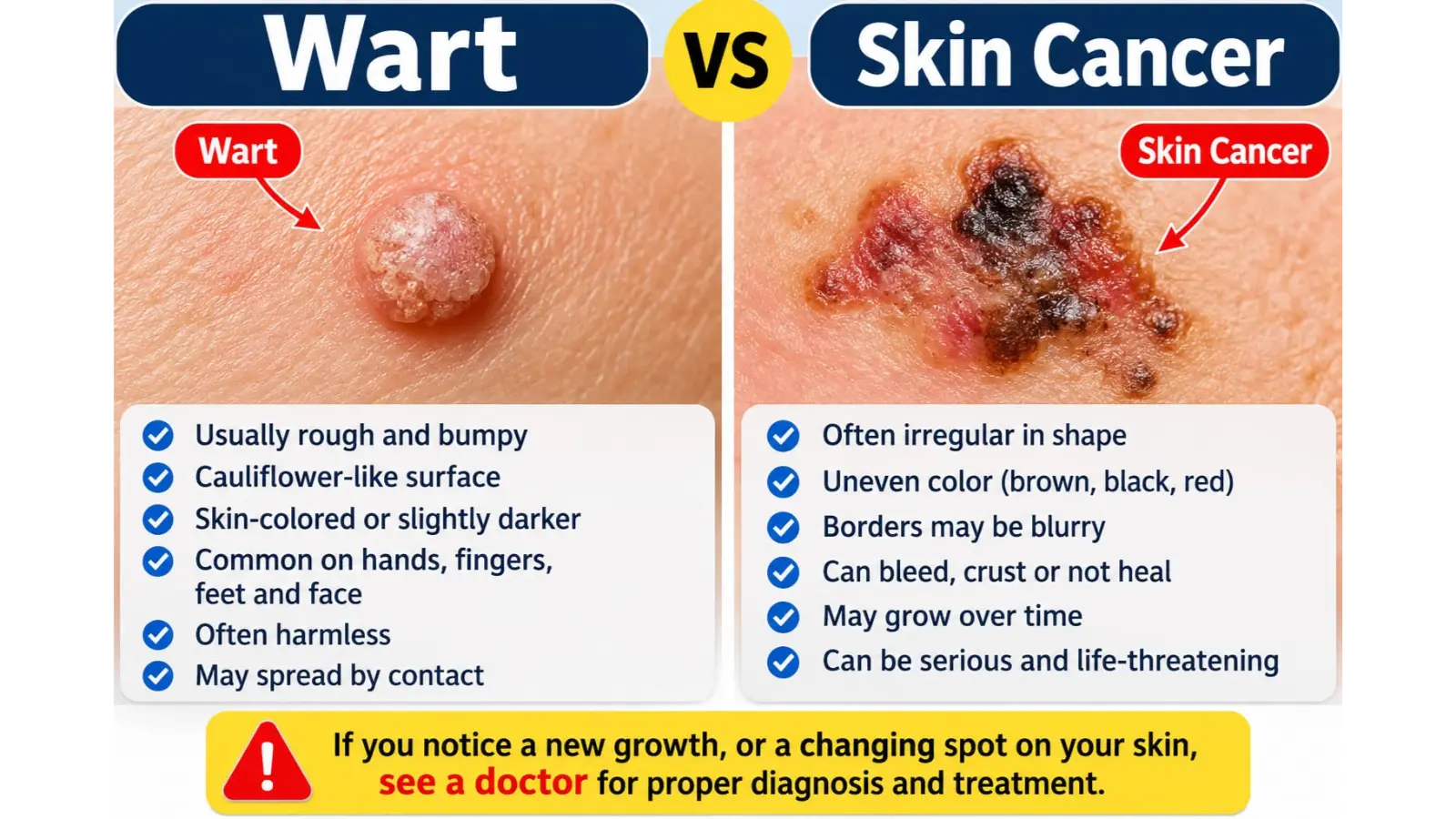
A wart or skin cancer can sometimes look surprisingly similar, especially when a skin growth appears as a raised, rough, or unusual bump. However, these conditions have different causes and may require very different treatments. Understanding their common features can help you recognize when a skin change needs medical attention.
Warts are generally noncancerous growths caused by certain types of human papillomavirus (HPV). Skin cancer, on the other hand, develops when abnormal skin cells grow uncontrollably. Although many warts are harmless, some skin cancers can resemble warts, so appearance alone cannot confirm what a growth is.
What Is a Wart?
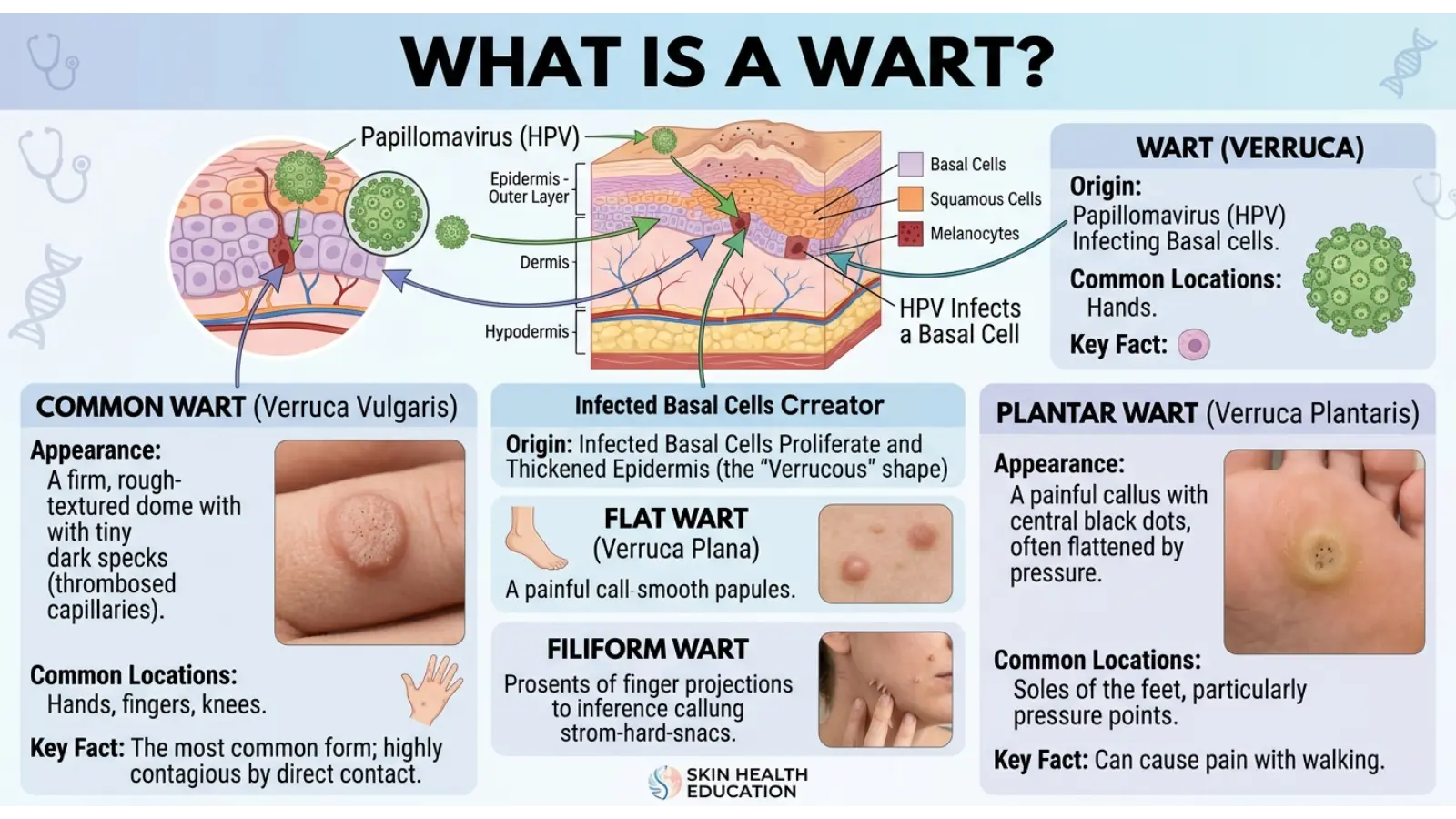
A wart is a common, usually harmless skin growth caused by certain types of HPV. The virus affects the outer layer of the skin and can cause cells to grow into a raised or thickened area.
Warts can develop on different parts of the body, including the hands, fingers, feet, knees, elbows, and face. Their appearance depends on the type of wart and its location.
Common features include:
- A raised, rough, or thickened surface.
- A round or oval shape.
- Skin-colored, pink, brown, gray, or other shades.
- Small black dots that may look like seeds.
- One growth or several growths grouped together.
Some warts do not cause discomfort. Others, particularly those on the soles of the feet, can become painful when walking or applying pressure.
According to the American Academy of Dermatology, warts can have different shapes, textures, and colors. Some skin conditions, including skin cancer, can also resemble warts.
What Is Skin Cancer?
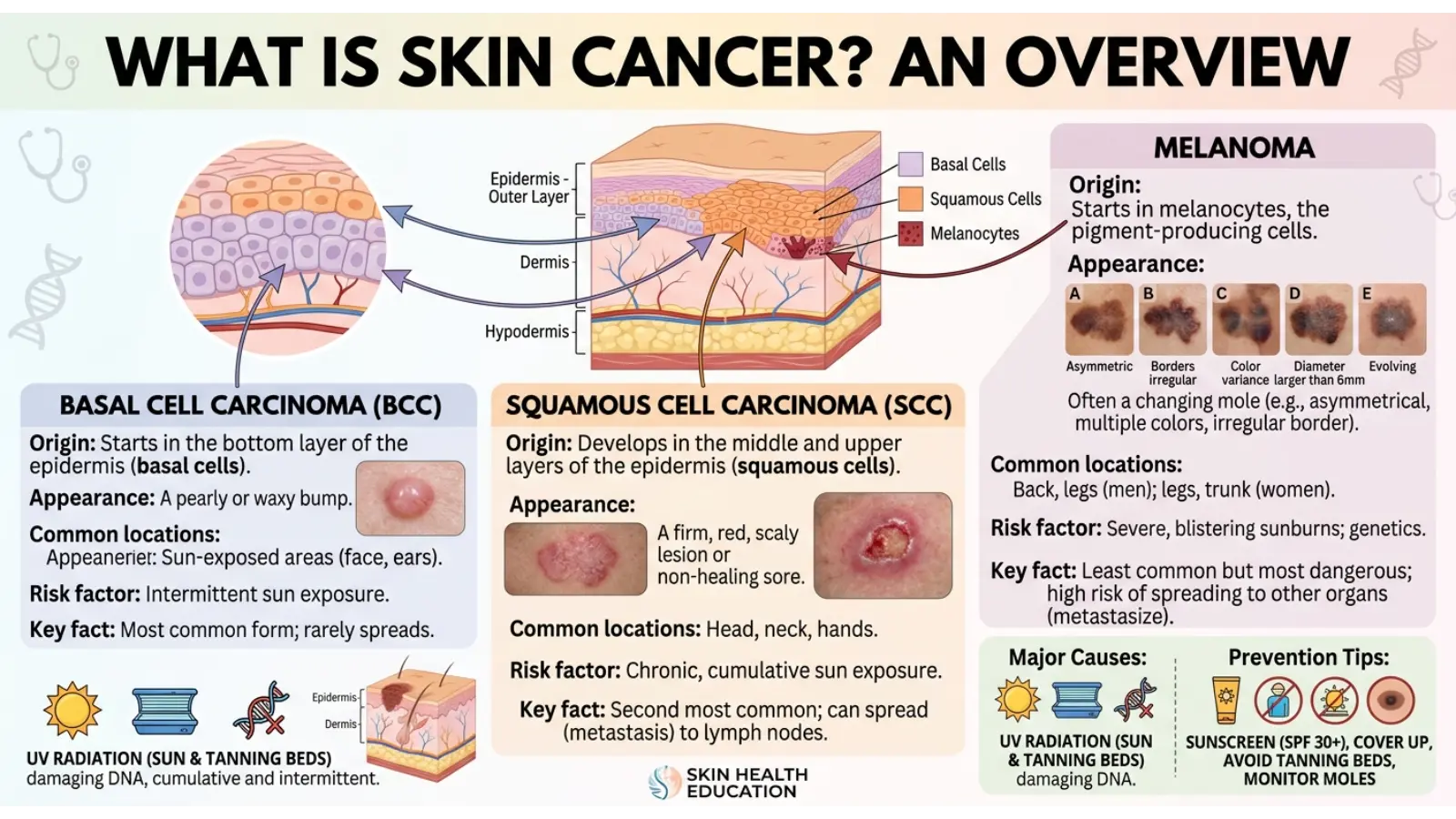
Skin cancer occurs when abnormal cells grow uncontrollably in the skin. It can develop on almost any part of the body, although areas frequently exposed to sunlight are common locations.
The three most common types are:
Basal Cell Carcinoma: This type may appear as a shiny bump, a pink or red patch, or a sore that does not heal.
Squamous Cell Carcinoma: It may look like a firm bump, a rough or scaly patch, or an open sore that bleeds.
Melanoma: This type can develop in an existing mole or appear as a new, unusual spot. Changes in shape, border, color, size, or appearance deserve attention.
Skin cancer does not always look like a dark mole. Some types appear as skin-colored or pink growths that may be mistaken for ordinary skin conditions.
The American Academy of Dermatology explains that a growing, bleeding, or changing skin spot should be evaluated by a dermatologist.
Wart or Skin Cancer: Key Differences
Although warts and skin cancer can sometimes look alike, several general differences may help explain them.
| Feature | Wart | Skin Cancer |
|---|---|---|
| Main cause | Certain types of HPV | Abnormal growth of skin cells |
| Nature | Usually noncancerous | Cancerous |
| Appearance | Often rough or raised | May be shiny, rough, scaly, or irregular |
| Color | Skin-colored or varied shades | Skin-colored, pink, red, brown, or multiple colors |
| Growth | May remain stable or spread | May grow or change over time |
| Bleeding | Can bleed if injured | May bleed without an obvious injury |
| Healing | Some disappear naturally | A suspicious sore may fail to heal |
| Diagnosis | Usually assessed by examination | May require examination and a biopsy |
These are general patterns, not reliable diagnostic rules. A skin cancer can look like a wart, and a wart can change or bleed. Therefore, do not use a comparison chart to diagnose a growth yourself.
How to Recognize Common Wart Symptoms
Warts do not all look the same. Their appearance depends on where they develop and which type of HPV causes them.
Common Warts
Common warts usually appear as firm, raised bumps with a rough surface. They often develop on fingers, hands, and around the nails.
Some have tiny black dots that represent small blood vessels. They may appear individually or in groups.
Plantar Warts
Plantar warts develop on the soles of the feet. They can grow inward because of pressure from standing and walking.
You may notice:
- A thickened area of skin.
- Small black dots.
- Pain when walking or standing.
- A sensation similar to having a small stone inside your shoe.
Flat Warts
Flat warts are usually smaller and smoother than common warts. They may appear in clusters on the face, hands, or legs.
They can be skin-colored, pink, brown, or slightly darker than the surrounding skin.
Filiform Warts
Filiform warts have a narrow, thread-like appearance. They often develop around the mouth, nose, or eyes.
Although these features can help describe common warts, they cannot rule out other skin conditions.
Warning Signs That a Skin Growth May Be Skin Cancer
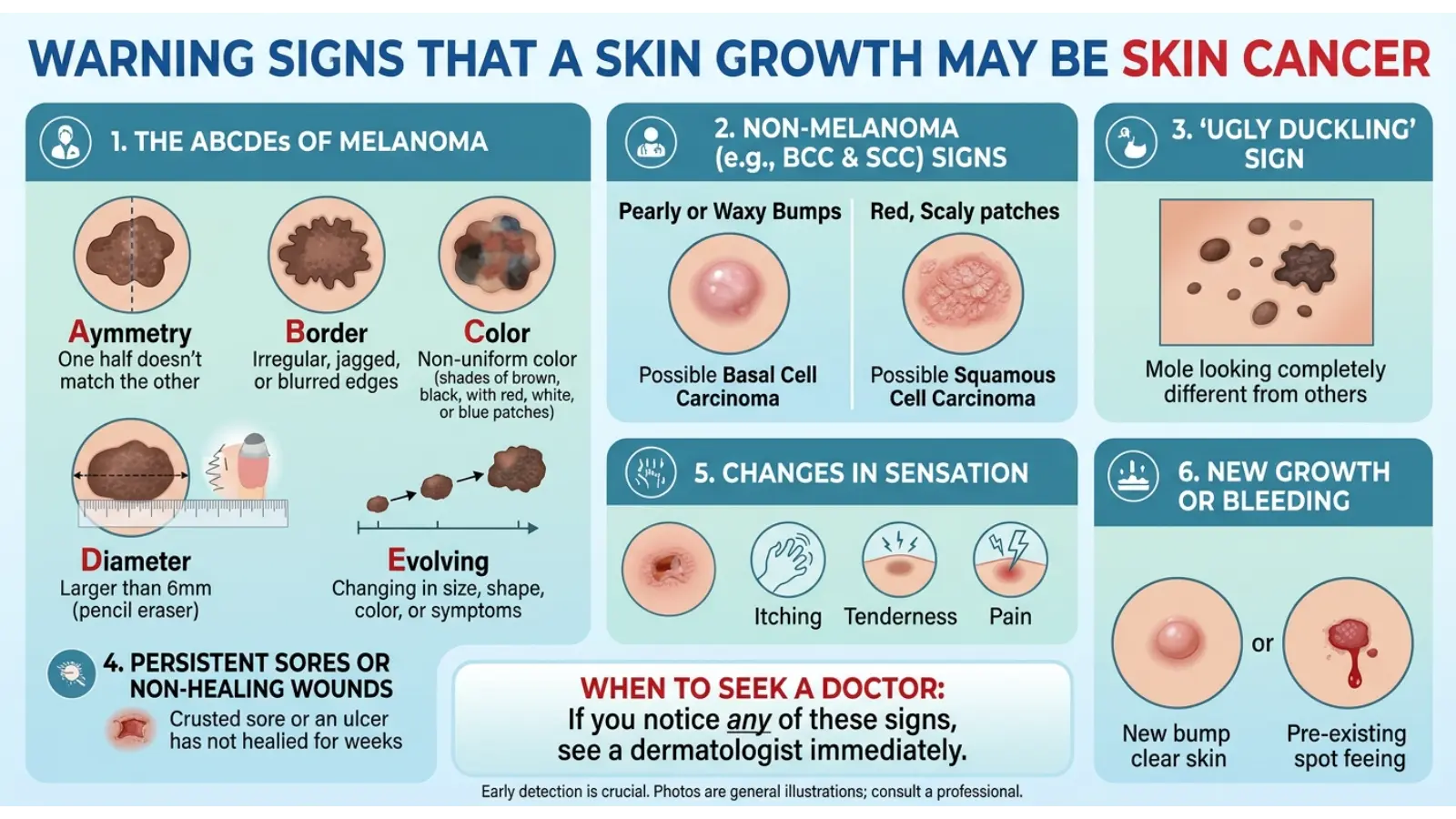
Skin cancer can appear in several different ways. Some warning signs are easy to overlook because the growth may initially look like a minor bump or sore.
Pay attention to the following changes:
A Growing Bump: A spot that gradually becomes larger or changes shape should be checked.
A Sore That Does Not Heal: A sore that remains open, repeatedly heals and returns, or continues to crust may need medical evaluation.
Unexpected Bleeding: A growth that bleeds without being scratched or injured deserves attention.
A Rough or Scaly Patch: Some skin cancers appear as persistent rough, red, pink, or skin-colored patches.
Changes in a Mole: A mole that changes its shape, border, color, size, or overall appearance should be examined.
Remember the ABCDE Rule for Melanoma
The ABCDE rule helps people recognize common warning signs of melanoma.
- A – Asymmetry: One half of the spot looks different from the other half.
- B – Border: The edges look uneven, blurred, or irregular.
- C – Color: The spot has several colors or uneven coloring.
- D – Diameter: The spot may be larger than a pencil eraser, although melanoma can be smaller.
- E – Evolving: The spot changes in size, shape, color, or appearance over time.
Not every melanoma shows all these signs. Any new or changing spot should be discussed with a healthcare professional. The Centers for Disease Control and Prevention also recommends paying attention to skin changes and melanoma warning signs.
Why Can a Wart Look Like Skin Cancer?
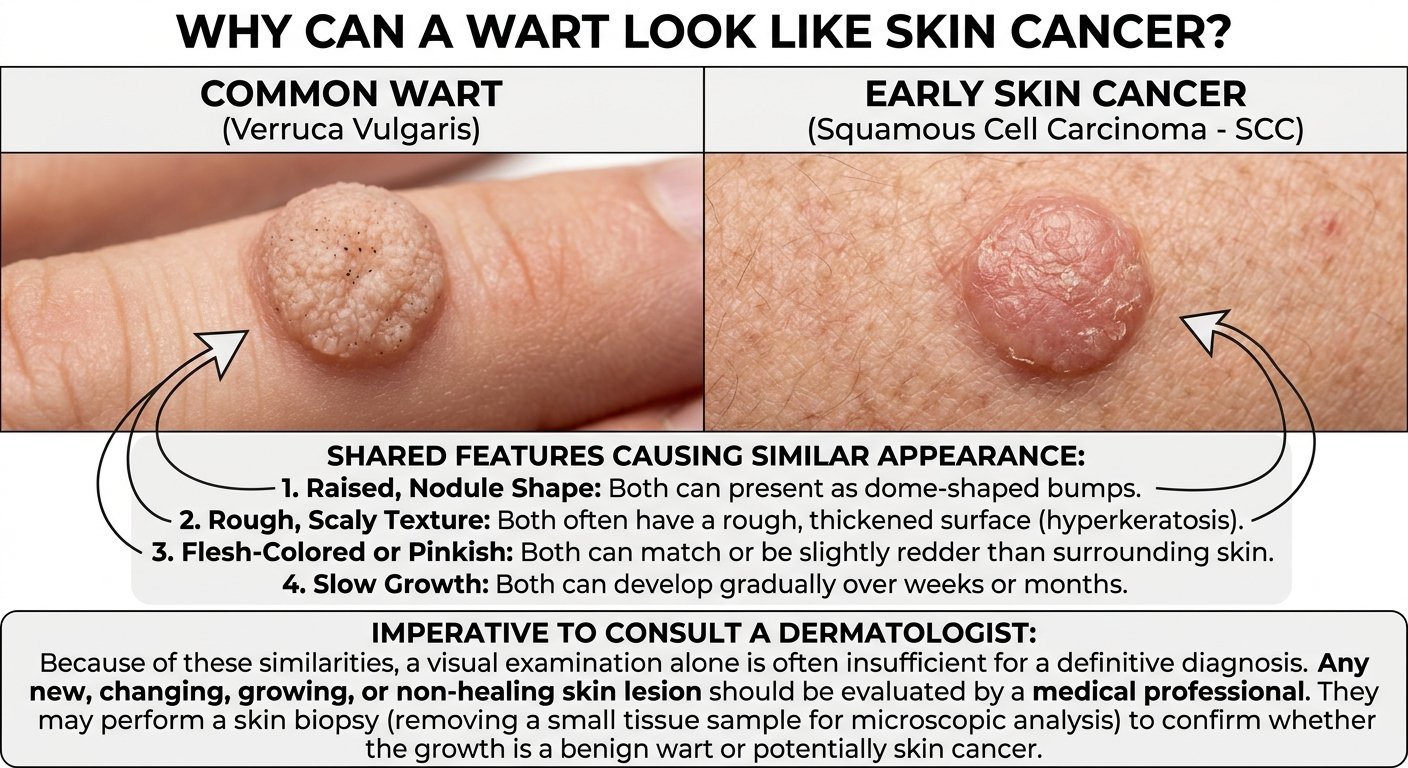
The confusion happens because skin growths do not always have a distinct appearance. Some warts are rough, raised, or discolored, while certain skin cancers can also appear as raised bumps.
For example, squamous cell carcinoma may look like a firm, rough growth. Basal cell carcinoma may appear as a shiny bump or a sore that does not heal.
Additionally, some harmless skin conditions can resemble both warts and skin cancer.
This is why guessing based on appearance can be risky. A dermatologist can examine the growth and decide whether further testing is needed.
How Doctors Diagnose a Wart or Skin Cancer
A healthcare professional usually begins by examining the affected area and asking about its history.
They may want to know:
- When did the growth first appear?
- Has it changed in size, shape, or color?
- Does it itch, hurt, or bleed?
- Have you tried any treatment?
- Have similar growths appeared elsewhere?
Skin Examination
A doctor may examine the growth closely, sometimes using a special magnifying device called a dermatoscope.
This helps the professional assess its surface, color, and structure.
Skin Biopsy
If skin cancer is suspected, a doctor may recommend a skin biopsy. During this procedure, a small sample of tissue is removed and examined under a microscope.
A biopsy can help determine whether the growth is cancerous and, if so, identify its type.
A visual examination alone may not be enough to confirm the diagnosis.
Treatment Options for Warts and Skin Cancer
Treatment depends on the diagnosis, the location of the growth, and the individual’s circumstances.
How Are Warts Treated?
Many warts disappear without treatment, although this can take months or even years.
When treatment is needed, options may include:
Salicylic Acid: This treatment gradually removes layers of wart tissue. It is commonly used for certain warts on the hands and feet.
Cryotherapy: A healthcare professional uses a very cold substance, often liquid nitrogen, to freeze the wart.
Other Medical Treatments: A dermatologist may recommend additional treatments if a wart is persistent or difficult to remove.
Do not use over-the-counter wart treatments on a growth unless you are confident it is a wart and the treatment is appropriate. If you are unsure, seek medical advice first.
How Is Skin Cancer Treated?
Skin cancer treatment depends on the type, size, location, and stage of the cancer.
Possible treatments include:
- Surgical removal.
- Mohs surgery for selected skin cancers.
- Radiation therapy in certain cases.
- Prescription medicines or other specialist treatments.
- Immunotherapy or targeted therapy for some advanced cancers.
A dermatologist or cancer specialist determines the most suitable treatment. Early diagnosis can make treatment easier and improve outcomes.
Common Mistakes When Comparing a Wart and Skin Cancer
People sometimes make assumptions about skin growths that can delay proper medical care.
Mistake: Assuming Every Rough Bump Is a Wart.
A rough surface does not automatically mean a growth is a wart. Some skin cancers can also appear rough or raised.
Mistake: Believing Skin Cancer Always Looks Dark.
Some skin cancers are pink, red, shiny, or similar in color to the surrounding skin.
Mistake: Treating Every Growth at Home.
Using wart-removal products on an unidentified growth may irritate the skin and delay an accurate diagnosis.
Mistake: Ignoring a Changing Growth.
A spot that grows, changes color, bleeds, or fails to heal should not be ignored.
Mistake: Assuming a Painless Growth Is Harmless.
Some skin cancers do not cause pain, especially in their early stages. The absence of discomfort does not rule them out.
When Should You See a Dermatologist?
Arrange a medical evaluation if you notice a new or unusual skin growth, particularly when it changes over time.
It is especially important to seek professional advice if a growth:
- Grows quickly or changes in appearance.
- Bleeds without a clear injury.
- Becomes painful, itchy, or tender.
- Develops an unusual color or irregular shape.
- Forms a sore that does not heal.
- Returns after appearing to heal.
- Does not respond to treatment you expected to work.
Also seek advice before using wart treatments if you are uncertain about the diagnosis. The American Academy of Dermatology recommends seeing a dermatologist when a suspected wart changes, bleeds, causes discomfort, or is difficult to identify. https://www.aad.org/public/diseases/a-z/warts-treatment
Simple Ways to Support Healthy Skin
Although no routine can prevent every skin condition, a few habits can support skin health and help you notice changes earlier.
- Use broad-spectrum sunscreen with SPF 30 or higher when outdoors.
- Wear protective clothing and seek shade when sunlight is strong.
- Avoid indoor tanning.
- Check your skin regularly for new or changing spots.
- Avoid picking or scratching warts.
- Do not share personal items such as towels when you have a wart.
- Seek professional advice about unusual or persistent skin growths.
Regular skin awareness is useful because noticing a change early gives you an opportunity to have it assessed.
Real-Life Examples: Wart or Skin Cancer?
These examples explain why a professional examination matters.
Example 1: A Rough Bump on a Finger
Someone notices a small, rough bump on a finger with tiny black dots. These features can occur with a common wart. However, a healthcare professional should confirm the diagnosis if there is uncertainty.
Example 2: A Shiny Bump on the Face
A person notices a shiny bump that slowly grows and occasionally bleeds. This could have several causes, including basal cell carcinoma, so it needs medical assessment.
Example 3: A Changing Spot on the Arm
A spot on someone’s arm changes its shape and color over several months. Changes like these should be checked by a dermatologist, even if the spot does not hurt.
Example 4: A Growth That Will Not Heal
A small skin growth repeatedly forms a crust and bleeds. Because a persistent, non-healing sore can be a warning sign of skin cancer, it should be examined rather than treated as an ordinary wart.
These examples are educational only. They cannot establish a diagnosis.
Frequently Asked Questions
Can a wart turn into skin cancer?
Ordinary warts are generally benign growths caused by HPV and do not usually turn into skin cancer. However, some skin cancers can look like warts, so an uncertain or changing growth should be examined.
Can skin cancer look like a wart?
Yes. Some skin cancers, particularly certain squamous cell carcinomas, can appear as raised or rough growths. A dermatologist can determine whether a growth is a wart or something more serious.
How can I tell if a bump is a wart or skin cancer?
You cannot always tell by looking. Warts often have a rough surface and may contain tiny black dots, while skin cancer may appear as a growing, bleeding, shiny, scaly, or changing spot. These features overlap, so professional evaluation is important.
Are warts always harmless?
Most ordinary warts are harmless, but they can spread, become uncomfortable, or be mistaken for other skin conditions. A growth that changes, bleeds, or causes concern should be checked.
Does skin cancer always cause pain?
No. Many early skin cancers do not cause pain. A new or changing spot can be important even when it feels completely normal.
Should I use wart remover on a suspicious skin growth?
No. Do not apply wart-removal products to a growth unless a healthcare professional has confirmed that it is a wart or advised that the treatment is appropriate.
Which doctor should I see for an unusual skin growth?
A dermatologist is the appropriate specialist for evaluating unusual skin growths. A primary care doctor can also examine the area and arrange a referral when needed.
Conclusion
Understanding the difference between a wart or skin cancer can help you make better decisions about unusual skin growths. Warts are usually noncancerous growths caused by HPV, while skin cancer develops from abnormal skin cells. However, the two can sometimes look similar, making self-diagnosis unreliable.
Pay attention to growths that change, bleed, become painful, or fail to heal. Rather than assuming that an unusual bump is a wart, have it examined by a qualified healthcare professional. Early evaluation can help identify the cause and ensure that you receive the right care.
Medical Disclaimer: This article is for educational purposes only and does not replace professional medical advice, diagnosis, or treatment. Consult a qualified healthcare professional about any new, changing, or suspicious skin growth.