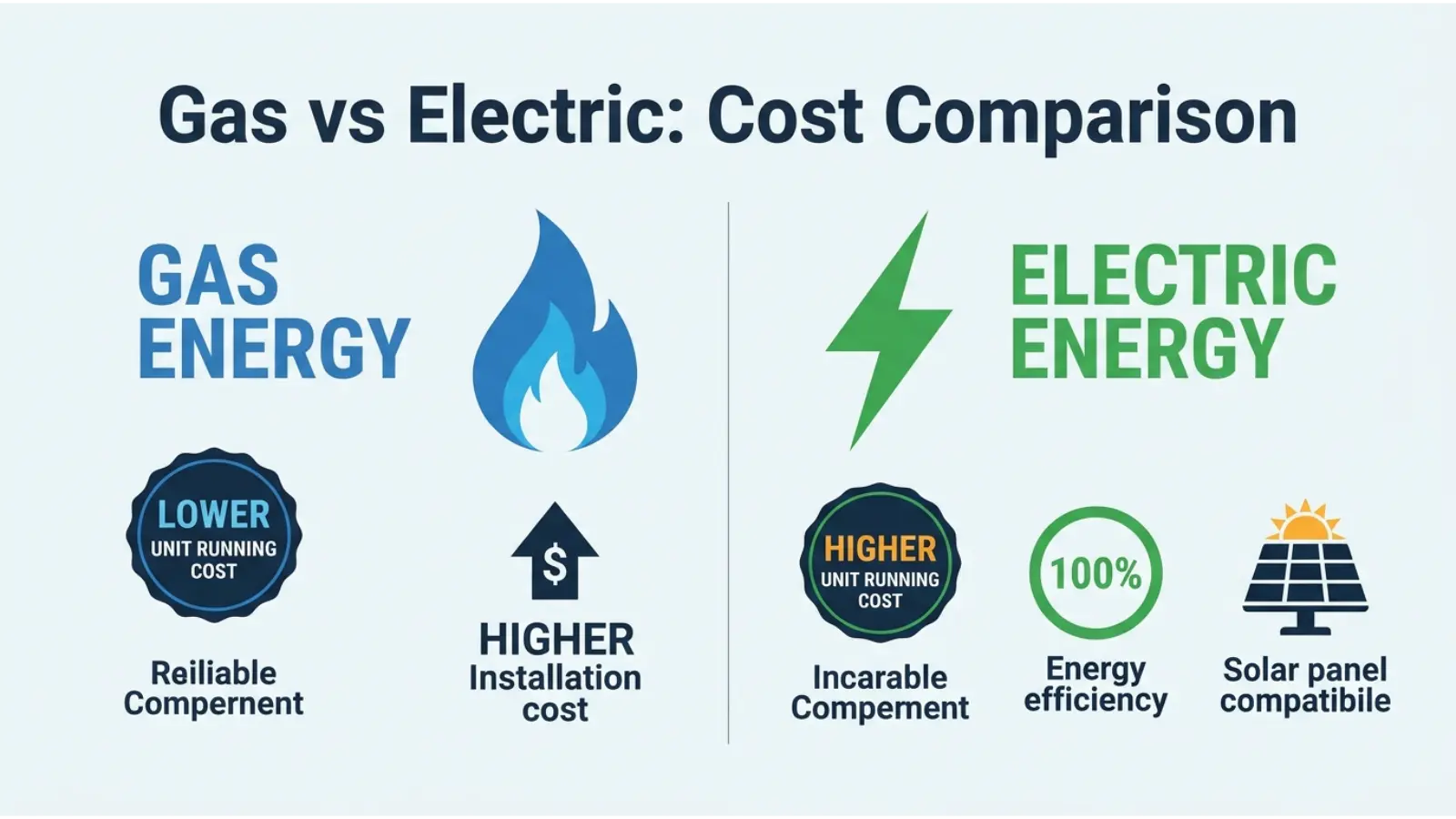
Is Gas or Electric Cheaper is a common question for homeowners looking to reduce their monthly energy expenses. Both gas and electricity can power household appliances, heating systems, and cooking equipment, but their costs vary depending on energy prices, appliance efficiency, and daily usage. Understanding these differences can help you make a smarter financial decision.
In this guide, you will discover how gas and electricity compare in terms of running costs, energy efficiency, monthly bills, and long-term savings. We will also explore the advantages and disadvantages of each option so you can determine which energy source offers better value for your home.
So, is gas or electric cheaper? In many U.S. homes, natural gas costs less to use for traditional heating and cooking appliances. However, modern electric heat pumps can offer excellent savings because they use energy more efficiently. The best choice depends on local utility rates, appliance efficiency, installation expenses, and how much energy your household consumes.
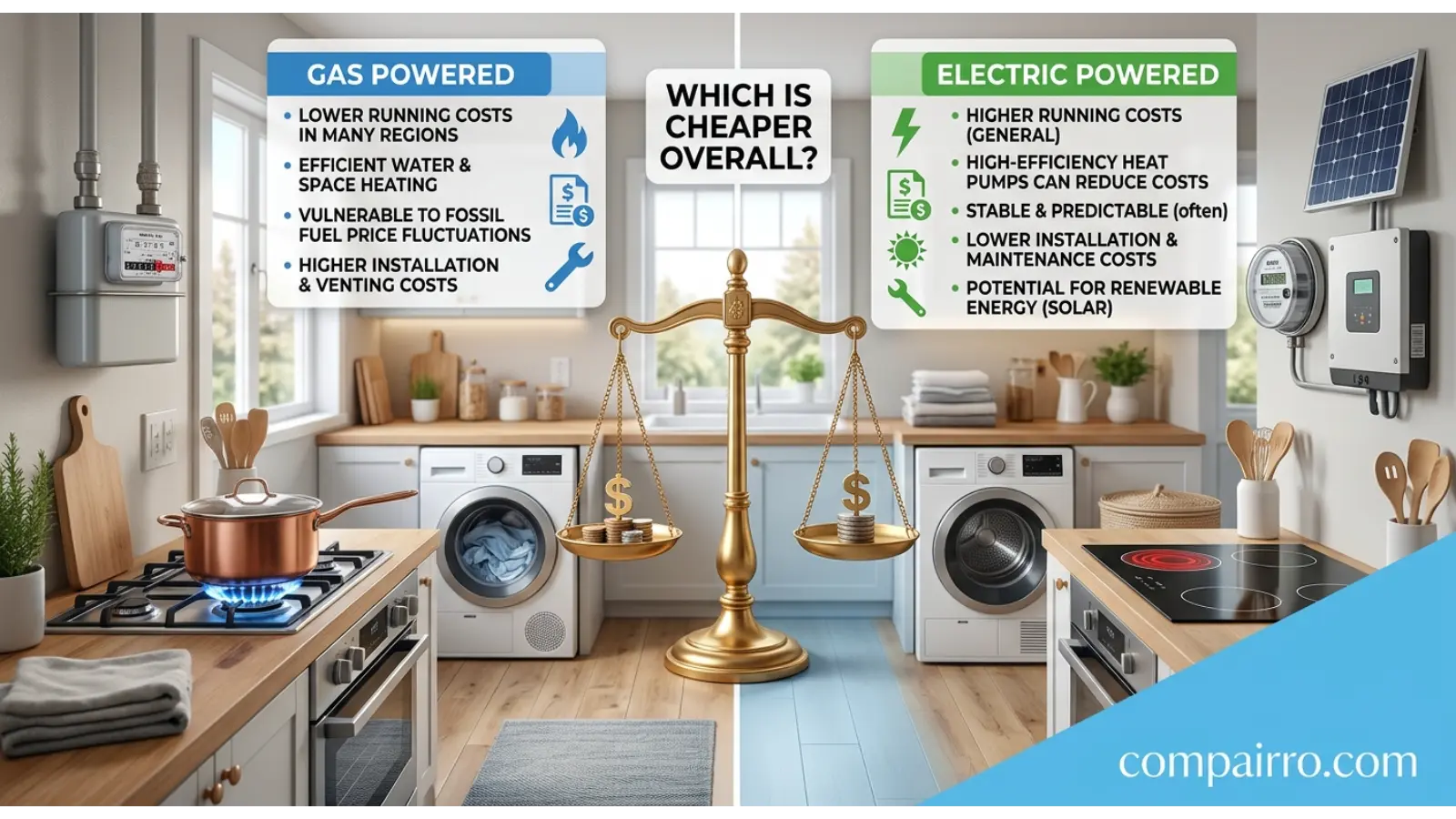
Is Gas or Electric Cheaper Overall?
In general, natural gas is often cheaper than electricity for traditional home heating and some cooking appliances. Gas usually costs less per unit of usable energy, making it an affordable option for households with gas furnaces and water heaters.
Electricity, however, can be more economical when used by highly efficient appliances. For example, an electric heat pump can provide several units of heating for each unit of electricity it consumes.
The overall cost depends on several factors:
- Local natural gas and electricity prices.
- Appliance energy efficiency.
- Household energy consumption.
- Installation and maintenance expenses.
- Climate and seasonal energy demand.
Therefore, comparing energy prices alone does not give you the complete answer. You should also consider how efficiently each appliance converts or uses energy.
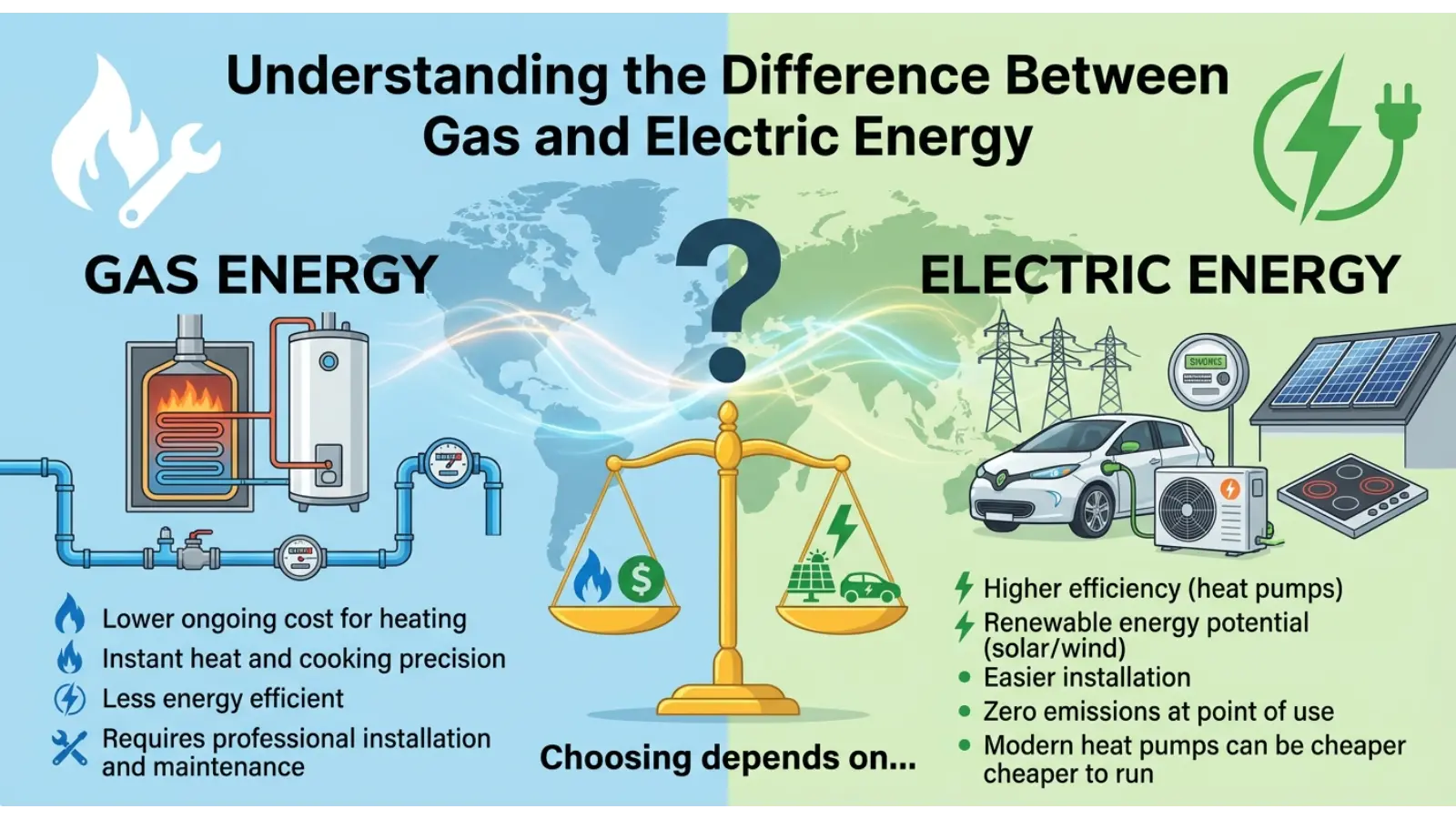
Understanding the Difference Between Gas and Electric Energy
Before comparing costs, it helps to understand how these two energy sources work.
Natural gas is a fossil fuel commonly used for home heating, water heating, cooking, and clothes drying. It is delivered to connected homes through underground pipelines.
Electricity powers appliances through your home’s electrical system. It can come from different sources, including natural gas, nuclear power, wind, solar, and hydropower.
Both options provide reliable energy, but their costs depend on local supply, utility pricing, and appliance technology.
Gas vs. Electric: Which Costs Less to Run?
Running costs are among the most important considerations when choosing an energy source.
Natural gas appliances often have lower operating costs than conventional electric resistance appliances. This is particularly true for furnaces and water heaters in areas where natural gas prices are relatively low.
However, electric heat pumps are different. Instead of generating heat directly, they transfer existing heat from one place to another. This process can make them much more efficient than conventional electric heating.
For example:
- A gas furnace burns natural gas to produce heat.
- An electric resistance heater converts electricity into heat.
- An electric heat pump transfers heat using a refrigeration cycle.
As a result, a heat pump may cost less to operate than either a traditional electric heater or a gas furnace, depending on local rates and outdoor temperatures.
Is Gas or Electric Cheaper for Home Heating?
Home heating can account for a substantial portion of household energy consumption, especially during winter.
A natural gas furnace is often an affordable heating option because natural gas generally has a lower cost per unit of energy than residential electricity. High-efficiency gas furnaces can also convert most of their fuel into usable heat.
Electric heating systems have different operating costs.
Traditional electric furnaces and baseboard heaters can be expensive to run when electricity prices are high. On the other hand, modern electric heat pumps can deliver significantly more heat energy than the electricity they consume.
Which should you choose?
- Choose a gas furnace when local gas prices are favorable and an efficient gas system is already installed.
- Consider a heat pump when electricity rates and local climate make efficient electric heating economical.
- Compare a hybrid system when you want to combine heat pump efficiency with gas heating during very cold weather.
Your home’s insulation, size, climate, and heating requirements also affect the final cost.
Is Gas or Electric Cheaper for Cooking?
Both gas and electric stoves can prepare meals effectively, but their operating costs differ.
Gas stoves use natural gas to create a flame, while electric stoves use electricity to heat cooking elements or a smooth glass surface.
An induction cooktop is another electric option. It uses electromagnetic energy to heat compatible cookware directly, which can make it more efficient than conventional electric resistance cooking.
Here is a simple comparison:
| Feature | Gas Stove | Electric Stove |
|---|---|---|
| Energy source | Natural gas | Electricity |
| Heating method | Open flame | Electric heating element |
| Temperature control | Quick flame adjustment | Depends on model |
| Cleaning | More parts and grates | Usually easier on smooth tops |
| Installation | Requires gas connection | Requires suitable electrical connection |
| Operating cost | Depends on gas rates | Depends on electricity rates |
Gas may be cheaper to operate in some locations, but an induction cooktop can use energy more efficiently. Compare local prices and appliance performance before making a decision.
Is Gas or Electric Cheaper for Water Heating?
Water heating is another major household expense. Gas and electric water heaters both provide hot water, but their efficiency and energy requirements differ.
A conventional gas water heater burns fuel to heat water. A standard electric resistance water heater uses heating elements inside the tank.
A heat pump water heater uses electricity to move heat from the surrounding air into the water. It can use considerably less electricity than a conventional electric resistance model.
Consider these options:
- Gas water heater: Often offers affordable operation where natural gas is inexpensive.
- Standard electric water heater: Can be convenient when gas service is unavailable, although operating costs may be higher.
- Heat pump water heater: Can reduce electricity consumption compared with conventional electric resistance models.
The purchase price also matters. A cheaper unit may not provide the lowest lifetime cost if it consumes more energy every month.
What Do Energy Prices Tell Us?
Energy prices help explain why gas is often cheaper for conventional heating. However, prices vary by state and can change over time.
For a useful U.S. reference, the Department of Energy’s 2026 representative energy-cost figures, based on 2025 estimates, listed:
| Energy source | Representative cost |
|---|---|
| Residential electricity | 17.22 cents per kWh |
| Natural gas | $1.43 per therm |
| Electricity per million Btu | $50.47 |
| Natural gas per million Btu | $14.37 |
These figures show that natural gas had a lower average fuel cost per unit of energy. However, they do not account for the efficiency of the appliance using that energy.
For example, a heat pump can deliver more heat than the electrical energy it consumes. Therefore, comparing the energy prices without considering appliance efficiency can lead to the wrong conclusion.
Your actual utility rates may be different from these national reference figures.
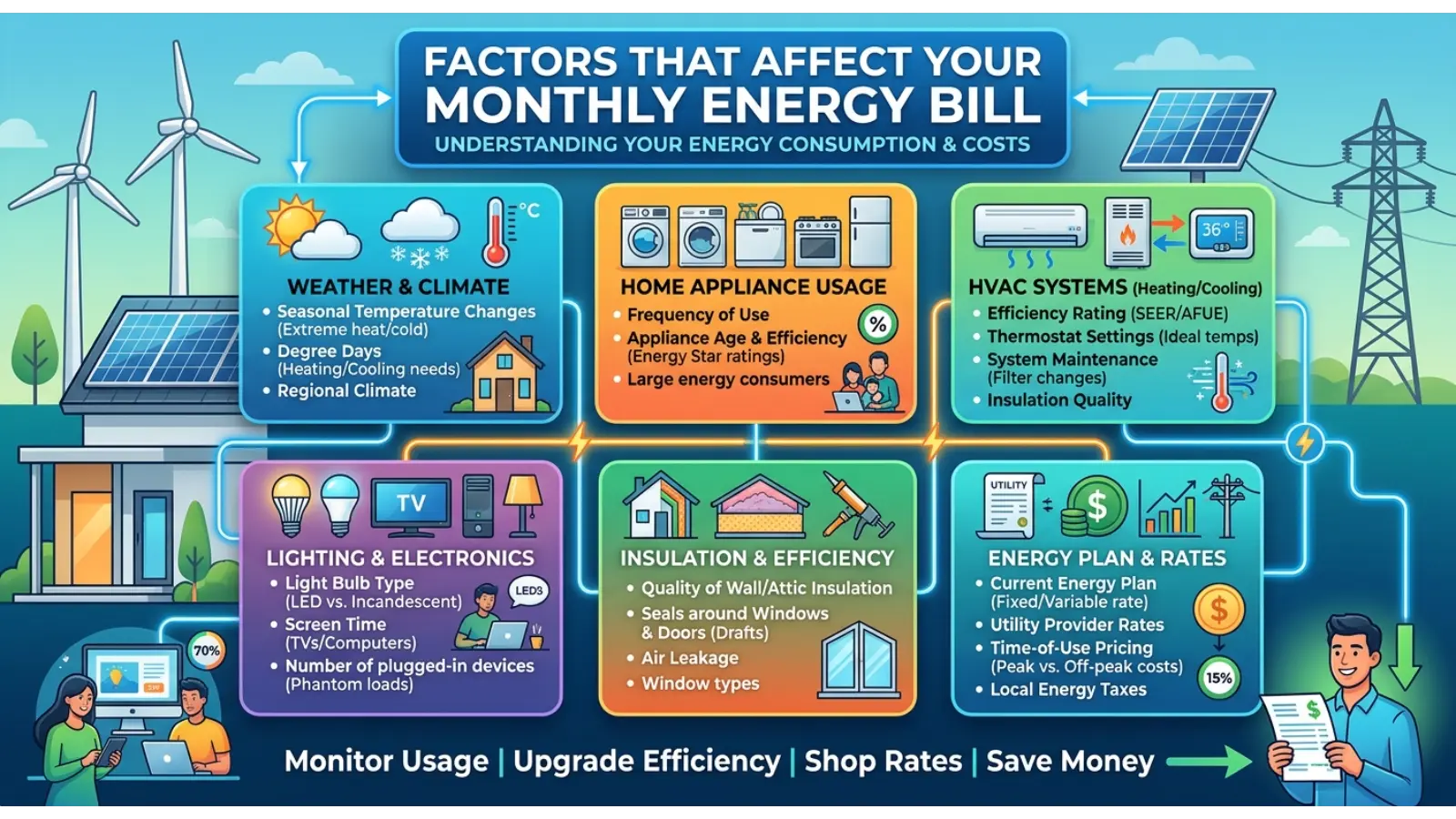
Factors That Affect Your Monthly Energy Bill
Even when two households use the same energy source, their bills can be very different.
Several factors influence how much you pay.
Local Utility Rates
Electricity and natural gas prices vary across the United States. A household in a state with inexpensive electricity may find electric appliances more affordable than a household in an area with higher electricity rates.
Appliance Efficiency
Efficient appliances require less energy to perform the same task. A high-efficiency gas furnace or ENERGY STAR heat pump can help reduce operating expenses.
Household Size
Larger households generally use more hot water, cooking energy, and heating or cooling. As a result, energy consumption can increase with the number of people living in a home.
Weather Conditions
Cold winters can increase heating expenses, while hot summers can raise electricity consumption through air conditioning.
Home Insulation
Poor insulation allows heated or cooled air to escape. Improving insulation, sealing air leaks, and maintaining HVAC equipment can help reduce energy waste.
Common Mistakes When Comparing Gas and Electric Costs
Many homeowners compare gas and electricity without considering the full picture. These mistakes can lead to poor purchasing decisions.
Comparing different energy units: Electricity is commonly measured in kilowatt-hours, while natural gas is measured in therms or cubic feet. These units are not directly interchangeable without conversion.
Ignoring appliance efficiency: A highly efficient heat pump may have lower running costs than a conventional gas heating system, even when electricity is more expensive per unit of energy.
Looking only at the purchase price: An inexpensive appliance may consume more energy over its lifetime. Consider both the initial cost and expected operating expenses.
Forgetting installation costs: Switching from gas to electric may require electrical upgrades. Installing gas equipment may require a gas connection, ventilation, and professional installation.
Assuming national averages apply everywhere: Your local utility rates are more useful than national averages when estimating your personal expenses.
How to Calculate Whether Gas or Electric Is Cheaper
You can make a more accurate comparison by calculating the energy cost for the same amount of useful heat or work.
Start by collecting these details:
- Your electricity price per kilowatt-hour.
- Your natural gas price per therm.
- The efficiency rating of each appliance.
- Your estimated monthly energy consumption.
For heating systems, compare the cost of delivering the same amount of heat rather than comparing fuel prices alone.
For example, a gas furnace with a 95% efficiency rating delivers approximately 95% of its fuel energy as useful heat. A heat pump may deliver two or three times as much heat energy as the electricity it consumes under suitable operating conditions.
You can also use your previous utility bills to estimate seasonal consumption. This provides a more realistic picture than relying on general averages.
Which Is Better for Long-Term Savings?
Long-term savings depend on more than monthly energy prices. You should consider the purchase price, installation, maintenance, energy consumption, and expected lifespan of the appliance.
Gas systems may be a cost-effective choice when a home already has a gas connection and local gas prices are low.
Electric heat pumps may offer attractive long-term savings because one system can provide both heating and cooling. Heat pump water heaters can also reduce energy consumption compared with standard electric water heaters.
Before replacing an appliance, compare its estimated lifetime operating cost with the total installation expense. Also check whether local utilities or government programs offer rebates or incentives for energy-efficient equipment.
Frequently Asked Questions
Is gas always cheaper than electricity?
No. Natural gas is often cheaper for conventional heating, but efficient electric heat pumps and induction cooktops can offer lower operating costs in some locations.
Is electric heating more expensive than gas heating?
Traditional electric resistance heating is often more expensive than gas heating where electricity rates are high. However, heat pumps can be much more efficient and may cost less to operate.
Is a gas stove cheaper to run than an electric stove?
It depends on local gas and electricity prices. Gas stoves may cost less to operate in some areas, while efficient induction cooktops can use less energy than conventional electric stoves.
Which is cheaper for water heating, gas or electric?
Conventional gas water heaters can be affordable where natural gas is inexpensive. However, heat pump water heaters can provide significant electricity savings compared with standard electric resistance models.
Does switching from gas to electric save money?
It can, particularly when replacing older equipment with efficient heat pumps. However, installation expenses, electrical upgrades, local energy prices, and existing equipment all affect potential savings.
Conclusion
So, is gas or electric cheaper? Natural gas is often the less expensive option for conventional home heating and some appliances. However, modern electric technologies, especially heat pumps, can provide excellent efficiency and lower operating costs.
The smartest choice depends on your local utility rates, appliance efficiency, installation expenses, and household energy needs. Compare the total cost of ownership rather than choosing based only on the price of gas or electricity.
By understanding these differences, you can select an energy option that fits your home, budget, and long-term savings goals.