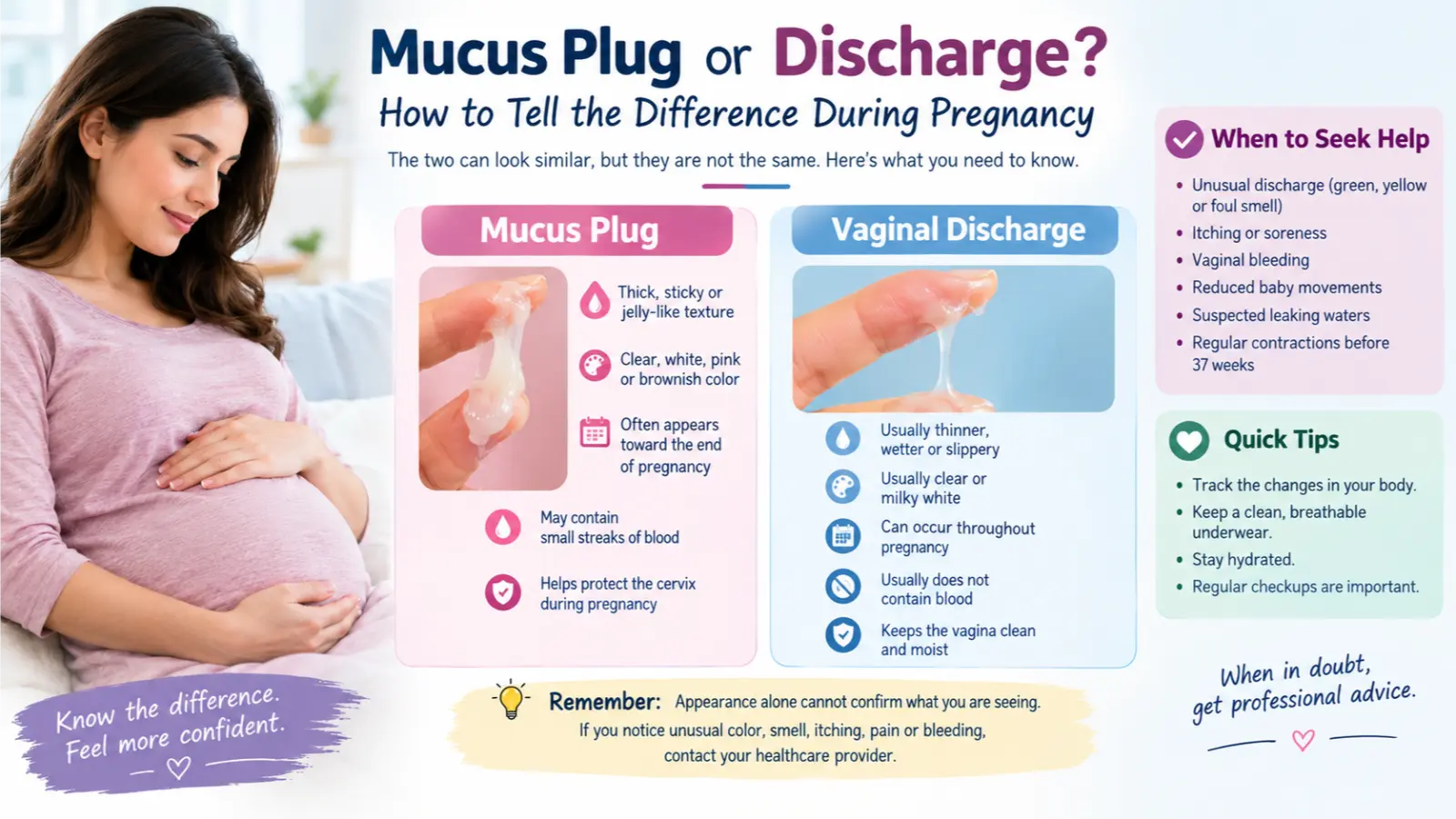
Understanding Mucus Plug or Discharge during pregnancy can be confusing, especially when changes in color, texture, and consistency occur. Vaginal discharge is common throughout pregnancy, while the mucus plug is a thicker collection of mucus that helps protect the cervix from bacteria. Although they may look similar, recognizing their differences can help you better understand the changes happening in your body.
In this guide, you will learn how to distinguish a mucus plug from normal vaginal discharge by comparing their appearance, texture, color, and timing. You can also use our copy button to save helpful information for future reference. Remember that losing the mucus plug does not always mean labor will begin immediately. If you experience heavy bleeding, severe pain, leaking fluid, or signs of preterm labor, contact your healthcare professional promptly.
A mucus plug is usually thicker and more jelly-like than ordinary vaginal discharge. However, appearance alone cannot confirm what the fluid is. This guide explains the differences, common signs, examples, and warning symptoms in simple English.
What Is a Mucus Plug?
A mucus plug is a collection of thick mucus that forms in the cervix during pregnancy. It helps protect the uterus by acting as a barrier against germs.
As the cervix softens and begins to open near labor, the mucus plug may come out. It can appear as one thick piece or several smaller pieces. Its color may be clear, white, pink, or slightly brown, and it may contain small streaks of blood.
Losing the mucus plug does not necessarily mean labor will begin immediately. It may happen hours or days before labor, and sometimes earlier. If you think you have lost it before 37 weeks of pregnancy, contact your healthcare provider promptly.

What Is Vaginal Discharge During Pregnancy?
Vaginal discharge is fluid or mucus that helps keep the vagina clean and protected. It is normal to experience more discharge during pregnancy because of hormonal changes and increased blood flow to the vaginal area.
Healthy pregnancy discharge is generally thin, clear, or milky white and does not have a strong, unpleasant smell. Its amount and texture may change throughout pregnancy.
However, discharge that smells unpleasant, becomes green or yellow, or causes itching or soreness may indicate an infection and should be assessed by a healthcare professional.
Mucus Plug vs. Discharge: Key Differences
Although these two substances can look similar, there are some differences to consider.
| Feature | Mucus Plug | Normal Vaginal Discharge |
|---|---|---|
| Texture | Thick, sticky, or jelly-like | Usually thinner, wetter, or slippery |
| Color | Clear, white, pink, or brownish | Usually clear or milky white |
| Appearance | May look like a thick blob or stringy mucus | Often appears as fluid or a thin coating |
| Timing | Often noticed toward the end of pregnancy | Can occur throughout pregnancy |
| Blood | May contain small streaks of blood | Usually does not contain blood |
| Main role | Helps protect the cervix during pregnancy | Keeps the vagina clean and moist |
| Meaning | May indicate cervical changes before labor | Usually a normal pregnancy change |
These are general differences, not a diagnostic test. The mucus plug can come away gradually and mix with ordinary discharge, making it difficult to distinguish between them.
How Can You Recognize a Mucus Plug?
The mucus plug often has a thicker consistency than everyday discharge. You might notice a sticky, stretchy, or jelly-like substance on your underwear or toilet paper.
It may be clear or off-white, or it may have pink or brown streaks. Some people notice one larger piece, while others notice small amounts over several hours or days.
You may lose the mucus plug without experiencing contractions. Therefore, do not assume that labor has started just because you see thick mucus.

When Is Vaginal Discharge Normal?
Increased vaginal discharge is common during pregnancy. It is generally reassuring when the discharge is clear or milky white, has no strong unpleasant smell, and does not cause irritation.
The amount may increase as your pregnancy progresses. Near your due date, ordinary discharge may mix with mucus from the cervix, making it thicker or slightly pink.
Nevertheless, contact your midwife or doctor if your discharge changes significantly, smells unpleasant, causes itching or soreness, or becomes green or yellow.
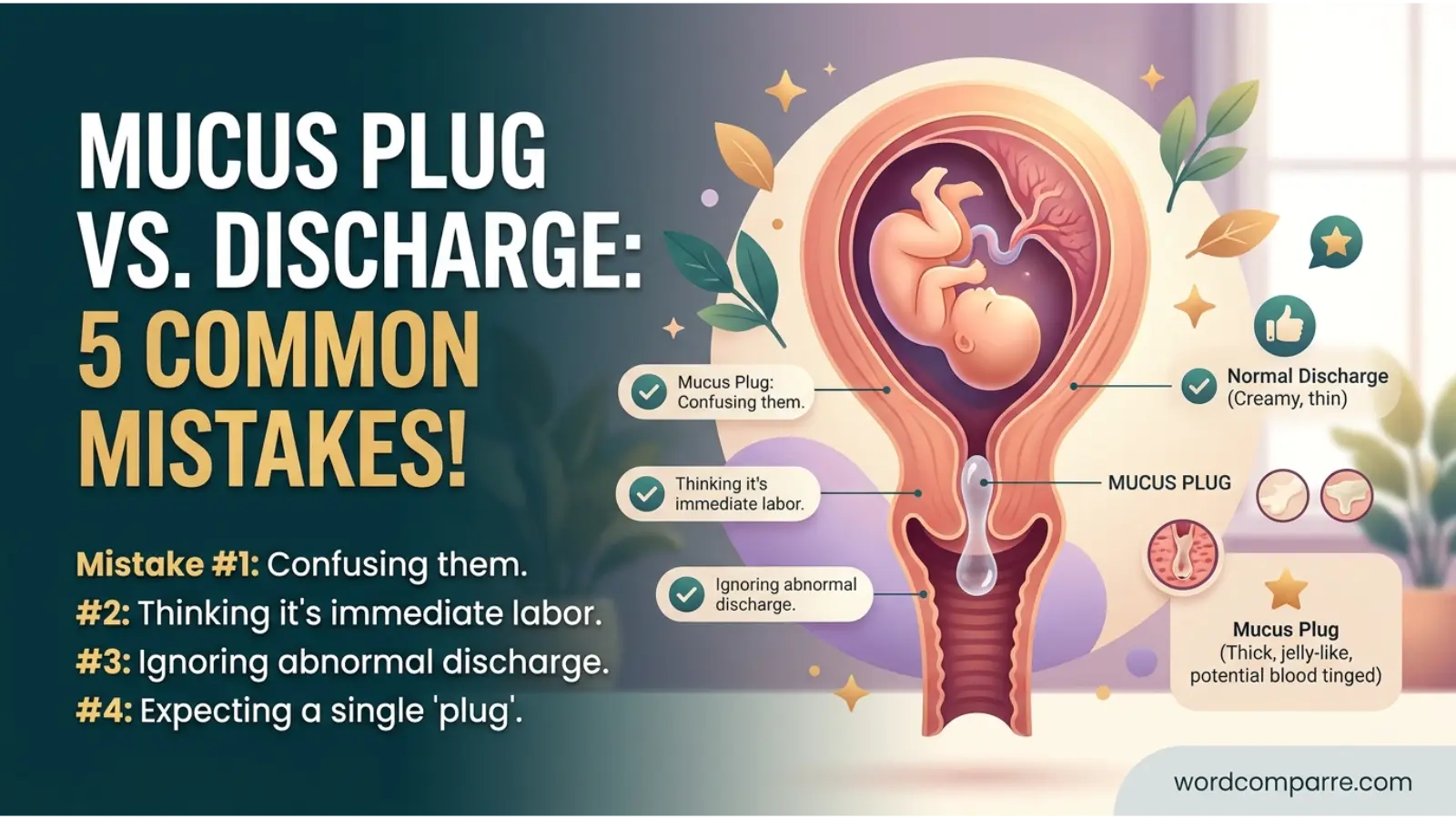
Common Mistakes About Mucus Plug and Discharge
Several misconceptions can cause unnecessary worry or delay medical care.
- Mistake 1: Assuming every thick discharge is the mucus plug. Normal cervical mucus and vaginal discharge can also be thick or sticky.
- Mistake 2: Believing labor always starts immediately after losing the mucus plug. Labor may begin hours or days later, and the timing varies.
- Mistake 3: Assuming blood-streaked mucus is always harmless. A small amount of blood can accompany a mucus plug, but bleeding during pregnancy should be discussed with a healthcare professional.
- Mistake 4: Confusing a mucus plug with leaking amniotic fluid. Amniotic fluid may leak as a continuous trickle or sudden gush. Contact your maternity team immediately if you suspect your waters have broken.
- Mistake 5: Ignoring symptoms because the discharge looks normal. Pain, fever, unusual odor, or other concerning symptoms deserve medical attention.
What Should You Do If You Lose Your Mucus Plug?
Your next step depends on how far along you are in pregnancy and whether you have other symptoms.
If you are at least 37 weeks pregnant and notice mucus without other warning signs, contact your maternity provider for advice based on your individual pregnancy and birth plan.
If you are fewer than 37 weeks pregnant and suspect you have lost your mucus plug, contact your healthcare provider promptly because it could be associated with early labor.
Seek urgent maternity assessment if you experience vaginal bleeding, reduced baby movements, regular contractions before 37 weeks, or a gush or ongoing trickle of fluid that could mean your waters have broken. Heavy bleeding or severe pain requires emergency assessment.
Real-Life Examples
Example 1: Normal discharge
A pregnant person notices thin, milky-white fluid without an unpleasant smell or irritation. This may be normal pregnancy discharge, although a healthcare professional should assess any unusual or worrying changes.
Example 2: Possible mucus plug
A person near their due date notices a thick, jelly-like substance with a small pink streak. This may be the mucus plug or a show, but appearance alone cannot confirm it.
Example 3: Possible leaking waters
A person notices repeated watery fluid that keeps wetting their underwear. This could be amniotic fluid rather than ordinary discharge. They should contact their maternity team immediately.
Example 4: Possible infection
A pregnant person notices yellow discharge accompanied by itching and an unpleasant smell. These symptoms may indicate an infection and should be assessed by a healthcare professional.
Frequently Asked Questions
1. How do I know if it is my mucus plug or discharge?
A mucus plug is often thicker, more jelly-like, and sometimes streaked with pink or brown blood. Normal discharge is generally thinner and clear or milky white. However, these signs overlap, so appearance alone cannot confirm the cause.
2. Can you lose your mucus plug without knowing it?
Yes. The mucus plug may come away gradually in small amounts and mix with regular vaginal discharge, so you might not notice it.
3. How long after losing the mucus plug does labor start?
There is no exact timeline. Labor may begin within hours or days, or the mucus plug may come away before other signs of labor become noticeable.
4. Is a mucus plug always bloody?
No. It can be clear or white without any blood. Small pink, red, or brown streaks may also occur.
5. Should I call my doctor if I think I lost my mucus plug?
Contact your healthcare provider if you are unsure, especially if you are under 37 weeks pregnant. Seek urgent assessment for bleeding, suspected leaking waters, reduced baby movements, or other warning signs.
Conclusion
Understanding the difference between a mucus plug and discharge can help you recognize common pregnancy changes. Normal discharge is generally thin and clear or milky white, while the mucus plug is often thicker, sticky, and jelly-like. However, the two can look similar, so you cannot always identify them by appearance alone.
Pay attention to how far along you are in pregnancy and whether you have other symptoms. If you notice bleeding, unusual discharge, suspected leaking waters, or signs of early labor, contact your healthcare provider promptly. When in doubt, getting professional advice is the safest choice.