Fav or fave is a common comparison people search for because both versions appear everywhere on social media, in text messages, product reviews, and everyday conversations. If you’ve wondered which one is correct, the answer is that both are correct, but they are used a little differently. One is a shortened abbreviation, while the other is an informal word that has become popular in modern English. Understanding when to use each can make your writing look more natural and appropriate for the situation. This guide explains the meaning, origin, dictionary treatment, and real-life usage of both forms so you can confidently choose the right one every time.
Quick Answer
Both fav and fave are correct.
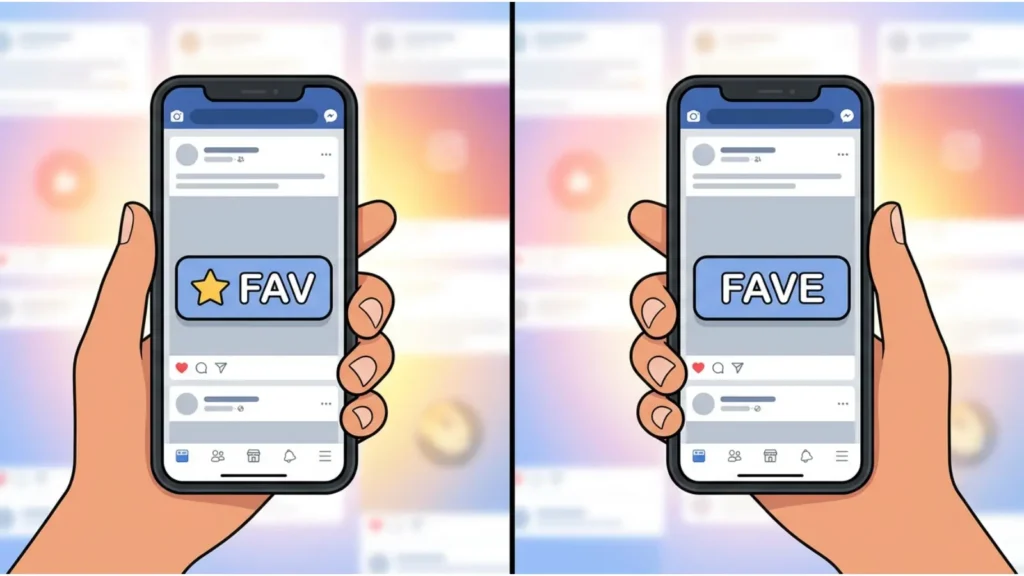
- Fav is a shortened abbreviation of favorite and is most common in texting, apps, menus, and social media.
- Fave is an informal noun or adjective meaning favorite and is widely used in everyday conversation, blogs, entertainment writing, and lifestyle content.
- In formal writing, use favorite instead of either shortened form.
What Does “Fav” Mean?
Fav is an abbreviation for favorite. It saves space and is especially common where short text is preferred.
Examples:
- That’s my fav song.
- Tap the heart to fav this post.
- My fav restaurant just opened a new location.
People frequently use fav on platforms like TikTok, Instagram, YouTube, and messaging apps because it is quick and easy to type.
What Does “Fave” Mean?
Fave is an informal English word meaning favorite. Unlike fav, it is often treated as a complete word rather than just an abbreviation.
Examples:
- Pizza is my fave food.
- She’s one of my fave authors.
- That was my fave episode of the season.
Although informal, fave sounds slightly more conversational than fav.
Fav vs Fave Comparison
| Feature | Fav | Fave |
|---|---|---|
| Meaning | Favorite | Favorite |
| Type | Abbreviation | Informal word |
| Dictionary status | Common abbreviation | Recognized informal word |
| Common in texting | Yes | Yes |
| Common in conversation | Sometimes | Very common |
| Professional writing | Avoid | Avoid |
| Social media | Extremely common | Very common |
| Best choice for formal documents | Neither | Neither |
Where Did Fav and Fave Come From?
Both words come from favorite.
Fav developed as a written abbreviation, especially with the growth of online messaging and mobile apps where shorter text became popular.
Fave appeared as a spoken and written informal shortening. Over time, it became widely accepted in magazines, entertainment journalism, blogs, and everyday conversation.
Today, both spellings are understood by English speakers around the world.
Why Do People Confuse Fav and Fave?
The confusion exists because both forms represent the same word and often appear in similar situations.
People also see different spellings depending on:
- Social media platforms
- Text messages
- Blog articles
- Online stores
- Entertainment websites
- Personal writing style
Since both mean favorite, many people assume one must be wrong. In reality, they simply serve slightly different purposes.
What Do Dictionaries Recommend?
Modern dictionaries recognize fave as an informal version of favorite.
Fav is generally treated as an abbreviation rather than a separate dictionary word, although it is extremely common in digital communication.
For academic papers, business emails, resumes, and professional reports, dictionaries and style guides recommend writing the complete word favorite.
Real-Life Examples
Using Fav
- This is my fav movie.
- Add your fav playlist.
- Tell me your fav dessert.
- My fav creator uploaded today.
Using Fave
- Summer is my fave season.
- She’s my fave singer.
- That café has my fave coffee.
- This became my new fave book.
Using Favorite in Professional Writing
- My favorite research article explains the topic clearly.
- This is our customers’ favorite product.
- Her favorite subject is biology.
Common Mistakes
Using shortened forms in formal writing
❌ The candidate is my fave.
✅ The candidate is my favorite.
Mixing styles in one document
❌ My favorite movie is exciting, and it’s also my fav.
✅ My favorite movie is exciting.
or
✅ It’s my fav movie.
Assuming one spelling is incorrect
Both fav and fave are acceptable in informal English.
Easy Memory Trick
Think of the extra e in fave as making it feel more like the full word favorite.
Fav = quickest shortcut.
Fave = casual everyday word.
Favorite = professional choice.
Which Should You Use in Professional Writing?
For work, school, academic writing, business communication, and official documents, always write favorite.
Choose fav when:
- Sending text messages
- Posting on social media
- Writing short captions
- Saving space
Choose fave when:
- Writing casually
- Talking with friends
- Creating lifestyle or entertainment content
- Using conversational English
Frequently Asked Questions
Is fav a real word?
It is a widely accepted abbreviation for favorite, especially in digital communication.
Is fave a real word?
Yes. Fave is an established informal word meaning favorite.
Which is more common online?
Fav is slightly more common on social media because it is shorter.
Which sounds more natural in conversation?
Many native English speakers naturally say and write fave in casual conversation.
Can I use either spelling?
Yes. Both are correct in informal situations. For formal writing, use favorite.
Is fave American or British English?
Fave appears in both American and British English as an informal word, although favorite (US) and favourite (UK) remain the standard formal spellings.
Conclusion
The comparison between fav and fave is not about right versus wrong because both are acceptable in informal English. Fav works best as a quick abbreviation for texting, apps, and social media, while fave reads more like a complete informal word used in everyday conversation and casual writing. Whenever you’re writing professionally or academically, the safest and clearest choice is the full word favorite. By understanding the difference, you can choose the version that matches your audience and writing style with confidence.

Alex Wordsmith is a comparison research writer and content specialist at WordComparre.com. He focuses on analyzing word meanings, spelling variations, grammar distinctions, and language usage to help readers make informed writing choices. Through clear explanations and practical examples, Alex simplifies complex language topics for students, writers, and professionals. His goal is to make English learning easier, more accurate, and accessible for everyone.