If you’ve searched for upsell or upsale, you’re probably wondering which spelling is correct and whether both words mean the same thing. This confusion is common because both terms appear online, especially in sales, marketing, and ecommerce content. However, they are not equally accepted in modern English.
In this guide, you’ll learn the real difference between upsell and upsale, why people mix them up, what dictionaries recommend, and which spelling you should use in professional writing. By the end, you’ll know exactly which word fits your sentence with confidence.
Quick Answer
Upsell is the correct and widely accepted spelling.
Upsale is generally considered a misspelling or a less common variation. In professional writing, marketing, ecommerce, customer service, and business communication, upsell is the preferred choice.
What Does “Upsell” Mean?
Upsell is both a verb and a noun.
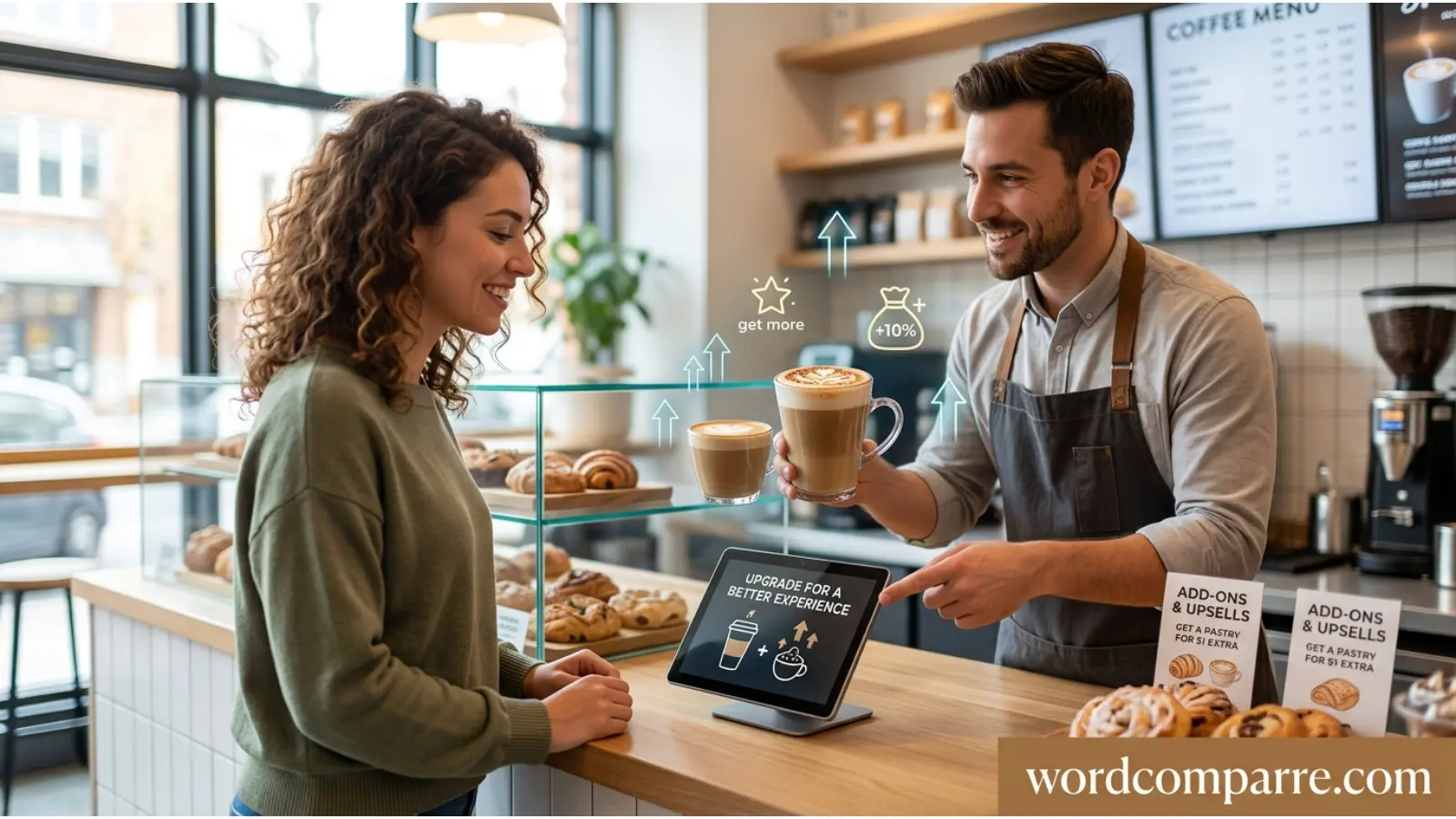
As a verb, it means persuading a customer to buy a more expensive version of a product or service or to add extra features.
Examples:
- The salesperson tried to upsell the premium package.
- We trained our staff to upsell extended warranties.
As a noun, it refers to the act or result of selling a higher-value product.
Examples:
- The checkout page includes an effective upsell.
- Their latest marketing campaign generated several successful upsells.
What Does “Upsale” Mean?
Upsale occasionally appears on websites, in blog posts, and in user-generated content. However, it is not the standard English spelling recognized by major dictionaries.
In most cases, people use upsale when they actually mean upsell.
Although readers may understand the intended meaning, using upsale can make professional writing appear less polished.
Upsell vs Upsale Comparison
| Feature | Upsell | Upsale |
|---|---|---|
| Standard English spelling | ✅ Yes | ❌ No |
| Recognized by dictionaries | ✅ Yes | Rarely |
| Common in ecommerce | ✅ Yes | Occasionally |
| Used in business writing | ✅ Yes | Not recommended |
| Preferred for SEO and marketing | ✅ Yes | No |
| Professional choice | ✅ Yes | No |
Where Did “Upsell” Come From?
The word upsell developed from the sales industry.
It combines:
- Up, meaning moving to a higher level or better option.
- Sell, meaning to persuade someone to buy.
The term became popular as businesses looked for ways to increase the value of each customer purchase by recommending premium products, upgrades, or additional services.
Today, upsell is one of the most common terms in ecommerce, retail, SaaS, hospitality, banking, and customer support.

Why Do People Write “Upsale”?
Several reasons explain the confusion.
People naturally associate the word with sale, since upselling happens during a sale.
Many assume that:
- sale → upsale
instead of the correct formation:
- sell → upsell
The similarity in pronunciation also causes spelling mistakes, especially among non-native English speakers.
What Do Dictionaries Recommend?
Major English dictionaries and language references recognize upsell as the standard word.
Business style guides, ecommerce platforms, marketing publications, and professional editors also consistently use upsell.
You will rarely find upsale listed as the preferred spelling in authoritative language resources.
Real-Life Examples
Correct:
- Our website uses AI to upsell premium subscriptions.
- The cashier successfully upsold the deluxe package.
- Adding product recommendations can increase upsell opportunities.
- Many ecommerce stores use upsell strategies to boost revenue.
- The customer accepted the upsell after comparing the features.
Less Preferred:
- Our website includes an upsale option.
- The company created an upsale campaign.
Although understandable, replacing upsale with upsell makes these sentences more accurate and professional.
Common Mistakes
Many writers accidentally write:
- Upsale instead of upsell
- Up sale as two separate words
- Up-sell with an unnecessary hyphen in normal writing
- Using upsell only as a verb while forgetting it also works as a noun
Using the standard spelling improves clarity and credibility.
Easy Memory Trick
Remember this simple rule:
You sell something, so you upsell something.
Think about the verb sell, not the noun sale.
If you remember the action is selling, you’ll naturally choose upsell.
Professional Writing Recommendation
For business documents, ecommerce websites, marketing content, sales training, customer support materials, blog posts, and academic writing, always use upsell.
Using the accepted spelling demonstrates strong language skills and aligns with modern business terminology.
Reserve upsale only when directly quoting a source that uses that spelling or discussing the spelling difference itself.
Frequently Asked Questions
Is upsale a real word?
It occasionally appears online, but it is not the standard spelling recommended for professional English.
Which is correct, upsell or upsale?
Upsell is the correct and widely accepted spelling.
Can upsell be both a noun and a verb?
Yes. It functions as both a noun and a verb.
Why do people confuse upsell and upsale?
Because the words sell and sale are closely related, and many people assume the spelling should follow the noun sale.
Which spelling should businesses use?
Businesses should consistently use upsell in websites, marketing campaigns, product pages, emails, and customer communications.
Is upsell acceptable in formal writing?
Yes. It is widely accepted in business English, marketing, and professional publications.
Conclusion
When comparing upsell or upsale, the answer is straightforward. Upsell is the correct, dictionary-supported, and professionally accepted spelling. It accurately describes encouraging customers to purchase a higher-value product or service and is the form used across marketing, ecommerce, sales, and business communication.
While upsale may appear in informal writing or as a spelling mistake, it is not the recommended choice. If you want your writing to look professional, trustworthy, and consistent with modern English usage, always choose upsell.

Alex Wordsmith is a comparison research writer and content specialist at WordComparre.com. He focuses on analyzing word meanings, spelling variations, grammar distinctions, and language usage to help readers make informed writing choices. Through clear explanations and practical examples, Alex simplifies complex language topics for students, writers, and professionals. His goal is to make English learning easier, more accurate, and accessible for everyone.