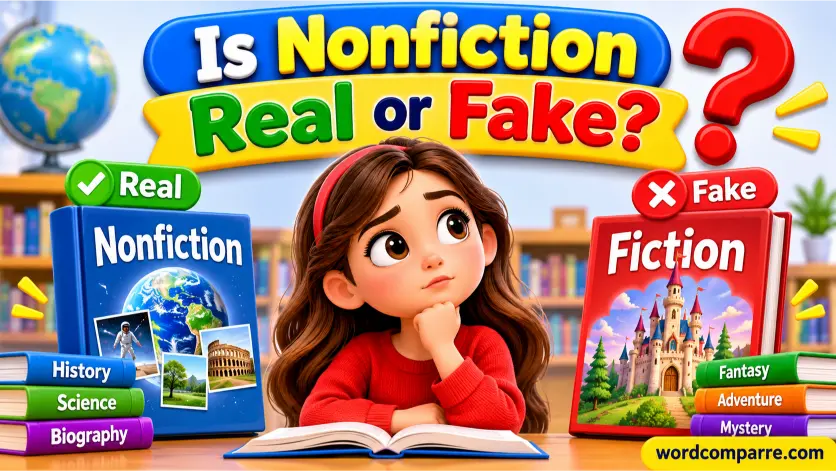
Is nonfiction real or fake? If you have ever picked up a nonfiction book or watched a documentary, you may have wondered whether everything presented in it actually happened. The simple answer is that nonfiction is based on real people, actual events, and factual information. Unlike fiction, which comes from imagination, nonfiction aims to explain things that exist or have happened in the real world.
Nonfiction Real or Fake is a common question among readers who want to understand the difference between factual information and imaginary stories. Nonfiction refers to books, articles, and stories based on real people, actual events, and factual information. However, does nonfiction always represent the truth, or can it contain inaccurate details? Understanding whether nonfiction is real or fake helps readers recognize factual writing and distinguish it from fiction.
What Does Nonfiction Mean?
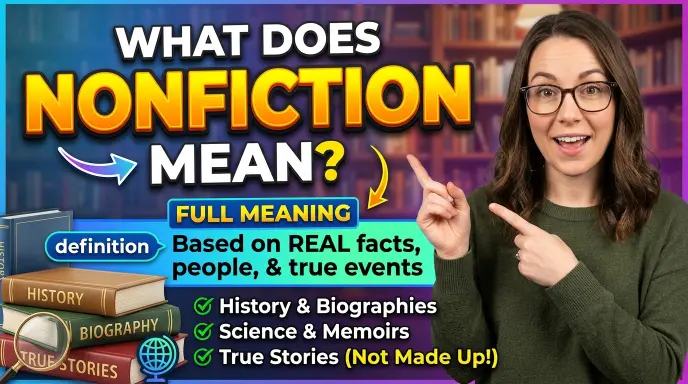
Nonfiction refers to writing, books, films, and other forms of content that present information about real people, places, events, and experiences.
Writers create nonfiction to inform, educate, explain, or describe something based on reality. For example, a biography about a famous scientist tells readers about an actual person’s life. Similarly, a history book explains events that happened in the past.
Common examples of nonfiction include:
- Biographies about real people.
- Autobiographies written by individuals about their own lives.
- History books describing actual historical events.
- Scientific books explaining facts and discoveries.
- Documentaries about real-world subjects.
- News reports covering current events.
- Educational books teaching practical information.
In simple terms, nonfiction aims to present reality rather than invent an imaginary world.
Is Nonfiction Real or Fake?
Nonfiction is generally real, not fake. It focuses on information, experiences, and events that exist or have happened in the real world.
For example, a nonfiction book about the life of Albert Einstein discusses a real historical person. Likewise, a documentary about the moon landing explores an actual historical event.
However, nonfiction does not automatically mean that every statement is correct. Authors can make mistakes, misunderstand information, or include personal opinions. Some writers may also present events from a particular perspective.
Therefore, readers should evaluate the evidence and credibility of nonfiction sources instead of assuming that every published detail is accurate.
Nonfiction vs. Fiction: What Is the Difference?
The main difference between nonfiction and fiction is the relationship between the content and reality.
| Nonfiction | Fiction |
|---|---|
| Based on real events or information. | Created mainly from imagination. |
| Focuses on facts and reality. | Focuses on invented characters or events. |
| Often teaches or informs readers. | Often entertains readers through storytelling. |
| Includes biographies and textbooks. | Includes fantasy and imaginary novels. |
| Aims for factual accuracy. | Does not need to describe real events. |
For example, a biography about a real president is nonfiction. On the other hand, a fantasy novel about an imaginary king and a magical kingdom is fiction.
Both types of writing can tell interesting stories, but they serve different purposes.
Can Nonfiction Contain Fake or Made-Up Information?
Yes, nonfiction can sometimes contain inaccurate or misleading information. However, invented information presented as fact does not become reliable nonfiction simply because an author labels a book nonfiction.
Here are some reasons why nonfiction may contain questionable information:
1. Human Errors
Authors and researchers sometimes misunderstand facts, dates, names, or historical details.
2. Personal Opinions
Some nonfiction writers include their own interpretations. Although opinions can help readers understand an issue, they are not always objective facts.
3. Dramatized Events
Documentaries and historical films may recreate real events using actors or reconstructed scenes. These scenes help explain what happened, but they are not necessarily original recordings.
4. Unreliable Sources
An author may use outdated research or information from sources that lack credibility. Consequently, some claims may be inaccurate.
5. Misleading Information
In rare cases, an author may intentionally present false information as truth. This can damage the credibility of the entire work.
For these reasons, checking reliable sources is important when reading nonfiction.
Different Types of Nonfiction
Nonfiction comes in several forms. Each type presents real-world information in a different way.
1. Biography
A biography tells the life story of another real person. It may describe childhood, education, achievements, challenges, and important experiences.
2. Autobiography
An autobiography is written by a person about their own life. It usually includes personal memories, experiences, and important life events.
3. Historical Nonfiction
Historical nonfiction explores actual events from the past. It may discuss wars, civilizations, political changes, and important historical figures.
4. Scientific Nonfiction
Scientific nonfiction explains subjects such as biology, chemistry, astronomy, and technology using research and factual information.
5. Documentary
A documentary presents real-world subjects through interviews, recordings, photographs, research, and other forms of evidence.
6. Creative Nonfiction
Creative nonfiction combines factual information with storytelling techniques. Writers may use descriptive language, dialogue, and scenes to make real experiences more engaging while maintaining factual accuracy.
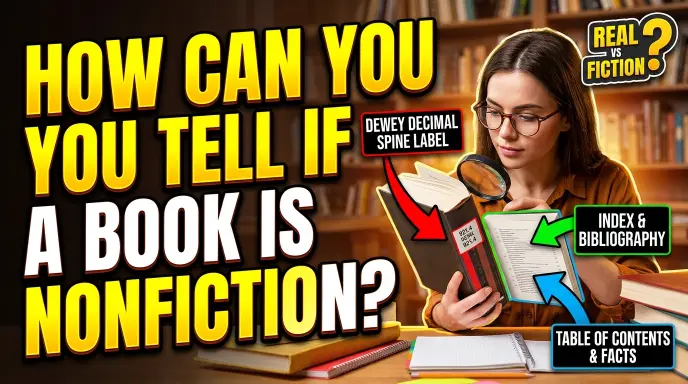
How Can You Tell Whether a Book Is Nonfiction?
If you are unsure whether a book contains real information or an invented story, consider these helpful clues:
- Check the subject: Nonfiction usually discusses real people, places, events, or subjects.
- Look for sources: Reliable nonfiction often includes references, notes, or a bibliography.
- Read the author’s introduction: Writers frequently explain their research methods and purpose.
- Check the publisher: Established educational and academic publishers often follow editorial and fact-checking standards.
- Compare information: Verify important claims using other trustworthy sources.
Remember that a nonfiction label alone does not guarantee accuracy. Research and evidence matter more than the category printed on a book cover.
Common Misunderstandings About Nonfiction
Readers sometimes misunderstand nonfiction because they confuse factual writing with storytelling.
Here are some common mistakes:
Mistake 1: Thinking nonfiction means every sentence is proven.
Correction: Nonfiction aims to present factual information, but individual claims may still contain errors or uncertainty.
Mistake 2: Assuming nonfiction cannot be entertaining.
Correction: Nonfiction can include humor, suspense, personal experiences, and engaging storytelling.
Mistake 3: Believing documentaries always show original footage.
Correction: Some documentaries use reenactments, animations, and reconstructed scenes to explain real events.
Mistake 4: Thinking fiction is always completely imaginary.
Correction: Fictional stories can include real places, historical events, and realistic situations.
Mistake 5: Assuming all nonfiction books are unbiased.
Correction: Authors may have personal viewpoints or select information that supports their arguments.
Examples of Nonfiction and Fiction in Sentences
Understanding nonfiction becomes easier when you see how people use the word in everyday situations.
- My teacher recommended a nonfiction book about world history.
- She enjoys reading nonfiction because she learns about real people.
- This documentary is nonfiction because it explores an actual historical event.
- I prefer fiction because I enjoy imaginary adventures.
- His nonfiction autobiography describes his childhood experiences.
- The library has separate sections for fiction and nonfiction.
- We watched a nonfiction film about ocean life.
- Her favorite nonfiction books explain science in simple language.
These examples show that nonfiction usually describes factual or reality-based content.
Nonfiction in Professional and Everyday Writing
The word nonfiction appears in education, publishing, journalism, libraries, and professional communication.
For example, teachers use nonfiction books to help students understand science, history, and other academic subjects. Similarly, publishers classify books as fiction or nonfiction to help readers find the content they want.
In professional writing, nonfiction includes research reports, biographies, educational materials, business books, and informative articles.
The term also appears in everyday conversations when people discuss their reading preferences.
Real-Life Conversations About Nonfiction
Here are two simple conversations that show how people use the word naturally.
Conversation 1:
A: Is this book about a real person?
B: Yes, it is a nonfiction biography.
A: So, the events actually happened?
B: Yes, although you should check the author’s sources for historical accuracy.
Conversation 2:
A: Do you prefer fiction or nonfiction?
B: I prefer nonfiction because I enjoy learning real facts.
A: What kind of nonfiction do you read?
B: Mostly history books, biographies, and science articles.
Easy Memory Trick: How to Remember Nonfiction
You can remember the meaning of nonfiction by breaking the word into two parts:
- Non: Means not.
- Fiction: Refers to imaginary or invented stories.
Therefore, nonfiction means content that is not primarily based on invented stories.
A simple way to remember the difference is:
- Nonfiction = Facts and Reality
- Fiction = Imagination and Invented Stories
This trick makes it easier to identify the difference whenever you choose a book, watch a film, or read an article.
Frequently Asked Questions (FAQs)
1. Is nonfiction based on a true story?
Yes. Nonfiction is generally based on real people, actual events, and factual information. However, some works may include opinions, interpretations, or reconstructed scenes.
2. Does nonfiction mean 100% true?
No. Nonfiction aims to present factual information, but it can contain mistakes, outdated research, or misleading claims. Readers should check important information against reliable sources.
3. Is a biography fiction or nonfiction?
A biography is nonfiction because it describes the life of a real person. However, its accuracy depends on the quality of the research and sources.
4. Can nonfiction include imaginary characters?
Nonfiction generally focuses on real people and events. However, creative nonfiction may use storytelling techniques, and fictionalized characters or invented events should not be presented as documented facts.
5. Are documentaries nonfiction?
Yes, documentaries generally fall into the nonfiction category because they explore real-world subjects. However, some use reenactments, animations, or dramatized scenes.
6. Is fiction always fake?
Fiction is invented storytelling, but it can include real locations, historical settings, and situations inspired by actual experiences. It does not mean every detail is necessarily false.
7. Why do people read nonfiction books?
People read nonfiction to learn about history, science, real experiences, famous people, personal development, and practical subjects. These books can provide knowledge and a better understanding of the world.
Conclusion
So, is nonfiction real or fake? Nonfiction is generally real because it focuses on actual people, events, experiences, and factual information. Unlike fiction, it does not primarily depend on imaginary characters or invented situations.
However, nonfiction does not guarantee that every statement is completely accurate. Authors can make mistakes, include personal opinions, or use dramatized scenes. Therefore, readers should examine evidence and choose trustworthy sources.
The easiest way to remember the difference is that nonfiction focuses on reality, while fiction focuses on imagination. Understanding this distinction will help you choose books, recognize different types of writing, and become a more informed reader.