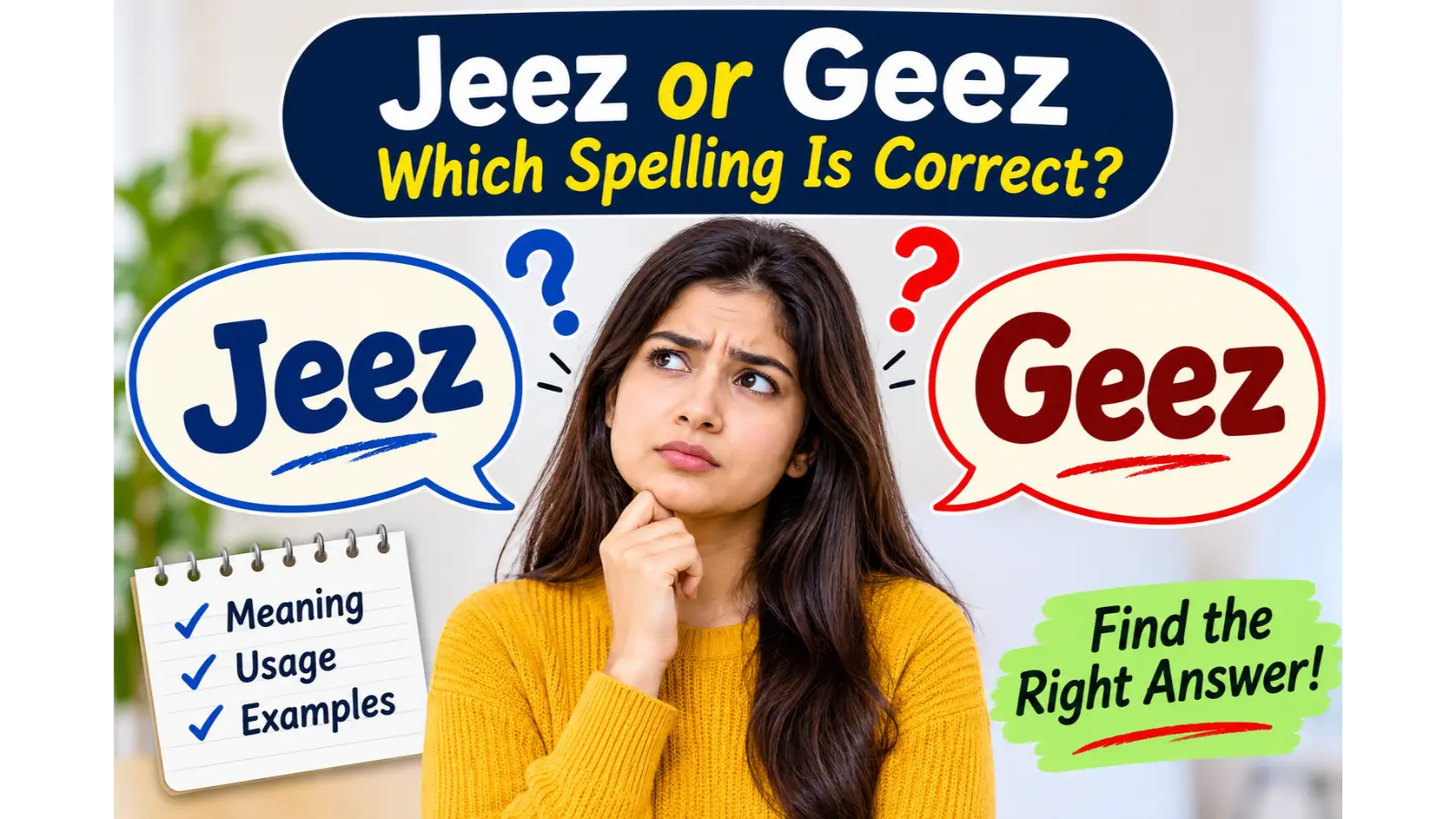
When deciding between Jeez or Geez, many English speakers wonder which spelling is correct. Both expressions appear in everyday conversations, text messages, social media posts, and informal writing. However, their similar pronunciation and meanings can make it difficult to understand whether they are interchangeable.
The good news is that both Jeez and Geez are accepted informal spellings. They express emotions such as surprise, frustration, annoyance, disbelief, and disappointment. Although their meanings are nearly identical, writers may prefer one spelling over the other depending on their habits and audience.
This guide explains the difference between Jeez and Geez, including their meanings, origins, dictionary recognition, pronunciation, common mistakes, and practical examples. By the end, you will understand how to use both expressions correctly.
Quick Answer: Jeez or Geez?
Both Jeez and Geez are correct informal expressions. Neither spelling is universally wrong.
- Jeez: A common interjection used to express surprise, frustration, annoyance, or disbelief.
- Geez: An alternative spelling with essentially the same meaning and pronunciation.
For everyday English writing, Jeez is a familiar choice. However, Geez is also acceptable in informal communication.
Remember: The main difference between Jeez and Geez is their spelling, not their meaning.
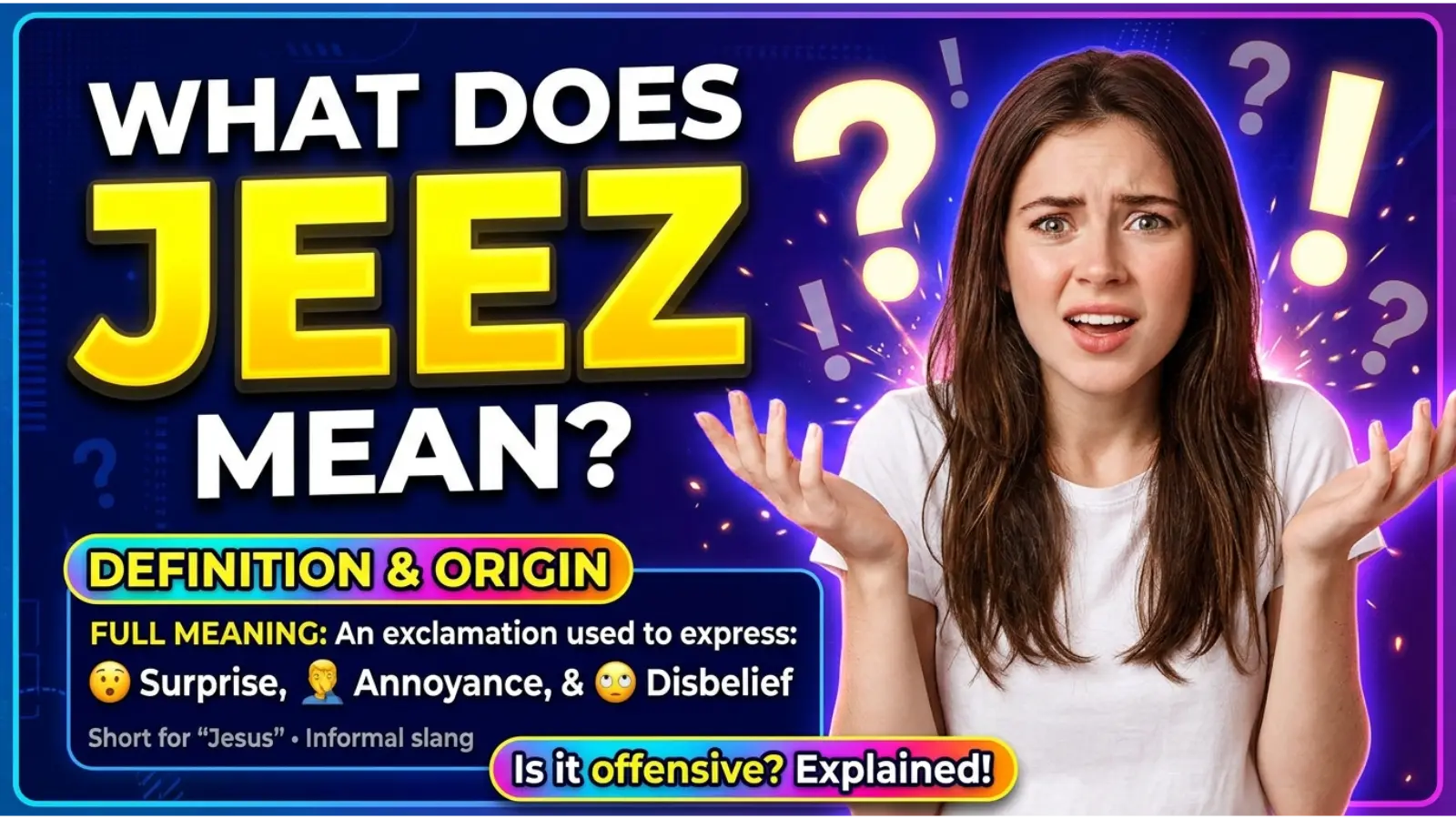
What Does Jeez Mean?
Jeez is an informal interjection that expresses a strong reaction to something. People commonly use it when they feel surprised, annoyed, frustrated, or disappointed.
The expression often appears at the beginning or end of a sentence. Its exact meaning depends on the situation and the speaker’s tone.
For example:
- Jeez, that was an expensive meal!
- Jeez, why are you making so much noise?
- I can’t believe we missed the train. Jeez!
- Jeez, you really scared me!
- Oh, jeez, I forgot my keys again.
In these examples, Jeez communicates an emotional reaction without requiring a long explanation.
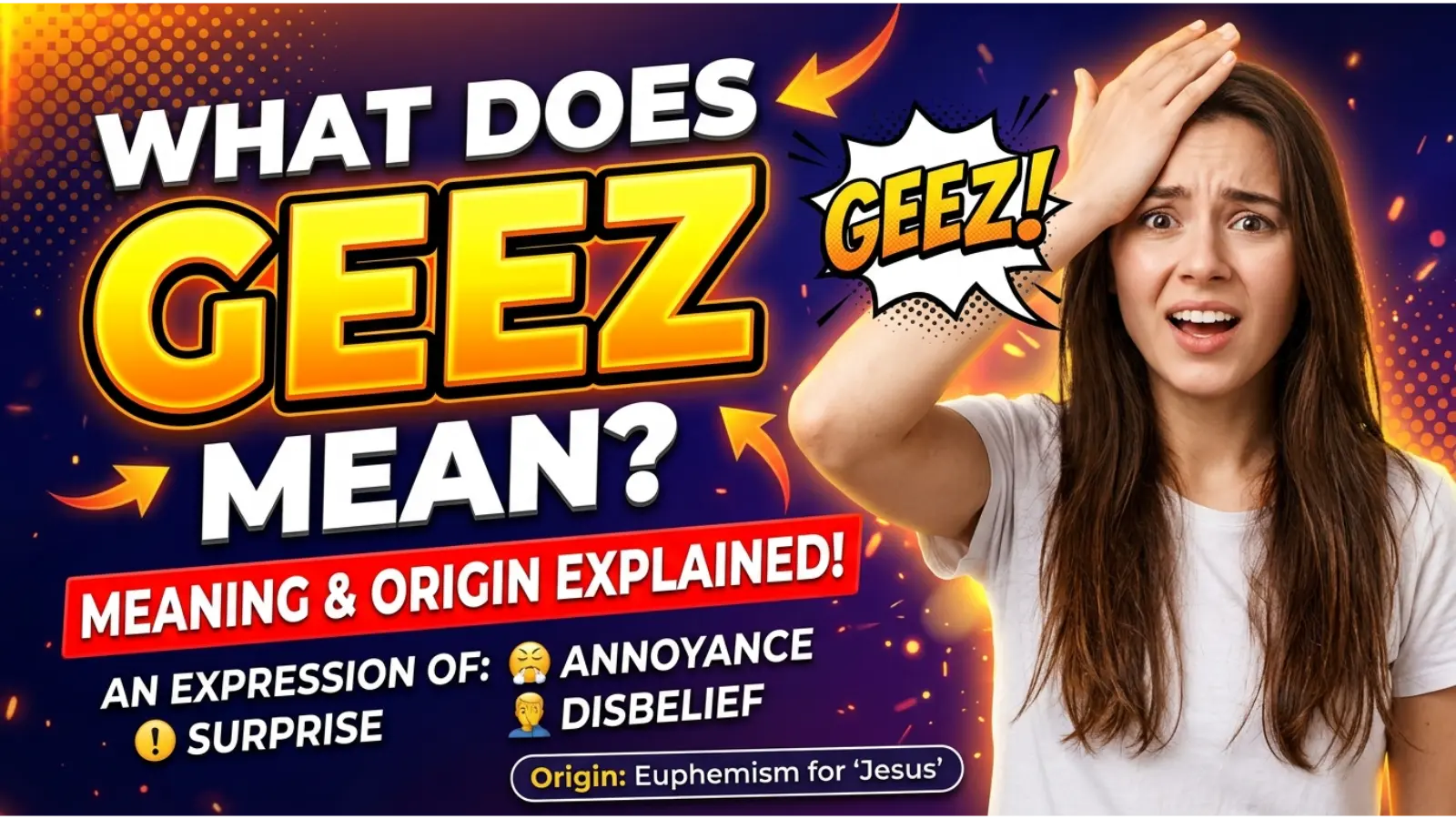
What Does Geez Mean?
Geez is an alternative spelling of Jeez. It functions as an informal interjection and communicates similar emotions, including surprise, frustration, irritation, and disbelief.
People use Geez in casual conversations, text messages, online discussions, and social media posts. It can also make a sentence sound more expressive or conversational.
Consider these examples:
- Geez, that was a close call!
- Geez, I have so much work to finish.
- Oh, geez, I forgot to charge my phone.
- Geez, why is the traffic so terrible?
- Geez, I never expected that to happen.
Therefore, Geez does not introduce a completely different meaning. It simply provides another accepted way to write the same expression.
Jeez vs. Geez: Key Differences
Although Jeez and Geez look different, they share almost identical meanings and pronunciations. The following comparison highlights their main features.
| Feature | Jeez | Geez |
|---|---|---|
| Spelling | Jeez | Geez |
| Meaning | Surprise or frustration | Surprise or frustration |
| Part of speech | Interjection | Interjection |
| Pronunciation | /dʒiːz/ | /dʒiːz/ |
| Usage | Informal | Informal |
| Tone | Casual and expressive | Casual and expressive |
| Correctness | Accepted | Accepted |
As the table shows, neither spelling has a major grammatical or semantic advantage. Both expressions serve the same conversational purpose.
Origin and History of Jeez and Geez
The expression Jeez developed as a shortened and softened form of Jesus. English speakers began using it as a mild exclamation instead of saying the religious name directly.
Linguists call this type of expression a minced oath. A minced oath replaces a potentially offensive, sensitive, or religious expression with a milder alternative.
Over time, Jeez became an established informal expression in English. Speakers used it to communicate surprise, frustration, irritation, and disbelief.
Geez developed as an alternative spelling of the same spoken expression. Although the spelling changed, its general meaning and conversational function remained the same.
Today, both forms appear in informal English, particularly in conversations, entertainment, online communication, and text messages.
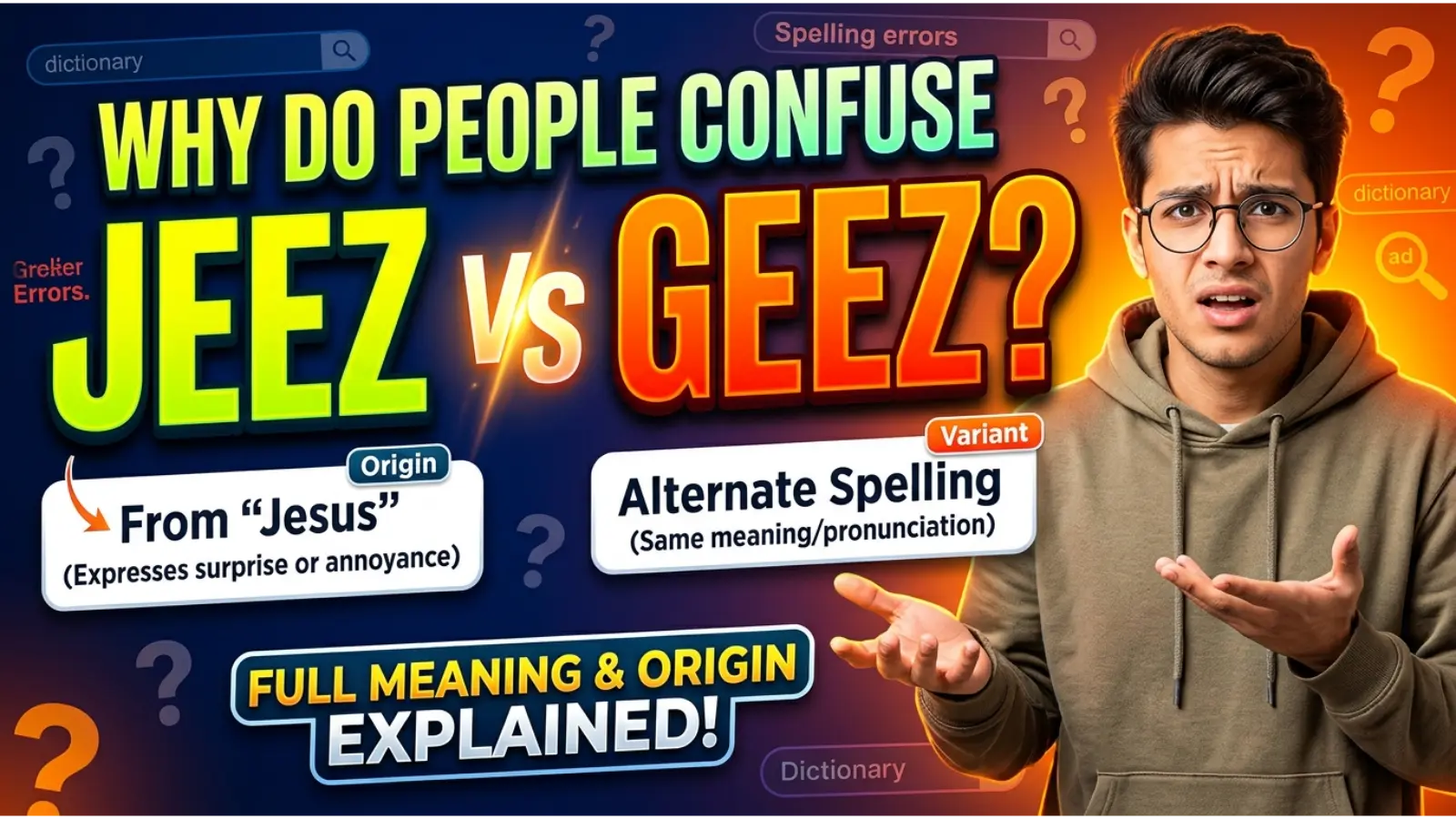
Why Do People Confuse Jeez and Geez?
Several factors explain why writers sometimes struggle to choose between these two spellings.
1. Identical Pronunciation
Jeez and Geez have the same pronunciation. Both sound like the word begins with the consonant sound /dʒ/. Consequently, listeners cannot identify the spelling simply by hearing the expression.
2. Similar Meanings
Both expressions communicate surprise, annoyance, frustration, or disbelief. Since they serve the same purpose, writers may assume that only one version can be correct.
3. Informal Communication
People often learn these expressions through conversations, television shows, movies, and social media. As a result, they may encounter both spellings without understanding their relationship.
4. Different Spelling Preferences
Some people naturally prefer Jeez, while others write Geez. These personal preferences can create confusion, especially when writers compare different online sources.
5. Limited Attention to Dictionary Variants
Writers sometimes check only one dictionary entry. However, different dictionaries may organize alternative spellings differently. Checking variant forms can help clarify whether an expression is accepted.
What Do Major Dictionaries Say About Jeez and Geez?
English dictionaries recognize Jeez as an informal interjection. Several dictionaries also acknowledge Geez as an alternative spelling.
Here is an overview of their dictionary treatment:
- Cambridge Dictionary: Defines Jeez as an informal exclamation used to express surprise, annoyance, or disappointment. It also recognizes Geez as an alternative spelling.
- Merriam-Webster: Includes Jeez as an informal interjection and recognizes Geez as a variant spelling.
- Dictionary.com: Explains Jeez as an informal expression of surprise, disappointment, or astonishment and acknowledges the alternative spelling Geez.
- Oxford Learner’s Dictionaries: Includes Jeez as an informal exclamation used to express strong feelings such as surprise or annoyance.
Dictionary recommendation: Both Jeez and Geez are recognized informal forms. However, Jeez is a practical default for general writing because it is a familiar dictionary headword.
Real-Life Examples of Jeez and Geez
Examples make it easier to understand how these expressions work in everyday communication.
Instances Using Jeez
- Jeez, I didn’t know the meeting started so early!
- Jeez, this traffic is getting worse every day.
- Jeez, you could have told me about the changes.
- Oh, jeez, I left my wallet at home.
- Jeez, that movie was much longer than I expected.
- Jeez, why is everyone talking at once?
- Jeez, I can’t believe how quickly time passes.
- Jeez, that was an unexpected surprise!
Examples Using Geez
- Geez, that was a close call!
- Geez, I have so much work to finish today.
- Oh, geez, I forgot to charge my phone.
- Geez, you don’t need to be so impatient.
- Geez, what a surprising result!
- Geez, I never expected that to happen.
- Geez, this assignment is taking forever.
- Geez, why did nobody tell me?
The following examples demonstrate how both spellings work in the same context.
1: Expressing Surprise
- Jeez, you finished the project already?
- Geez, you finished the project already?
2: Showing Frustration
- Jeez, the internet is so slow today.
- Geez, the internet is so slow today.
3: Expressing Disbelief
- Jeez, I can’t believe that happened!
- Geez, I can’t believe that happened!
Both versions communicate the same message. Therefore, the choice depends mainly on personal preference.
Common Mistakes When Using Jeez or Geez
Although both spellings are acceptable, writers sometimes misunderstand their meanings and usage. Avoid these common mistakes to improve your writing.
Mistake 1: Assuming Geez Is Always Incorrect
Some writers believe Geez is a misspelling because they see Jeez more frequently in dictionaries. However, Geez is also recognized as an alternative spelling.
Correct: Geez, that was unexpected!
Mistake 2: Treating Them as Formal Vocabulary
Jeez and Geez belong to informal English. They may sound inappropriate in academic papers, official reports, and professional correspondence.
Better formal alternative: That is quite surprising.
Mistake 3: Thinking They Have Different Pronunciations
Both expressions have the same pronunciation. Changing the first letter from J to G does not create a different spoken word.
Correct: Both are pronounced /dʒiːz/.
Mistake 4: Ignoring the Speaker’s Tone
The meaning of these expressions can change slightly depending on the situation. For instance, Jeez may communicate surprise in one conversation and irritation in another.
Example: Jeez, that was amazing!
Here, the speaker expresses surprise or admiration rather than frustration.
Mistake 5: Using Them in Every Situation
Although these expressions work well in casual conversations, they do not suit every writing style. Formal situations often require more precise vocabulary.
Better alternative: I am genuinely surprised by the result.
Memory Trick: How to Remember Jeez and Geez
A simple memory trick can help you remember both spellings.
- Jeez: Associate the letter J with Jesus, the name from which the expression developed.
- Geez: Remember that G represents an alternative spelling of the same spoken expression.
- Both: Connect these expressions with surprise, frustration, annoyance, or disbelief.
Easy reminder: Jeez is a familiar first choice, while Geez is an accepted alternative. You do not need to treat either spelling as incorrect.
Professional Writing Recommendation
Choosing between Jeez and Geez depends on your audience, purpose, and writing style. Both spellings work in casual communication, but neither is usually appropriate for formal documents.
Consider these recommendations:
- Everyday conversations: Both spellings sound natural.
- Text messages: Use either form to express surprise or frustration.
- Social media: Both expressions are acceptable in casual posts and comments.
- Academic writing: Avoid both forms and choose more precise language.
- Business communication: Use professional alternatives such as “I am surprised,” “That is unexpected,” or “I understand your concern.”
For general informal writing, Jeez is a practical choice. However, Geez remains an acceptable alternative.
Frequently Asked Questions (FAQs)
1. Is Jeez or Geez the correct spelling?
Both Jeez and Geez are accepted informal spellings. They express similar emotions, including surprise, frustration, annoyance, and disbelief.
2. Is Geez a real word?
Yes, Geez is a recognized alternative spelling of Jeez. It appears in informal English and has essentially the same meaning.
3. What does Jeez mean in texting?
In texting, Jeez expresses surprise, frustration, disappointment, or disbelief. Its exact meaning depends on the conversation and the sender’s tone.
4. Are Jeez and Geez pronounced the same?
Yes. Both expressions have the same pronunciation, /dʒiːz/. Their difference appears in their written forms rather than their sounds.
5. Is Jeez considered a bad word?
Jeez is generally considered a mild, informal expression rather than strong profanity. However, some people may avoid it because of its connection to the religious name Jesus.
6. Can I use Geez in formal writing?
It is better to avoid Geez in formal writing because it is an informal expression. Instead, use alternatives such as “surprisingly,” “unfortunately,” or “I am astonished,” depending on the context.
7. Which spelling is more common, Jeez or Geez?
Jeez is a familiar dictionary headword and a practical choice for general writing. However, Geez is also recognized as an alternative spelling.
8. Are Jeez and Geez interchangeable?
Yes. In most everyday situations, you can use either spelling without changing the intended meaning.
9. What is a polite alternative to Jeez?
Polite alternatives include “Oh my,” “Goodness,” “That is surprising,” and “I am surprised.” Choose one that matches the situation.
Conclusion
Choosing between Jeez or Geez does not have to be confusing. Both spellings are accepted informal expressions that communicate surprise, frustration, annoyance, and disbelief. They also share the same pronunciation and general meaning.
However, Jeez is a familiar first choice for everyday writing, while Geez remains an acceptable alternative. The important point is to understand their informal nature and choose expressions that suit your audience.
Remember, neither spelling is universally incorrect. Use either form in casual communication, but choose more professional alternatives when writing academic papers, business documents, or official messages.