If you’ve written spiraled but later saw spiralled, you’re not alone. Both spellings appear in books, newspapers, and online writing, making it easy to wonder which one is actually correct. The good news is that both forms are accepted English spellings. The difference depends mainly on the variety of English you are using rather than grammar or meaning.
In this guide, you’ll learn when to use spiraled and spiralled, why the two spellings exist, what major dictionaries recommend, and which version is best for professional writing. By the end, you’ll know exactly which spelling fits your audience.
Quick Answer
Both spiraled and spiralled are correct.
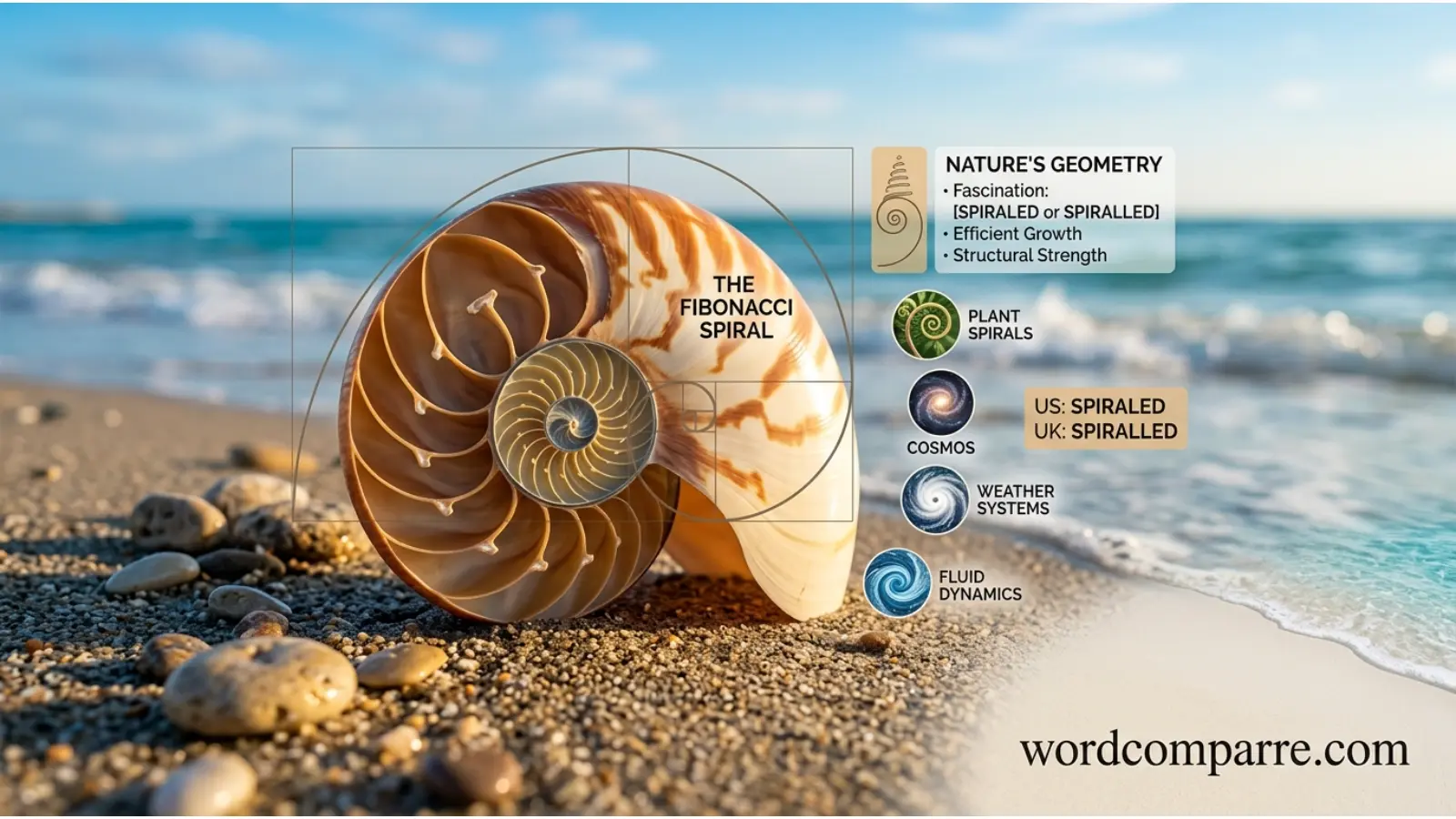
- Spiraled is the preferred spelling in American English.
- Spiralled is the preferred spelling in British English, as well as in many countries that follow British spelling conventions such as Australia and New Zealand.
Choose the spelling that matches the English style of your document and use it consistently.
Meaning of Both Spellings
Both words are the past tense and past participle of the verb spiral.
They have exactly the same meaning:
- Moved in a spiral shape.
- Twisted or wound around something.
- Increased or decreased rapidly in a circular or uncontrolled way.
Examples:
- The smoke spiraled into the sky.
- The smoke spiralled into the sky.
Both sentences express the same idea. Only the spelling changes.
Spiraled vs Spiralled Comparison
| Feature | Spiraled | Spiralled |
|---|---|---|
| Correct spelling | Yes | Yes |
| Meaning | Same | Same |
| American English | Preferred | Rare |
| British English | Less common | Preferred |
| Australian English | Less common | Preferred |
| Canadian English | Both appear, but usage depends on the publication style | |
| Professional writing | Best for US audiences | Best for UK audiences |
Where the Spellings Come From
The difference follows a common spelling pattern between American and British English.
American English often keeps a single l when adding endings to verbs ending in l if the final syllable is not stressed.
Examples include:
- traveled
- canceled
- fueled
- spiraled
British English commonly doubles the l before adding endings.
Examples include:
- travelled
- cancelled
- fuelled
- spiralled
Neither system is more correct than the other. They simply follow different spelling conventions.
Why People Get Confused
Many writers read content from both American and British sources without realizing the spelling rules differ.
Confusion also happens because:
- Spell checkers follow regional language settings.
- International companies publish content in different English varieties.
- Books and websites use different editorial style guides.
- Both spellings appear in dictionaries.
As a result, people often assume one spelling must be incorrect, even though both are accepted.
What Dictionaries Recommend
Major dictionaries recognize both spellings.
Most dictionaries list:
- Spiraled as the standard American English spelling.
- Spiralled as the standard British English spelling.
This means your choice should depend on your intended audience rather than on dictionary approval.
Real Life Examples Of Spiraled
American English
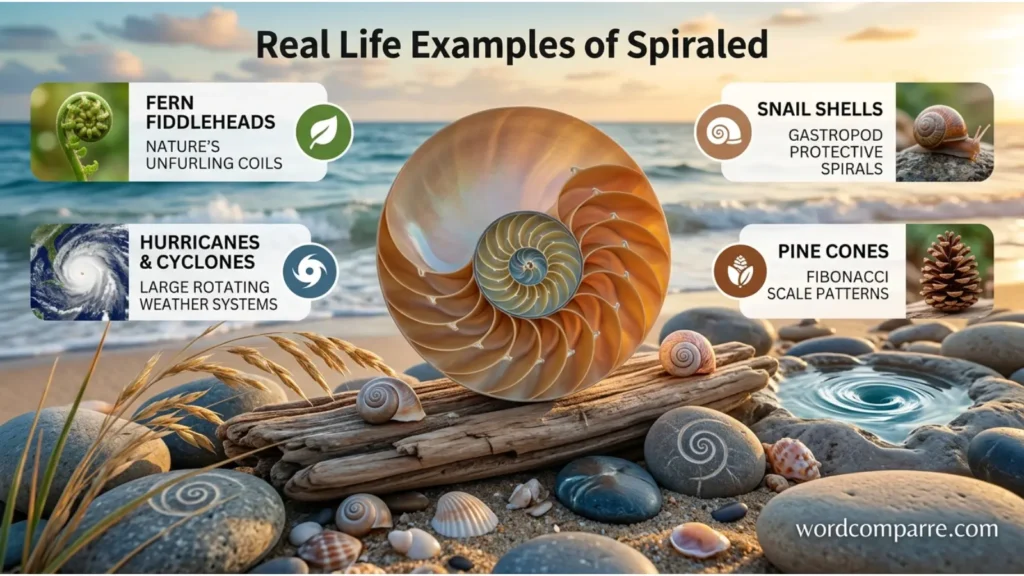
- The bird spiraled downward before landing.
- Prices spiraled out of control.
- The football spiraled through the air.
British English
- The bird spiralled downward before landing.
- Costs spiralled during the crisis.
- The smoke spiralled above the chimney.
Each sentence is correct within its respective variety of English.
Common Mistakes
One common mistake is mixing both spellings in the same document.
Incorrect:
- The plane spiraled toward the ground before it spiralled away.
Correct for American English:
- The plane spiraled toward the ground before it spiraled away.
Correct for British English:
- The plane spiralled toward the ground before it spiralled away.
Another mistake is assuming one spelling is wrong simply because it looks unfamiliar. In reality, both are standard spellings.
Easy Memory Trick
Remember the audience, not just the word.
- America prefers one L in spiraled.
- Britain usually doubles the L in spiralled.
If you’re writing for readers in the United States, choose spiraled. If you’re writing for readers in the United Kingdom, choose spiralled.
Professional Writing Recommendation
For the clearest and most polished writing:
- Use spiraled for American websites, schools, businesses, and publications.
- Use spiralled for British publishers, universities, government documents, and UK-based audiences.
- If your organization follows a specific style guide, always follow that guide.
- Stay consistent throughout the document instead of switching spellings.
Consistency is more important than choosing one regional spelling over the other.
Frequently Asked Questions
Is spiraled correct?
Yes. Spiraled is the standard spelling in American English.
Is spiralled correct?
Yes. Spiralled is the standard spelling in British English.
Do both words have the same meaning?
Yes. They both describe something moving, twisting, or developing in a spiral.
Which spelling should I use in the United States?
Use spiraled because it matches standard American spelling conventions.
Which spelling should I use in the United Kingdom?
Use spiralled, which is the preferred British spelling.
Will readers understand either spelling?
Yes. Most English speakers recognize both forms, although one may appear more natural depending on their region.
Conclusion
Spiraled and spiralled are both correct spellings with identical meanings. The only real difference is regional preference. American English favors spiraled, while British English favors spiralled. Instead of asking which spelling is right or wrong, choose the version that matches your audience and use it consistently throughout your writing. This approach keeps your content accurate, professional, and easy to read.

Alex Wordsmith is a comparison research writer and content specialist at WordComparre.com. He focuses on analyzing word meanings, spelling variations, grammar distinctions, and language usage to help readers make informed writing choices. Through clear explanations and practical examples, Alex simplifies complex language topics for students, writers, and professionals. His goal is to make English learning easier, more accurate, and accessible for everyone.