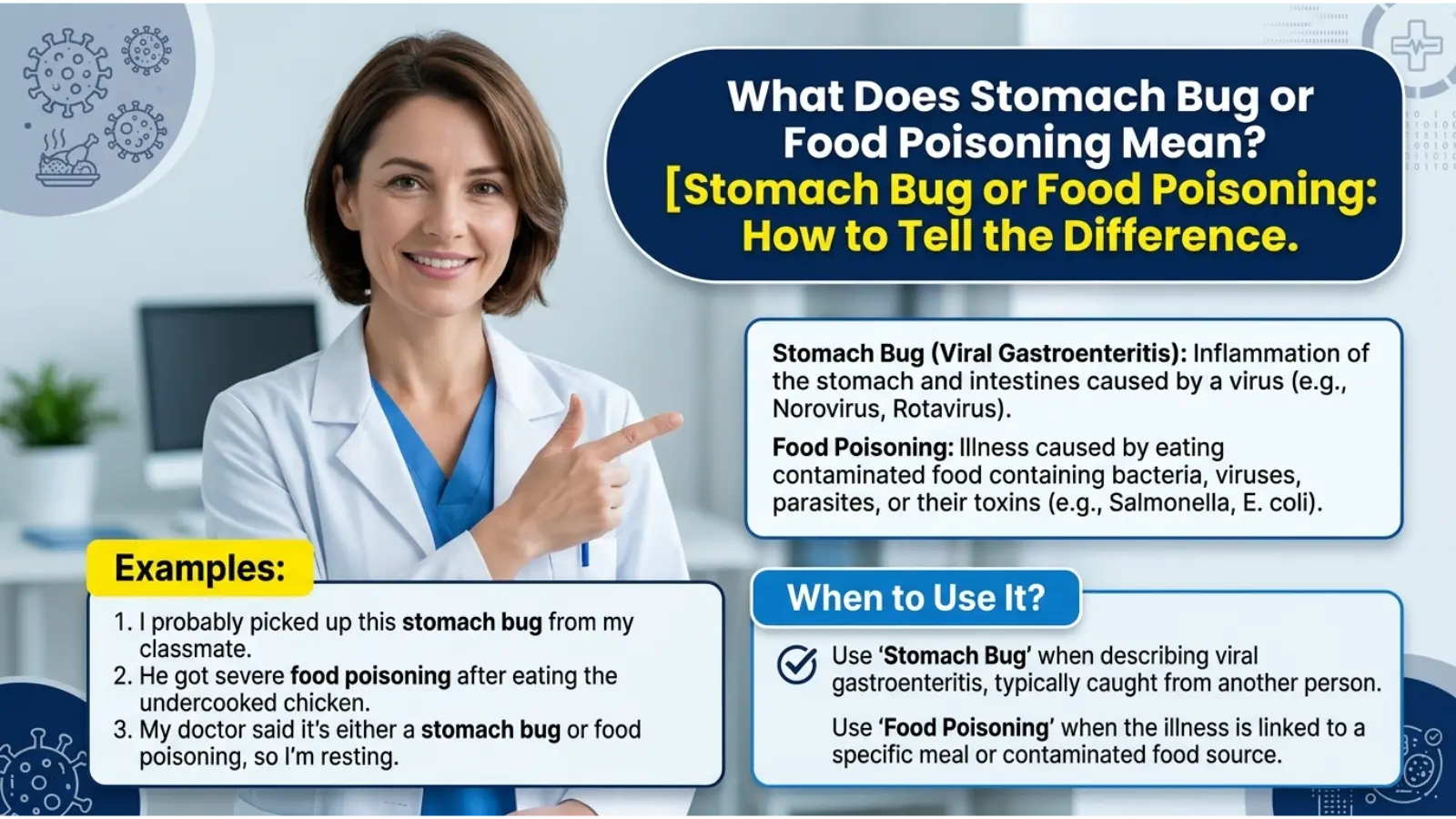
Have you ever experienced sudden nausea, vomiting, diarrhea, or stomach cramps and wondered whether you have a stomach bug or food poisoning? These two conditions can feel very similar, making it difficult to understand what is causing your digestive discomfort. However, they have different causes, sources of infection, and patterns of illness.
Understanding the difference between a stomach bug or food poisoning can help you recognize possible causes, manage symptoms, and know when to seek medical attention. This guide explains their meanings, symptoms, causes, recovery times, and important differences in simple English.
What Is a Stomach Bug?
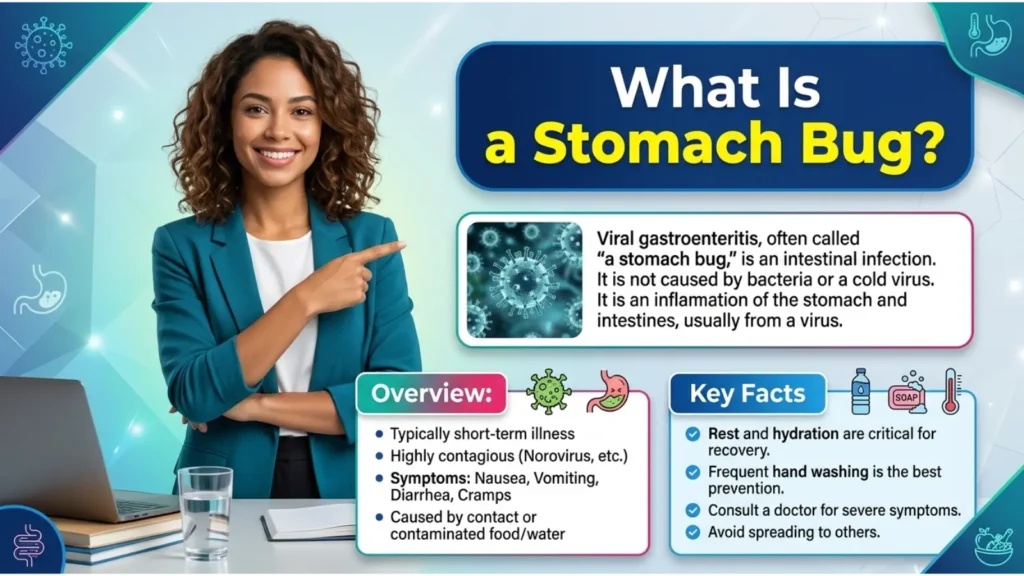
A stomach bug is a common term for an infection that affects the stomach and intestines. It is often caused by viruses, particularly norovirus, which can spread easily from one person to another.
Although people sometimes call it the stomach flu, it is not the same as influenza, which affects the respiratory system. A stomach bug can cause digestive problems such as vomiting, diarrhea, nausea, and abdominal cramps.
People can catch a stomach bug through contact with an infected person, contaminated surfaces, or contaminated food and water. Symptoms commonly develop within 12 to 48 hours after exposure to norovirus.
Most people recover within a few days, although the illness can be more serious for young children, older adults, and people with weakened immune systems.
Expert Insight: A stomach bug is often associated with viral gastroenteritis. Norovirus is highly contagious, which explains why infections can spread quickly through households, schools, workplaces, and other shared environments.
What Is Food Poisoning?
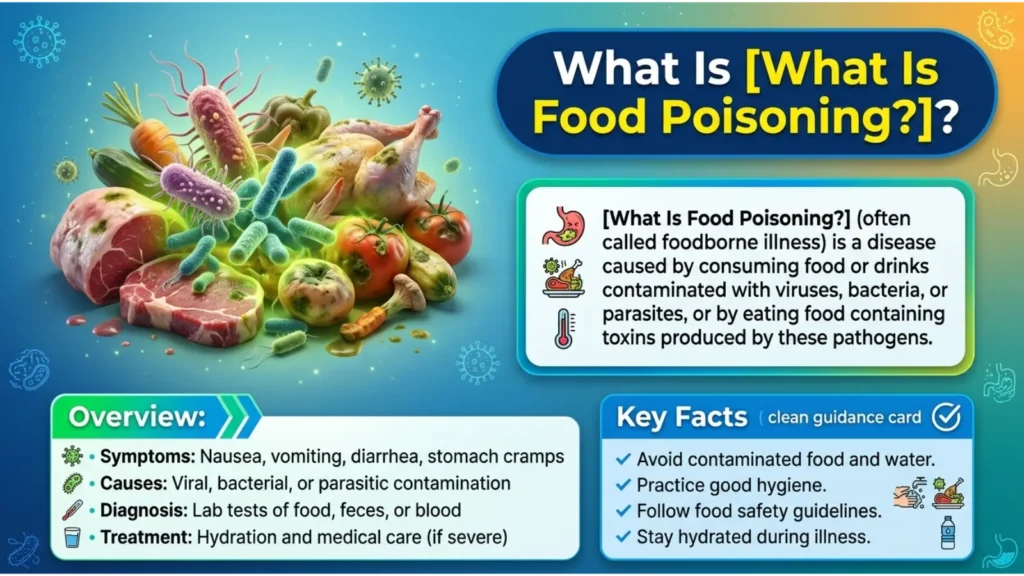
Food poisoning is an illness caused by eating or drinking something contaminated with harmful germs, toxins, or other substances. Common causes include bacteria such as Salmonella, E. coli, and Campylobacter, as well as certain viruses.
Contamination can happen when food is not cooked properly, stored at unsafe temperatures, or handled without proper hygiene. Raw or undercooked meat, contaminated vegetables, unpasteurized dairy products, and unsafe drinking water can also be sources of infection.
Common symptoms include nausea, vomiting, diarrhea, stomach cramps, and fever. Depending on the germ involved, symptoms may begin within a few hours or take several days to appear.
Some cases are mild and improve without medical treatment, while others can cause serious complications.
Expert Insight: Food poisoning does not always develop immediately after eating contaminated food. Different germs have different incubation periods, so the time between eating and becoming sick cannot identify the exact cause on its own.
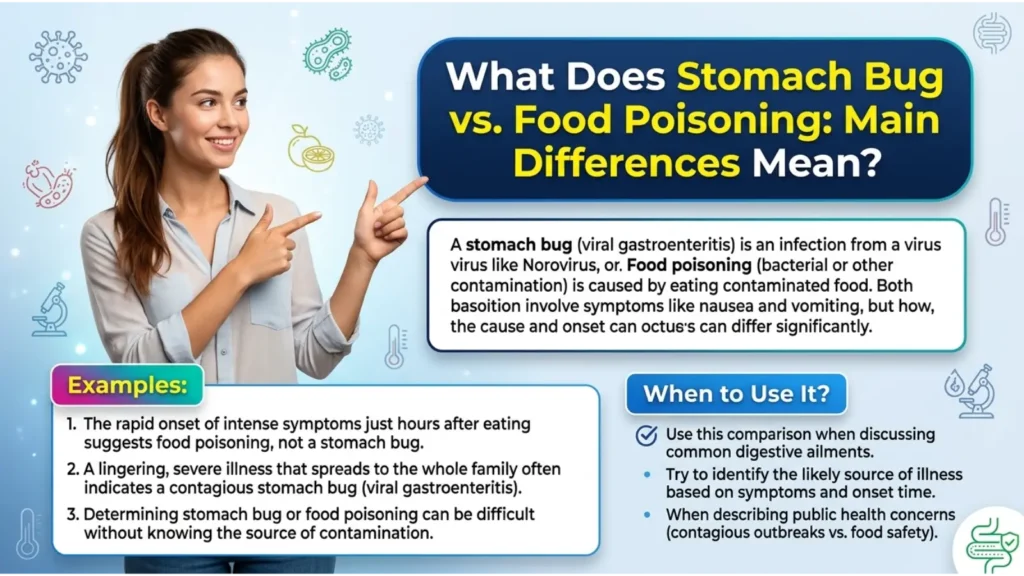
Stomach Bug vs. Food Poisoning: Main Differences
Although these conditions share several symptoms, their causes and methods of transmission are different.
| Feature | Stomach Bug | Food Poisoning |
|---|---|---|
| Main cause | Usually a viral infection | Contaminated food or drinks |
| Common germs | Norovirus and other viruses | Salmonella, E. coli, Campylobacter, and others |
| How it spreads | Person-to-person contact, surfaces, food, or water | Mainly through contaminated food or drinks |
| Symptoms | Vomiting, diarrhea, nausea, and cramps | Vomiting, diarrhea, nausea, cramps, and sometimes fever |
| When symptoms begin | Depends on the infection | Can begin within hours or days |
| Duration | Often a few days | A few hours to several days or longer |
| Contagiousness | Often spreads easily between people | Depends on the organism; some causes can spread between people |
One important detail is that the two conditions are not completely separate. Norovirus can cause a stomach bug and can also spread through contaminated food. Therefore, food poisoning and stomach bugs can sometimes have the same infectious cause.
Common Symptoms of a Stomach Bug
A stomach bug can affect people differently depending on the virus and their general health. Symptoms often appear suddenly and may include:
- Nausea or an upset stomach.
- Frequent vomiting.
- Watery diarrhea.
- Abdominal pain or stomach cramps.
- Mild fever.
- Headache.
- Muscle aches.
- Tiredness and weakness.
Norovirus commonly causes vomiting and diarrhea, and most people recover within one to three days.
However, repeated vomiting and diarrhea can cause dehydration. Drinking enough fluids is important during recovery.
Common Symptoms of Food Poisoning
Food poisoning can cause several digestive symptoms, but the exact experience depends on the contaminating germ or toxin.
Common symptoms include:
- Nausea.
- Vomiting.
- Diarrhea.
- Stomach pain or cramps.
- Fever.
- Headache.
- Weakness.
- Bloody diarrhea in some infections.
Some types of food poisoning cause symptoms within a few hours, while others take several days to develop. Certain bacterial infections can also produce more severe symptoms and complications.
For example, Salmonella can cause diarrhea, fever, and stomach cramps, while some E. coli infections can cause severe abdominal pain and bloody diarrhea.
Seek medical advice if symptoms are severe, persistent, or accompanied by signs of dehydration.
What Causes a Stomach Bug?
Stomach bugs usually develop when infectious germs enter the digestive system. Viruses are common causes, although some bacterial and parasitic infections can also produce gastroenteritis.
Common sources include:
Viral Infections
Norovirus is one of the leading causes of vomiting and diarrhea. Other viruses can also cause digestive infections.
Close Contact With Infected People
Touching an infected person, sharing contaminated objects, or caring for someone who is sick can spread certain stomach viruses.
Contaminated Surfaces
Germs can remain on surfaces such as bathroom fixtures, door handles, and kitchen counters. Touching contaminated surfaces and then touching your mouth can lead to infection.
Contaminated Food and Water
Eating or drinking contaminated items can introduce infectious germs into the digestive system.
Good handwashing and cleaning practices can help reduce the risk of infection.
What Causes Food Poisoning?
Food poisoning occurs when someone consumes contaminated food or drinks. Several factors can make food unsafe.
Undercooked Food
Meat, poultry, seafood, and eggs may contain harmful germs when they are not cooked thoroughly.
Improper Food Storage
Leaving perishable food at unsafe temperatures can allow certain bacteria to multiply.
Poor Food Handling
Food can become contaminated when people prepare meals without washing their hands or using clean equipment.
Contaminated Water
Drinking unsafe water or using it to wash food can introduce harmful microorganisms.
Expired or Contaminated Ingredients
Food that has spoiled or become contaminated during processing, transportation, or storage can cause illness.
Following proper food safety practices is one of the best ways to reduce the risk of food poisoning.
How Long Does a Stomach Bug Last?
Most common stomach bugs improve within a few days. Norovirus infections generally last one to three days, although some people may experience symptoms for longer.
Recovery depends on the cause of the infection, the person’s age, and their overall health.
During recovery, drinking fluids, getting enough rest, and eating when comfortable can help support the body.
If vomiting or diarrhea continues, becomes severe, or causes dehydration, medical advice is important.
How Long Does Food Poisoning Last?
Food poisoning does not have one fixed recovery period. Some cases improve within 24 hours, while others can last several days or longer.
The duration depends on the specific bacteria, virus, or toxin responsible for the illness.
For example, some toxin-related illnesses cause short episodes of vomiting, while certain bacterial infections can produce symptoms for several days.
People with severe diarrhea, persistent vomiting, bloody stools, or high fever should seek medical attention rather than waiting for the symptoms to disappear.
How to Tell Whether It Is a Stomach Bug or Food Poisoning
It can be difficult to distinguish these conditions because they share many symptoms. However, a few details may provide useful clues.
Consider Recent Food Consumption
If several people become sick after eating the same meal, contaminated food may be a possible explanation.
Check Whether Others Are Sick
If family members, classmates, or coworkers develop similar symptoms after contact with an infected person, a contagious stomach bug may be involved.
Notice When Symptoms Started
Some foodborne illnesses cause symptoms within a few hours, while others take several days. Norovirus symptoms commonly begin 12 to 48 hours after exposure.
Pay Attention to Additional Symptoms
Fever, bloody diarrhea, severe abdominal pain, and prolonged symptoms may indicate a more serious infection that needs medical assessment.
Remember that these clues cannot confirm the diagnosis. A healthcare professional may need to review your symptoms, medical history, food exposure, and sometimes laboratory test results.
Treatment and Home Care for Both Conditions
Treatment for a stomach bug and food poisoning often focuses on replacing lost fluids and preventing dehydration. Most mild cases improve with supportive care.
Drink Plenty of Fluids
Take frequent small sips of water or an oral rehydration solution. These fluids help replace water and important salts lost through vomiting and diarrhea.
Get Enough Rest
Allow your body time to recover. Avoid strenuous activities while experiencing significant symptoms.
Eat When You Feel Ready
Start with foods you can comfortably tolerate. Avoid foods that seem to worsen nausea or diarrhea.
Maintain Good Hygiene
Wash your hands with soap and water, especially after using the bathroom and before preparing food.
Avoid Spreading Infection
Do not prepare food for other people while sick. Clean contaminated surfaces and wash soiled clothing and bedding carefully.
Antibiotics do not treat viral infections such as norovirus. They should only be used when a healthcare professional determines that they are appropriate.
When Should You See a Doctor?
Although many cases of stomach bugs and food poisoning are mild, certain symptoms require medical attention.
Contact a healthcare professional if you experience:
- Bloody diarrhea.
- Diarrhea lasting more than three days.
- A fever higher than 102°F (38.9°C).
- Frequent vomiting that prevents you from keeping liquids down.
- Severe abdominal pain.
- Very little urination.
- Dry mouth or throat.
- Dizziness when standing.
- Unusual weakness or confusion.
Young children, older adults, pregnant people, and individuals with weakened immune systems may need earlier medical assessment. Severe dehydration, confusion, fainting, or other alarming symptoms require urgent medical attention.
Conclusion
Understanding the difference between a stomach bug or food poisoning helps explain why two similar illnesses can have different causes. A stomach bug is commonly associated with a viral infection, while food poisoning develops after consuming contaminated food or drinks.
Both conditions can cause nausea, vomiting, diarrhea, and stomach cramps. However, their sources, transmission methods, and recovery times can vary. Staying hydrated, getting enough rest, and maintaining good hygiene are important parts of recovery. Most importantly, seek medical attention if symptoms become severe or signs of dehydration appear.