If you’ve come across both tepee and teepee, you’re probably wondering which spelling is correct. The good news is that both words are correct. They refer to the same cone-shaped tent traditionally used by several Indigenous peoples of the North American Plains. The difference is not meaning but spelling preference, historical usage, and editorial style.
In this guide, you’ll learn when to use tepee or teepee, why both spellings exist, what major dictionaries recommend, and which version is the better choice for modern writing.
Quick Answer
Both tepee and teepee are correct spellings.
- Tepee is generally the preferred spelling in many modern dictionaries, educational publications, and style guides.
- Teepee is an accepted alternative and remains common in books, travel writing, and everyday English.
If you’re writing professionally or academically, tepee is usually the safer choice unless your publisher or organization prefers teepee.
What Do Tepee and Teepee Mean?
Both words describe the same structure.
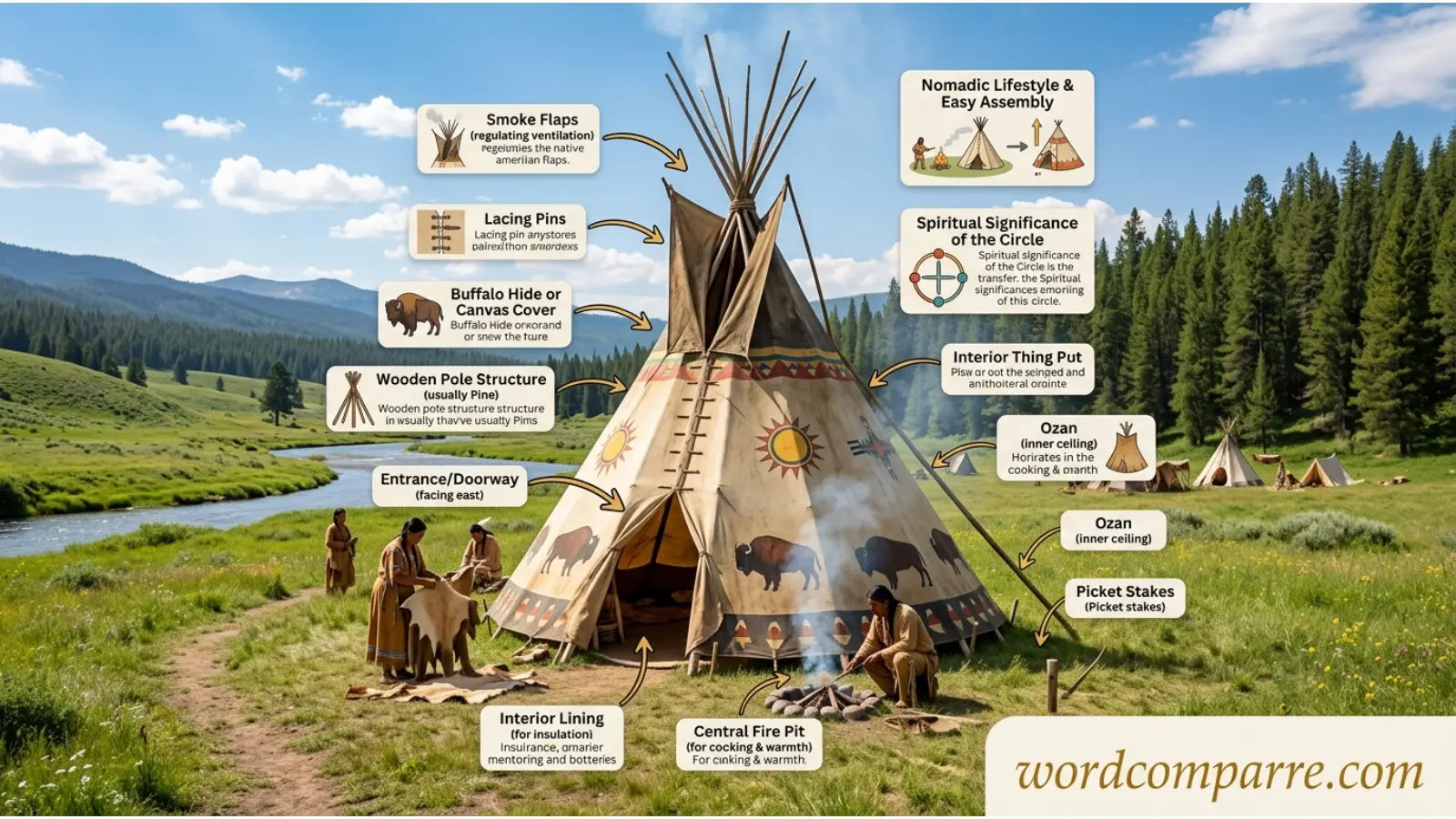
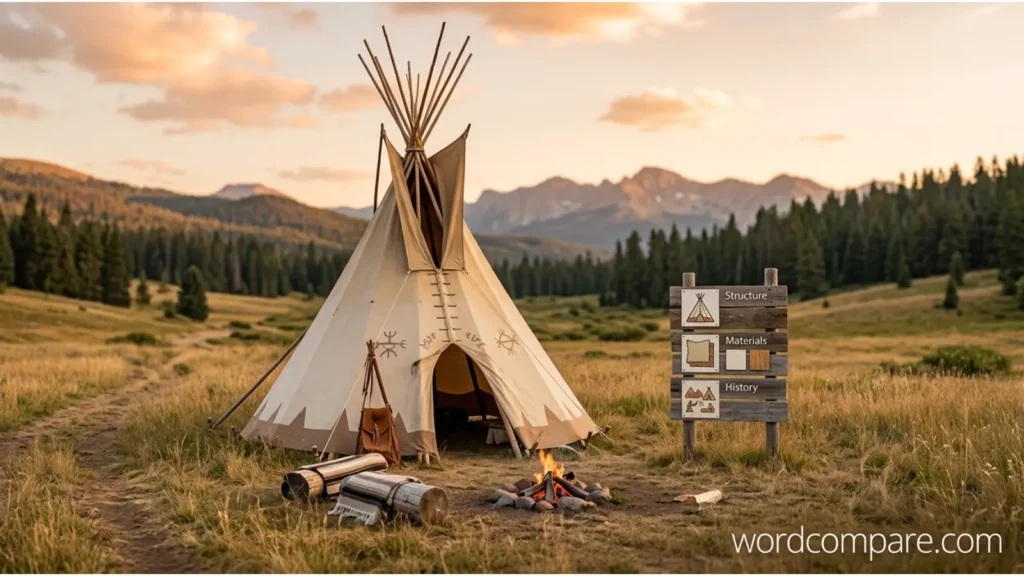
A tepee or teepee is a tall, cone-shaped tent traditionally made with wooden poles covered by animal hides and later by canvas. It was designed to be portable, making it ideal for the nomadic lifestyle of many Indigenous nations living on the Great Plains.
There is no difference in meaning between the two spellings.
Tepee vs Teepee Comparison
| Feature | Tepee | Teepee |
|---|---|---|
| Correct spelling | Yes | Yes |
| Meaning | Traditional cone-shaped dwelling | Same meaning |
| Dictionary acceptance | Widely preferred | Accepted alternative |
| Modern professional writing | Usually preferred | Less commonly preferred |
| Everyday use | Common | Common |
| Pronunciation | tee-pee | tee-pee |
Where Did These Spellings Come From?
The English word comes from the Lakota word thípi, meaning “a dwelling” or “they dwell.”
As English speakers adopted the word, different spellings appeared because translators tried to represent the same pronunciation using English letters. Over time, tepee and teepee both became accepted spellings.
Today, both remain part of standard English.
Why Are People Confused?
The confusion exists because both spellings appear in trusted sources.
Some books use tepee, while others use teepee. Older publications often favored teepee, whereas many modern dictionaries and educational resources now list tepee as the primary spelling or place it first.
Since both are correct, readers often assume one must be wrong, even though that isn’t the case.
What Do Dictionaries Recommend?
Major English dictionaries recognize both spellings.
Many modern dictionaries present tepee as the main entry while listing teepee as a variant spelling. This reflects current editorial preference rather than a difference in meaning.
If you’re following a dictionary-based style, using tepee is generally the best choice.
Real Life Examples Of Tepee
Correct:
- We visited a traditional tepee during the cultural exhibition.
- The museum displayed a carefully reconstructed tepee.
- The children learned how a teepee was built.
- A large teepee stood near the campground entrance.
Incorrect:
- Treating teepee as incorrect.
- Mixing tepee and teepee randomly within the same document.
- Changing spellings without following a consistent style guide.
Common Mistakes
One common mistake is believing only one spelling is acceptable. In reality, both are recognized in standard English.
Another mistake is switching between tepee and teepee in the same article or report. Consistency makes your writing look more polished and professional.
Some writers also confuse these words with other types of tents, even though a traditional tepee has a unique cone-shaped design and important cultural significance.
Easy Memory Trick
Remember this simple tip:
- Tepee is often the preferred spelling in modern dictionaries.
- Teepee simply adds an extra e, but the meaning stays exactly the same.
If you’re unsure, choose tepee for formal writing.
Which Spelling Should You Use in Professional Writing?
For most professional, academic, and educational content, tepee is the recommended choice because it aligns with the preference of many modern dictionaries and editorial standards.
However, if you’re quoting a published source, following a company’s style guide, or maintaining consistency with existing content that uses teepee, it’s perfectly acceptable to keep that spelling.
The most important rule is consistency throughout your writing.
Frequently Asked Questions
Is tepee correct?
Yes. Tepee is a correct and widely preferred spelling in modern English.
Is teepee also correct?
Yes. Teepee is an accepted alternative spelling with the same meaning.
Do tepee and teepee mean different things?
No. Both words refer to the same traditional cone-shaped dwelling.
Which spelling do dictionaries prefer?
Many modern dictionaries list tepee as the primary spelling while recognizing teepee as a standard variant.
Which spelling should students use?
Unless your teacher or style guide specifies otherwise, tepee is generally the better choice for school assignments and formal writing.
Conclusion
Choosing between tepee and teepee is easier once you know that both spellings are correct. They have the same pronunciation, meaning, and historical origin. The main difference lies in editorial preference rather than accuracy.
If you’re writing for school, business, publishing, or online content, tepee is generally the preferred spelling because many modern dictionaries list it first. If you’re using teepee, that’s still correct—just be consistent throughout your writing.

Alex Wordsmith is a comparison research writer and content specialist at WordComparre.com. He focuses on analyzing word meanings, spelling variations, grammar distinctions, and language usage to help readers make informed writing choices. Through clear explanations and practical examples, Alex simplifies complex language topics for students, writers, and professionals. His goal is to make English learning easier, more accurate, and accessible for everyone.