Unexcusable or inexcusable is a spelling comparison that often confuses English learners and even experienced writers. Both words appear in books, articles, and online discussions, making it difficult to know which one to use. The confusion happens because both forms seem to express the same idea and follow familiar English word-building patterns.
The good news is that both spellings are correct English words. However, they are not equally common in modern writing. Knowing which one dictionaries prefer and which spelling readers expect can help you write more naturally and professionally.
Quick Answer
Both unexcusable and inexcusable are correct English words.
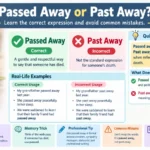
- Inexcusable is the standard and overwhelmingly preferred spelling in modern English.
- Unexcusable is a valid but much less common alternative that appears occasionally in literature and historical writing.
- For business writing, academic work, journalism, and everyday communication, inexcusable is the better choice.
Meaning of Both Spellings
Inexcusable
Inexcusable means something cannot be forgiven, justified, or excused because it is too serious or unacceptable.
Examples:
- His behavior during the meeting was inexcusable.
- Missing the deadline without notice was inexcusable.
- The mistake was considered inexcusable by the management.
Unexcusable
Unexcusable carries essentially the same meaning. It describes something that cannot be excused or defended. Although correct, it is far less common in present-day English.
Examples:
- The author’s neglect was described as unexcusable.
- Such cruelty is unexcusable.
Comparison Table
| Feature | Inexcusable | Unexcusable |
|---|---|---|
| Correct spelling | Yes | Yes |
| Modern usage | Very common | Rare |
| Dictionary recognition | Yes | Yes |
| Preferred in professional writing | Yes | No |
| Academic writing | Recommended | Rarely used |
| Everyday English | Standard choice | Uncommon |
| Meaning | Cannot be excused | Cannot be excused |
Origin
Both words are formed from the adjective excusable, which means capable of being forgiven or justified.
English uses both the prefixes in- and un- to create negative adjectives. Over time, however, usage settled on inexcusable as the preferred form. While unexcusable survived in some older texts and occasional modern writing, it never became the dominant spelling.
Language often develops this way. Even when two forms are technically correct, one naturally becomes the standard through widespread use.

Why the Confusion Exists Between unexcusable or inexcusable
The confusion comes from the way English forms negative words.
Many adjectives use un-, such as:
- unfair
- unhappy
- unbelievable
Others traditionally use in-, including:
- incorrect
- incomplete
- incapable
Since excusable seems like it could take either prefix, many people assume unexcusable is the standard form. In reality, modern English overwhelmingly favors inexcusable.
Dictionary Recommendations
Major English dictionaries recognize inexcusable as the standard spelling.
Most dictionaries also include unexcusable, but it is typically marked as a less common or alternative form.
If your goal is clear, modern English, dictionary preference strongly supports using inexcusable.
Real Life Examples
Correct modern usage:
- Leaving children unattended is inexcusable.
- The company’s response was inexcusable.
- His repeated dishonesty became inexcusable.
- The referee called the foul inexcusable.
- Such careless driving is inexcusable.
Less common but still correct:
- The novel described the mistake as unexcusable.
- His silence was considered unexcusable by the narrator.
Common Mistakes
Many writers believe unexcusable is incorrect simply because they rarely see it. It is actually a legitimate English word.
Another mistake is switching between the two spellings within the same article or document. Consistency improves readability.
Some people also choose unexcusable because they assume every adjective should take the prefix un-. English does not always follow one pattern, and established usage matters.
Memory Trick
Think of these familiar words:
- invisible
- incomplete
- inaccurate
- incapable
Like these words, the standard form is inexcusable.
If you remember that professional writing almost always uses inexcusable, choosing the correct spelling becomes much easier.
Professional Writing Recommendation
For nearly every situation, choose inexcusable.
It is the spelling readers expect in:
- Academic papers
- Business emails
- News articles
- Legal documents
- Professional reports
- Blogs
- Website content
Use unexcusable only if you are quoting historical material, preserving an author’s original wording, or intentionally following an older writing style.
Frequently Asked Questions
Is unexcusable a real word?
Yes. Unexcusable is a genuine English word, although it is much less common than inexcusable.
Which spelling is more common?
Inexcusable is far more common in modern English and is the standard choice.
Do both words have the same meaning?
Yes. Both describe something that cannot reasonably be forgiven or justified.
Which spelling should students use?
Students should almost always use inexcusable, since it is the accepted standard in modern education and professional writing.
Can I use unexcusable in formal writing?
You can, but it may look unusual to many readers. Inexcusable is the safer and more natural choice.
Conclusion
Both unexcusable and inexcusable are correct English words, but they are not equally common. Modern English overwhelmingly prefers inexcusable, making it the best option for professional, academic, and everyday writing. Unexcusable remains a valid alternative with the same meaning, yet it appears far less often and is usually found in older or stylistically distinctive texts.
When you want writing that feels natural, polished, and widely accepted, inexcusable is the spelling to choose.

Alex Wordsmith is a comparison research writer and content specialist at WordComparre.com. He focuses on analyzing word meanings, spelling variations, grammar distinctions, and language usage to help readers make informed writing choices. Through clear explanations and practical examples, Alex simplifies complex language topics for students, writers, and professionals. His goal is to make English learning easier, more accurate, and accessible for everyone.