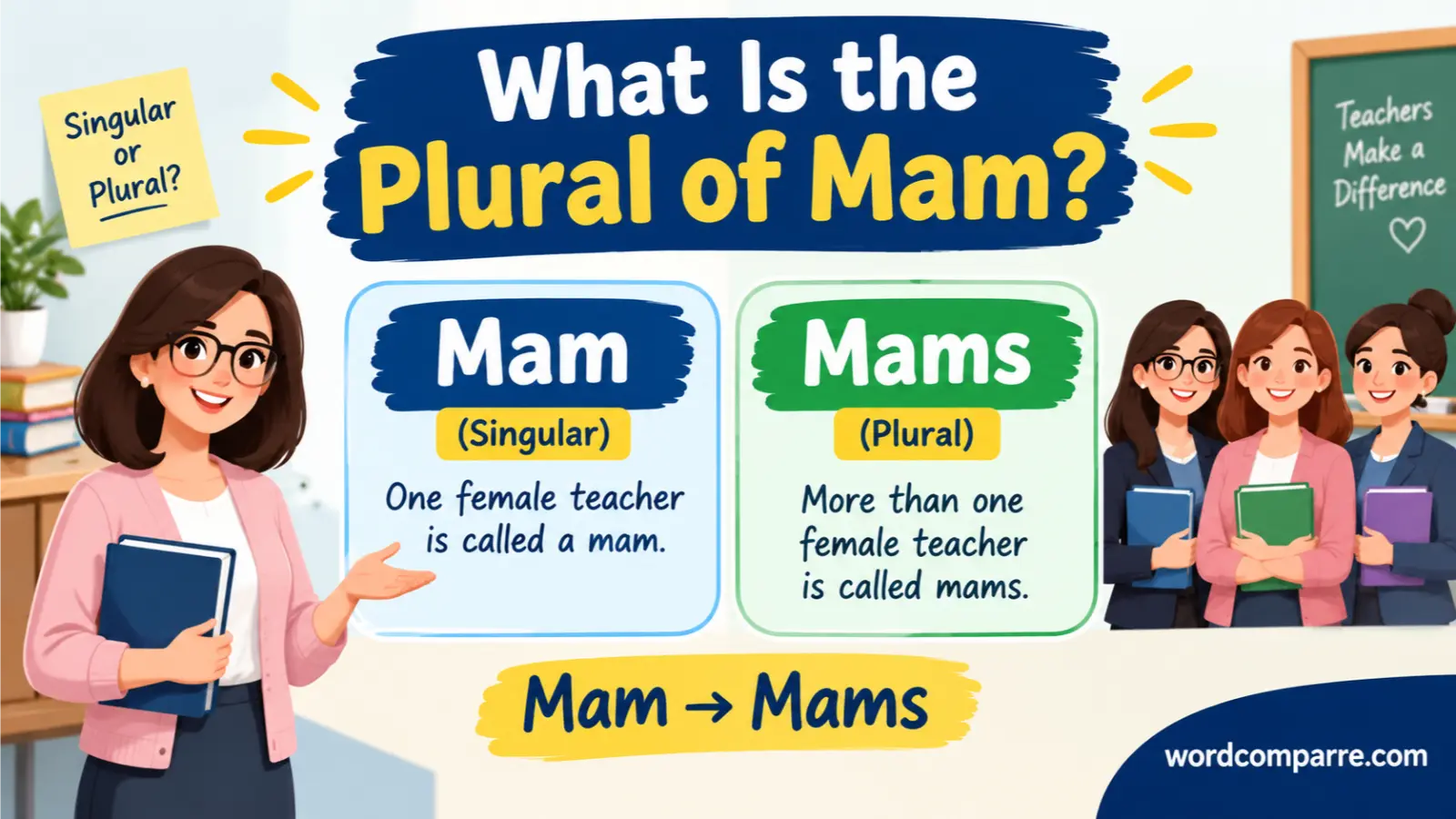
The plural of mam is mams. The word mam is an informal term for a mother, commonly used in parts of the United Kingdom and Ireland. When you refer to more than one person who is called a mam, you can use mams.
Understanding the plural of mam helps you use this regional word correctly in everyday conversations, informal writing, and sentences about families. Although mams is a valid plural, the word mums or mothers may be more familiar in other English-speaking regions.
What Is the Plural of Mam?
The plural of mam is mams. It follows the regular English plural rule of adding -s to a singular noun.
- Singular: mam
- Plural: mams
A mam is a mother or a woman addressed as someone’s mother in certain regional varieties of English. The plural mams refers to two or more mothers.
Examples:
- The mams gathered outside the school after the event.
- Several mams helped organize the children’s party.
- The local group invited all the mams to its family celebration.
- The mams discussed their children’s school activities.
In these examples, mams refers to multiple mothers. The spelling does not change beyond adding the letter s.
What Does Mam Mean?
The word mam is an informal word for mother or mum. Its meaning is similar to other familiar family terms, but its use depends on regional speech and personal preference.
For example, someone might say, “My mam is coming to visit,” instead of “My mum is coming to visit.”
The word can appear in conversations, personal messages, local stories, and informal writing. It is not usually necessary to replace mam with mother unless a more formal tone is appropriate.
Examples:
- My mam makes the best Sunday dinner.
- I called my mam after work.
- Her mam attended the school meeting.
- His mam helped him prepare for the interview.
These sentences show how mam can be used naturally when speaking about one mother.
Why Is the Plural of Mam Mams?
English nouns commonly form their plurals by adding -s or -es. Because mam ends in a consonant and does not require a special plural ending, adding -s produces mams.
The same basic pattern appears in many everyday nouns.
| Singular | Plural |
|---|---|
| Mam | Mams |
| Mum | Mums |
| Dad | Dads |
| Aunt | Aunts |
| Friend | Friends |
| Teacher | Teachers |
The spelling rule is straightforward: when referring to more than one mam, write mams.
There is no need to add -es, change the vowel, or remove a letter.
Incorrect for the standard plural: mamies, mam’s, or mamess.
Correct plural: mams.
Remember that mam’s is different from mams. An apostrophe usually indicates possession or a contraction, not an ordinary plural.
Is Mams a Correct Word?
Yes, mams is a correct plural of mam when mam is being used as a common noun meaning mother.
However, the word may sound more natural in some communities than in others. English varies by region, and speakers do not all use the same family terms.
For example, a person who regularly calls their mother mam may naturally use mams when talking about several mothers. Someone who usually says mum may prefer mums instead.
Both forms can be correct in their appropriate contexts.
Examples:
- The mams waited for the children outside the classroom.
- The mums organized a fundraising event.
- The mothers attended the parent meeting.
All three sentences are grammatically correct. The choice depends on the word the speaker uses and the intended audience.
Mam vs. Mams: What Is the Difference?
The main difference between mam and mams is number. Mam is singular, while mams is plural.
| Word | Grammatical form | Meaning | Example |
|---|---|---|---|
| Mam | Singular noun | One mother | My mam is at home. |
| Mams | Plural noun | Two or more mothers | The mams are at home. |
Use mam when talking about one person. Use mams when referring to more than one person.
Singular examples:
- Her mam works at the hospital.
- My mam loves gardening.
- His mam called this morning.
Plural examples:
- Their mams work at the hospital.
- The mams love gardening.
- Our mams called this morning.
Notice that the verb may also change depending on whether the subject is singular or plural. For example, my mam works uses a singular verb, while the mams work uses a plural verb.
Mam vs. Mum vs. Mother
Although these words can refer to the same family relationship, they differ in tone and regional usage.
| Word | Typical usage | Example |
|---|---|---|
| Mam | Informal and regional | My mam is cooking. |
| Mum | Informal, especially in British English | My mum is cooking. |
| Mother | Neutral or more formal | My mother is cooking. |
| Mom | Common in American English | My mom is cooking. |
Mam is associated with particular regional varieties of English, including speech in Wales, northern England, and parts of Ireland. Usage differs within these regions, so it should not be assumed that everyone in a particular area uses the word.
Mum is widely used in British English, while mom is the usual spelling in American English.
Mother works in both formal and informal contexts, although it can sound more formal than mam, mum, or mom in everyday family conversations.
The appropriate plural depends on the singular word being used:
- Mam → Mams
- Mum → Mums
- Mom → Moms
- Mother → Mothers
These forms should not be mixed without a reason.
Is Mam’s the Plural of Mam?
No. Mam’s is not the standard plural of mam. The apostrophe changes how the word functions in a sentence.
Use mams to refer to more than one mother. Use mam’s to show possession or, in some contexts, to represent a contraction.
Examples of the plural:
- The mams attended the meeting.
- Several mams volunteered at the school.
Examples of possession:
- My mam’s coat is hanging by the door.
- The mam’s phone rang during lunch.
In the sentence “My mam’s coat is hanging by the door,” the apostrophe indicates that the coat belongs to one mam.
When referring to something belonging to multiple mams, write mams’.
For example: “The mams’ meeting starts at six o’clock.”
Here is the distinction:
- Mam: One mother.
- Mams: More than one mother.
- Mam’s: Belonging to one mam, or a contraction where appropriate.
- Mams’: Belonging to multiple mams.
Learning this difference can help prevent common punctuation errors.
How to Use Mams in Sentences
The word mams can be used as the subject or object of a sentence, depending on what you want to say.
Mams as the Subject
When mams performs the action, it functions as the subject.
Examples:
- The mams organized the school fundraiser.
- Several mams arrived early.
- The mams discussed the upcoming celebration.
- Local mams supported the community event.
Because mams is plural, it generally takes a plural verb in the present tense.
For example, write “The mams are ready,” rather than “The mams is ready.”
Mams as the Object
When an action is directed toward the mams, the word can function as an object.
Examples:
- The school invited the mams to the ceremony.
- The children thanked their mams.
- The organizer contacted the mams yesterday.
- The event welcomed mams from the surrounding community.
These examples demonstrate how the plural noun fits into different sentence structures.
Mams in Informal Writing
The word can also appear in informal messages, community announcements, and personal writing when it matches the audience’s usual vocabulary.
Examples:
- A big thank you to all the mams who helped today.
- The mams are meeting at the school entrance.
- We invited the mams to join the family celebration.
For a wider international audience, mothers may be clearer. For a regional audience that regularly uses mam, the word may feel more natural and familiar.
Common Mistakes When Using the Plural of Mam
Writers sometimes confuse plural forms with possessive forms or choose a regional word that does not suit their audience. The following examples explain how to avoid these problems.
Adding an Apostrophe to Make a Plural
Incorrect: The mam’s attended the meeting.
Correct: The mams attended the meeting.
An apostrophe is not normally needed to form the plural of a regular noun.
Using the Singular Verb With a Plural Subject
Incorrect: The mams is waiting outside.
Correct: The mams are waiting outside.
The plural subject mams takes the plural verb are.
Confusing Mams With Mums
Mams and mums can refer to the same family relationship, but they come from different singular forms.
If you start with mam, use mams. If you start with mum, use mums.
Assuming Mam Is Used Everywhere
Not every English speaker uses mam. Some people prefer mum, mom, or mother. Choose the term that fits the speaker, context, and audience.
Using Mams in Formal Writing Without Considering the Audience
Mams is appropriate when the regional term is relevant, but mothers may be more suitable in formal reports, academic writing, or international communication.
The goal is to select the word that communicates the intended meaning clearly.
Is Mam Used in British and American English?
The word mam is associated with regional varieties of British and Irish English, but it is not the standard everyday term in every part of the United Kingdom or Ireland.
In some communities, mam is a familiar word for mother. In others, mum is more common. American English generally favors mom.
The plural forms follow their respective spellings:
- British or regional English: mam → mams.
- British English: mum → mums.
- American English: mom → moms.
- General English: mother → mothers.
These are general patterns rather than absolute rules. Individual families and communities may use different terms.
If you are writing for readers from different countries, consider explaining mam the first time it appears. This makes the article easier to understand without incorrectly labeling the word as wrong.
Frequently Asked Questions
What Is the Plural of Mam?
The plural of mam is mams. It refers to more than one mother when mam is the term being used.
Is Mams Grammatically Correct?
Yes. Mams is a valid regular plural of mam. Its naturalness depends on regional usage and the context in which it appears.
Is Mam’s or Mams Correct?
Mams is correct when referring to multiple mothers. Mam’s usually indicates possession by one mam or functions as a contraction in a suitable sentence.
What Is the Difference Between Mam and Mum?
Both words can mean mother. Mam is associated with particular regional varieties of English, while mum is widely used in British English. Their use depends on region and personal preference.
Is Mams the Same as Mothers?
They can refer to the same people, but they differ in tone and usage. Mams is informal and regional, whereas mothers is a more widely understood term suitable for formal and general writing.
Can I Use Mams in Formal Writing?
You can use mams when the regional term is relevant to your subject or audience. For formal writing intended for a broad readership, mothers may be clearer.
What Is the Possessive Form of Mams?
The possessive form of the plural mams is mams’. For example, “The mams’ meeting was postponed” means the meeting associated with the mams was postponed.
Conclusion
The plural of mam is mams. It follows the regular English rule of adding -s to a singular noun. The word mam is an informal, regionally used term for mother, and its plural is appropriate when referring to multiple people who are called mams.
Remember the difference between mam, mams, and mam’s. Use mam for one mother, mams for more than one, and mam’s when expressing possession or a suitable contraction. Depending on your audience, mums, moms, or mothers may be more familiar alternatives.
By understanding these distinctions, you can choose the correct spelling and use the word naturally in everyday conversation and writing.