If you’ve come across knicking or nicking, you’re probably wondering if both spellings are correct or if one is simply a mistake. The confusion is understandable because many English words beginning with a silent k have changed over time, while others have retained it only in certain forms or names.
In modern English, nicking is the standard spelling in almost every situation. Knicking is extremely rare and usually appears only as a misspelling or as part of a proper name, brand, or surname. Understanding why this difference exists will help you write more confidently and avoid common spelling errors.
Quick Answer
Nicking is the correct spelling in standard English.
Knicking is generally considered a misspelling unless it is part of a specific proper noun, company name, surname, or intentionally stylized word.
What Does Each Spelling Mean?
Nicking
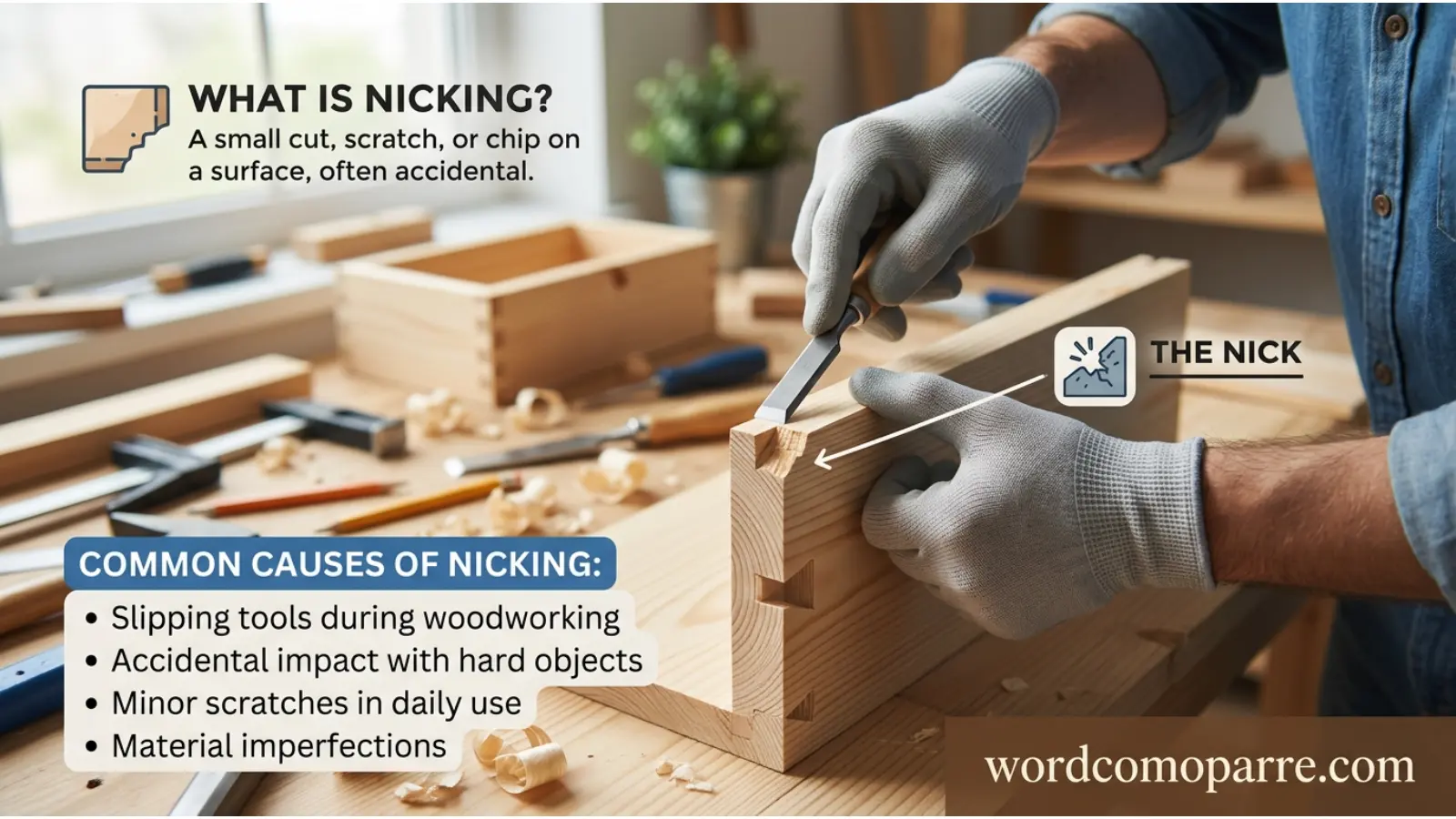
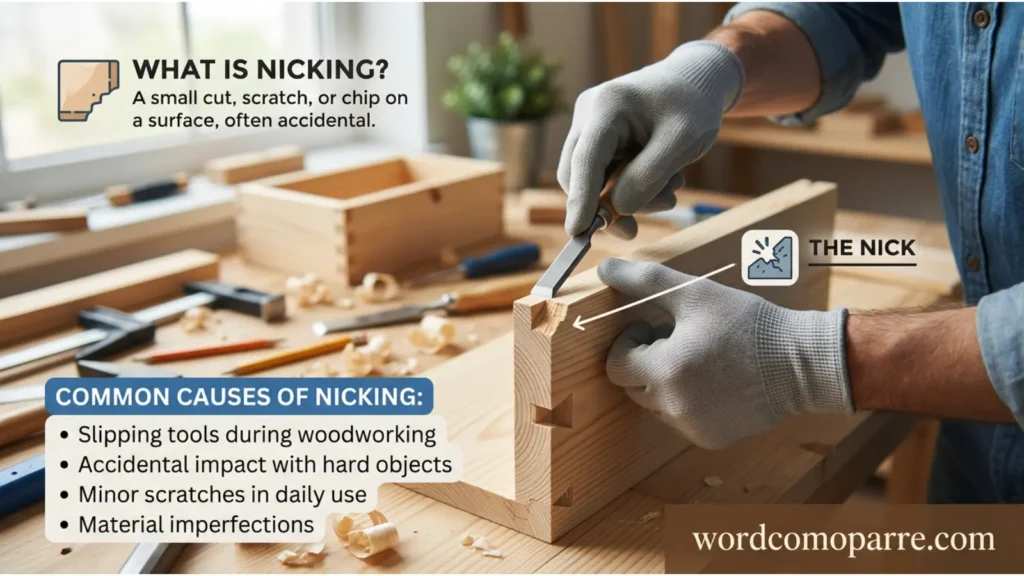
Nicking is the present participle of nick and has several accepted meanings.
It can mean:
- Making a small cut or notch.
- Accidentally cutting something slightly.
- Stealing something (mainly informal British English).
- Arresting someone (informal British English).
Examples:
- Be careful not to nick your finger while cooking.
- The machine kept nicking the edge of the fabric.
- Someone was caught nicking a bicycle.
- The police were nicking suspects after the investigation.
Knicking
Knicking is not recognized as the standard present participle of any common English verb. Most dictionaries do not list it as an accepted word.
You may occasionally see it because:
- Someone accidentally added the silent k from words like knife or knock.
- It is part of a surname or business name.
- It is an intentional creative spelling.
Comparison Table Of Knicking Or Nicking
| Feature | Nicking | Knicking |
|---|---|---|
| Standard English spelling | Yes | No |
| Found in major dictionaries | Yes | Generally no |
| Used in everyday writing | Very common | Extremely rare |
| Suitable for academic writing | Yes | No, unless it is a proper name |
| Can refer to making a small cut | Yes | No |
| Can mean stealing in British English | Yes | No |
| Can mean arresting in British English | Yes | No |
Where Does the Confusion Come From?
The confusion comes from English words that begin with a silent k, such as:
- knife
- knit
- knee
- knock
- knot
Writers sometimes assume that nick should also begin with kn, even though it has always been spelled without the silent k in modern English.
Because English spelling contains many historical patterns, this mistake is understandable but still incorrect.
What Do Dictionaries Recommend?
Leading English dictionaries recognize nick and nicking as the correct forms.
They define nick with meanings including:
- a small cut
- a notch
- to cut slightly
- to steal (informal)
- to arrest (British informal)
Major dictionaries do not recognize knicking as a standard English spelling.
Real-Life Examples
Correct:
- I accidentally nicked my thumb while opening the package.
- The tailor was nicking the fabric to mark the seam.
- Someone was caught nicking a wallet on the train.
- The police were nicking offenders throughout the evening.
Incorrect:
- I was knicking vegetables for dinner.
- He kept knicking the paper with scissors.
Correct only if referring to a proper name:
- We visited Knicking Studio for the exhibition.
Common Mistakes
Many writers make these errors:
- Adding a silent k because of words like knife.
- Assuming every word beginning with the “n” sound follows the same spelling pattern.
- Using spell-check incorrectly by ignoring suggested corrections.
- Copying the misspelling from social media or unedited content.
Easy Memory Trick
Think of this simple phrase:
Nick means a small cut, and small cuts do not need a silent K.
If you’re talking about cutting, stealing, or arresting, nicking is almost always the correct choice.
Professional Writing Recommendation
For professional, academic, business, and online writing, always use nicking unless Knicking is the official spelling of a person’s name, company, product, or another proper noun.
Using the standard spelling improves clarity, credibility, and consistency while matching dictionary and style guide recommendations.
Frequently Asked Questions
Is knicking a real English word?
Not in standard English. It is usually a spelling mistake or a proper name.
Is nicking correct?
Yes. Nicking is the accepted spelling and appears in major English dictionaries.
Can nicking mean stealing?
Yes. In informal British English, nicking commonly means stealing something.
Can nicking mean arresting someone?
Yes. In informal British English, the police may nick someone, meaning they arrest them.
Why do people write knicking?
Most people mistakenly add the silent k because they are familiar with words like knife, knee, or knock.
Should I ever use knicking in formal writing?
Only if it is part of an official name, such as a person’s surname or a registered business name.
Conclusion
When comparing knicking or nicking, the correct choice for standard English is nicking. It is the recognized spelling in dictionaries and is used when referring to making a small cut, stealing something in informal British English, or arresting someone. Knicking is not accepted as a standard spelling and should generally be avoided unless it is part of a proper noun. Choosing nicking ensures your writing is accurate, professional, and easy for readers to understand.

Alex Wordsmith is a comparison research writer and content specialist at WordComparre.com. He focuses on analyzing word meanings, spelling variations, grammar distinctions, and language usage to help readers make informed writing choices. Through clear explanations and practical examples, Alex simplifies complex language topics for students, writers, and professionals. His goal is to make English learning easier, more accurate, and accessible for everyone.