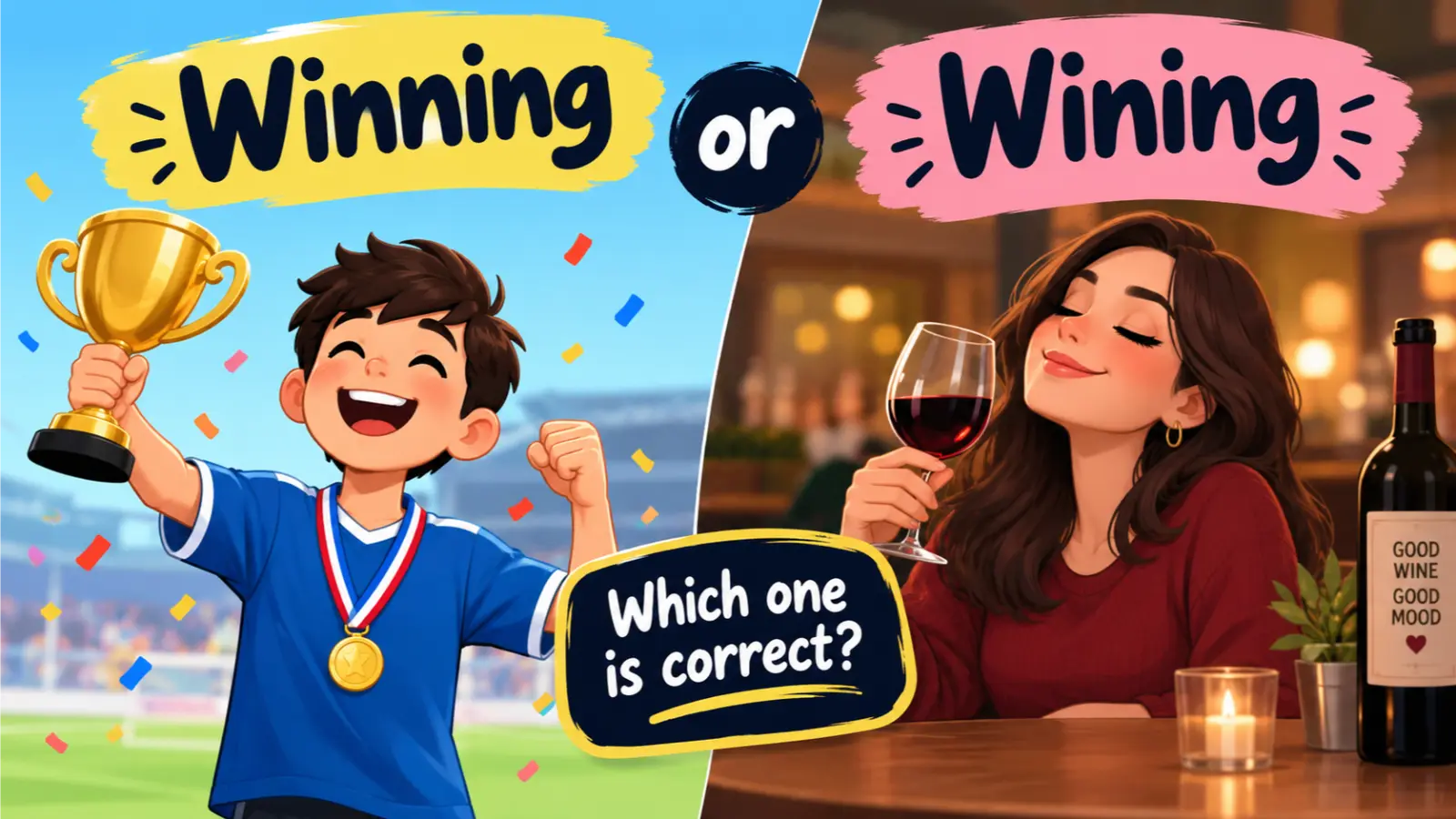
Choosing between winning or wining can be confusing because these words differ by only one letter. However, both spellings are correct in English, and each has a different meaning. The right choice depends on what you want to say.
Winning means succeeding, achieving victory, or gaining an advantage. Wining is the present participle of the verb wine, which can refer to drinking or serving wine. Understanding their meanings and spelling rules will help you avoid mistakes in everyday conversations, school assignments, and professional writing.
Quick Answer: Winning or Wining
Both words are correct, but they are not interchangeable.
- Winning: Use this word when someone succeeds, wins a competition, or achieves a goal.
- Wining: Use this word when referring to drinking or serving wine, especially in the expression wining and dining.
Examples:
- Correct: Our team is winning the championship.
- Correct: They spent the evening wining and dining their guests.
Easy rule: If you mean success or victory, write winning. If you mean an activity involving wine, wining may be appropriate.

What Does Winning Mean?
Winning is the present participle of the verb win. It describes the action of achieving victory, succeeding in a competition, or gaining something through effort.
People commonly use winning when discussing sports, games, awards, business achievements, and personal goals. It can also describe something that attracts people or helps someone gain their approval.
Examples of Winning in Sentences
- Our school team is winning the basketball tournament.
- She celebrated after winning the spelling competition.
- The company is winning new customers with excellent service.
- His winning smile made everyone feel welcome.
- Winning requires patience, practice, and determination.
Winning can also function as an adjective. For example, a winning strategy is a strategy that helps achieve success, while a winning personality describes someone whose qualities attract others.
What Does Wining Mean?
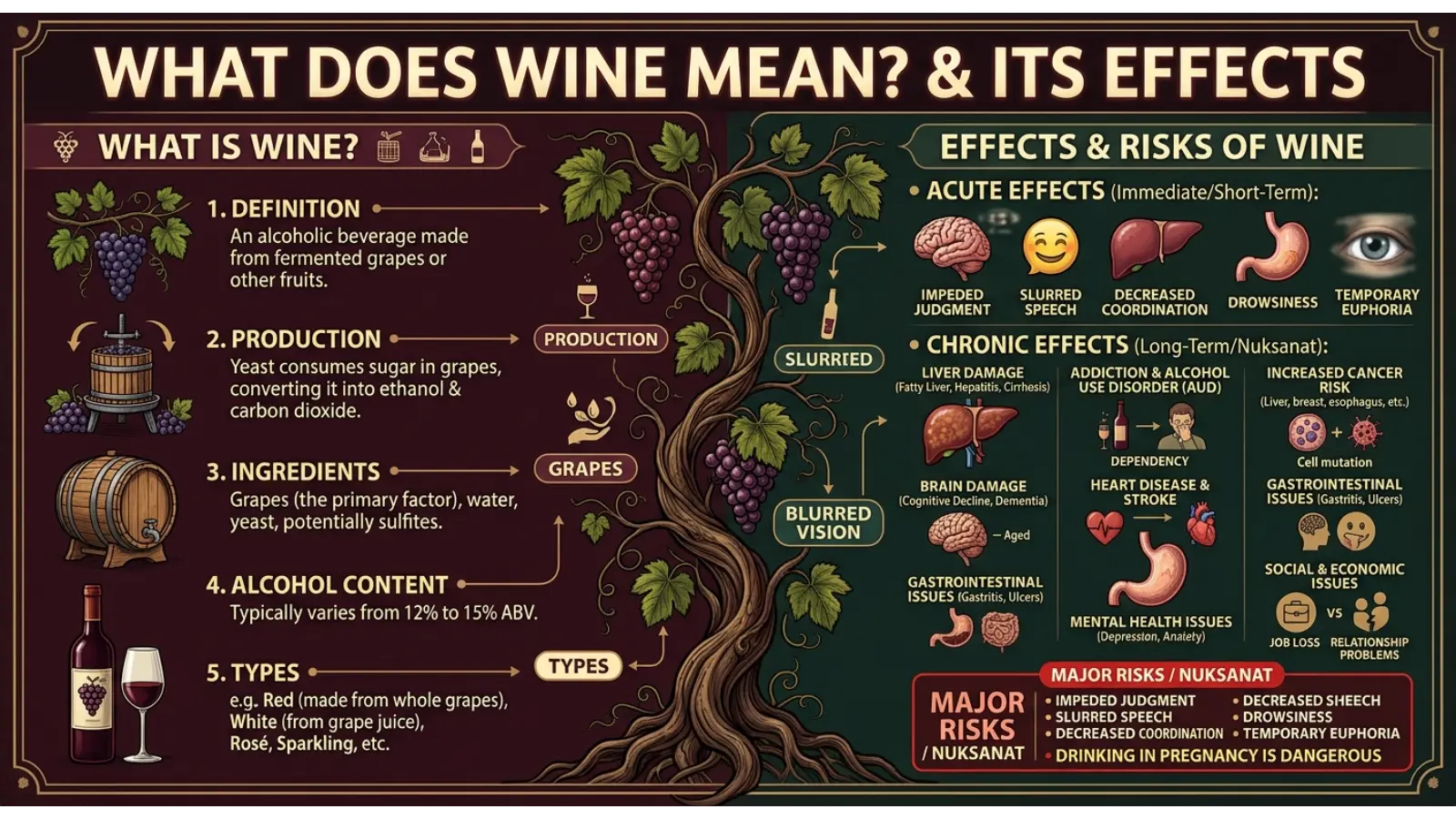
Wining is the present participle of the verb wine. In ordinary usage, this verb refers to drinking or providing wine, particularly when entertaining guests.
The word is much less common than winning. You will most often encounter it in the expression wining and dining, which describes entertaining someone with food and drink.
Examples of Wining in Sentences
- The hosts were wining and dining their special guests.
- The evening involved wining, dining, and conversation.
- The company spent the evening wining and dining its business partners.
- They enjoyed wining and dining during their holiday.
Wining is not the correct spelling when you mean succeeding in a race, winning a prize, or achieving a goal.
Winning vs Wining: Comparison Table
| Feature | Winning | Wining |
|---|---|---|
| Base word | Win | Wine |
| Part of speech | Verb form; also an adjective and noun in certain uses | Verb form |
| Main meaning | Achieving victory or success | Drinking or serving wine |
| Spelling pattern | Double the final n before adding -ing | Remove the silent e before adding -ing |
| Common usage | Very common | Uncommon |
| Example | She is winning the race. | They are wining and dining their guests. |
The main difference is the base word. Winning comes from win, while wining comes from wine. Remembering this distinction makes it easier to choose the correct spelling.
Why Do People Confuse Winning and Wining?
People confuse these words because they look almost identical. Both end in -ing, and the only spelling difference is the extra letter n in winning.
Another reason is that English uses different spelling rules when adding endings to words. Some writers forget to double the final consonant in win, while others recognize wining as a valid word and assume it can also describe success.
Context provides the best clue. If a sentence discusses a competition, a prize, or an achievement, winning is the appropriate choice. If it describes serving wine or entertaining guests with wine, wining may be correct.
Spelling Rules for Winning and Wining
Understanding how each word is formed helps prevent spelling errors.
How Winning Is Formed
The verb win ends with a consonant preceded by a short vowel. When adding -ing, the final consonant doubles.
- Win + ing = winning.
- Run + ing = running.
- Sit + ing = sitting.
- Stop + ing = stopping.
This pattern preserves the short vowel sound in the original word.
How Wining Is Formed
The verb wine ends with a silent e. When adding -ing, the final e is removed.
- Wine + ing = wining.
- Dine + ing = dining.
- Shine + ing = shining.
- Ride + ing = riding.
Both forms follow standard English spelling patterns. The difference comes from their base words, not from a British or American spelling preference.
What Do Dictionaries Say About Winning and Wining?
Standard English dictionaries recognize both words, but they define them differently.
Winning is associated with win and describes gaining victory, achieving success, or attracting approval. It appears in common expressions such as winning a game, winning an award, and a winning smile.
Wining is associated with the verb wine and is used for wine-related activities, particularly in the expression wining and dining.
Neither word is a regional spelling alternative to the other. Writers should select the word that matches the intended meaning rather than treating one as a universal correction for the other.
Winning or Wining in British and American English
There is no standard British versus American spelling difference between these words.
Both British and American English use winning for victory and success. Both also recognize wining in its wine-related sense.
Examples:
- British English: Our team is winning the match.
- American English: Our team is winning the game.
- British English: They enjoyed wining and dining their guests.
- American English: They enjoyed wining and dining their guests.
The surrounding vocabulary may differ between regions, but the spelling distinction remains the same.
Common Mistakes to Avoid
Knowing the meaning of each word helps you avoid several common errors.
Mistake 1: Using Wining for a Competition
Incorrect: Our team is wining the final.
Correct: Our team is winning the final.
The sentence describes success in a competition, so the spelling requires two n’s.
Mistake 2: Writing Winning and Dining
Incorrect: The company was winning and dining its clients.
Correct: The company was wining and dining its clients.
The established expression refers to entertaining people with food and wine, not achieving victory.
Mistake 3: Assuming Wining Is Always Wrong
Incorrect assumption: Wining is never a real English word.
Correct explanation: Wining is a valid word when it refers to the verb wine. It is simply much less common than winning.
Mistake 4: Forgetting the Base Word
Incorrect: She is wining the race.
Correct: She is winning the race.
Always identify the original verb before adding an ending. Win becomes winning, while wine becomes wining.
Easy Memory Trick for Winning or Wining
Use these simple reminders to remember the difference.
- Winning has two n’s for a win. Think of a medal, trophy, or championship.
- Wining comes from wine. Think of a glass of wine or a dinner with guests.
- Win becomes winning. Double the final n before adding -ing.
- Wine becomes wining. Remove the silent e before adding -ing.
You can also test yourself by replacing the word with a simpler phrase. If you mean coming first, choose winning. If you mean drinking or serving wine, wining may fit.
Professional Writing Recommendations
Choosing the correct word improves clarity in articles, emails, academic assignments, and business documents.
For Academic Writing
Use winning when describing competition results, achievements, or successful outcomes.
Example: The researchers developed a winning strategy for the final round of the competition.
For Business Writing
Use winning when discussing successful campaigns, sales results, or competitive advantages.
Example: The company introduced a winning marketing strategy.
Use wining only when the subject genuinely involves wine or wine-related entertainment.
For Blogs and SEO Content
Use winning naturally when writing about sports, contests, achievements, or success. If your article explains the difference between these two words, include wining where relevant.
Avoid inserting either spelling repeatedly just to increase keyword frequency. Clear explanations and useful examples help readers more than unnecessary repetition.
For Everyday Communication
Choose the spelling that matches your intended meaning. In most everyday situations involving success or victory, winning will be the correct choice.
Frequently Asked Questions
1. Is winning or wining correct?
Both are correct English words. Winning refers to success or victory, while wining relates to drinking or serving wine.
2. Why does winning have two n’s?
The final n in win doubles before the suffix -ing is added. This produces winning and preserves the short vowel sound.
3. Is wining a real word?
Yes. Wining is the present participle of wine. It commonly appears in the expression wining and dining, which refers to entertaining someone with food and drink.
4. Is it winning or wining a game?
The correct phrase is winning a game. It describes achieving victory. Wining does not carry this meaning.
5. Is it wining and dining or winning and dining?
The established expression is wining and dining. It refers to entertaining someone with food and wine.
6. Do British and American English spell winning differently?
No. Both varieties use winning for success and wining for the wine-related verb.
7. How can I remember the difference between winning and wining?
Remember the original words. Win becomes winning with two n’s, while wine becomes wining after the silent e is removed.
Conclusion
The difference between winning and wining becomes clear when you understand their meanings. Winning is the correct choice for victory, achievement, and success. Wining is a valid but less common word associated with drinking or serving wine.
Both words follow standard English spelling rules, and neither is simply an alternative regional spelling of the other. To avoid confusion, identify the base word first: win becomes winning, while wine becomes wining.
Remember this simple rule: use winning when someone succeeds, and use wining when the context genuinely involves wine. This small distinction will help you write more accurately and confidently.