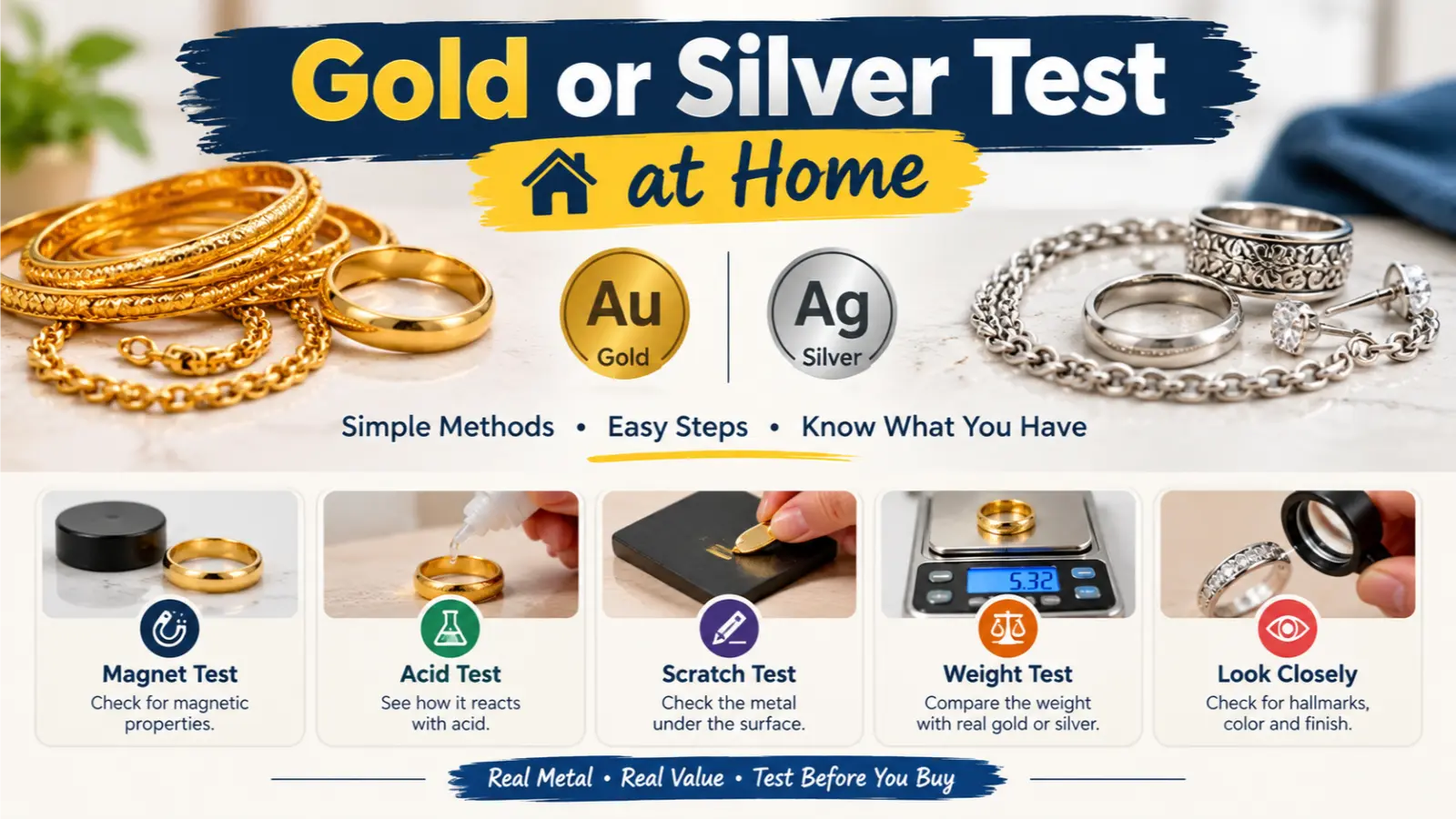
A gold or silver jewelry test can help you identify possible signs of genuine precious metals before buying, selling, or evaluating your jewelry. Many jewelry pieces look similar, but some contain solid gold or silver while others have only a thin precious metal coating. Knowing the difference can help you avoid costly mistakes.
In this guide, you will learn seven practical ways to check gold and silver jewelry at home, recognize purity marks, understand common testing mistakes, and decide when professional testing is necessary. You can also use the copy button on this website to save these useful tips for future reference.
The most important rule is that no single home test can guarantee that jewelry is genuine or confirm its exact purity.
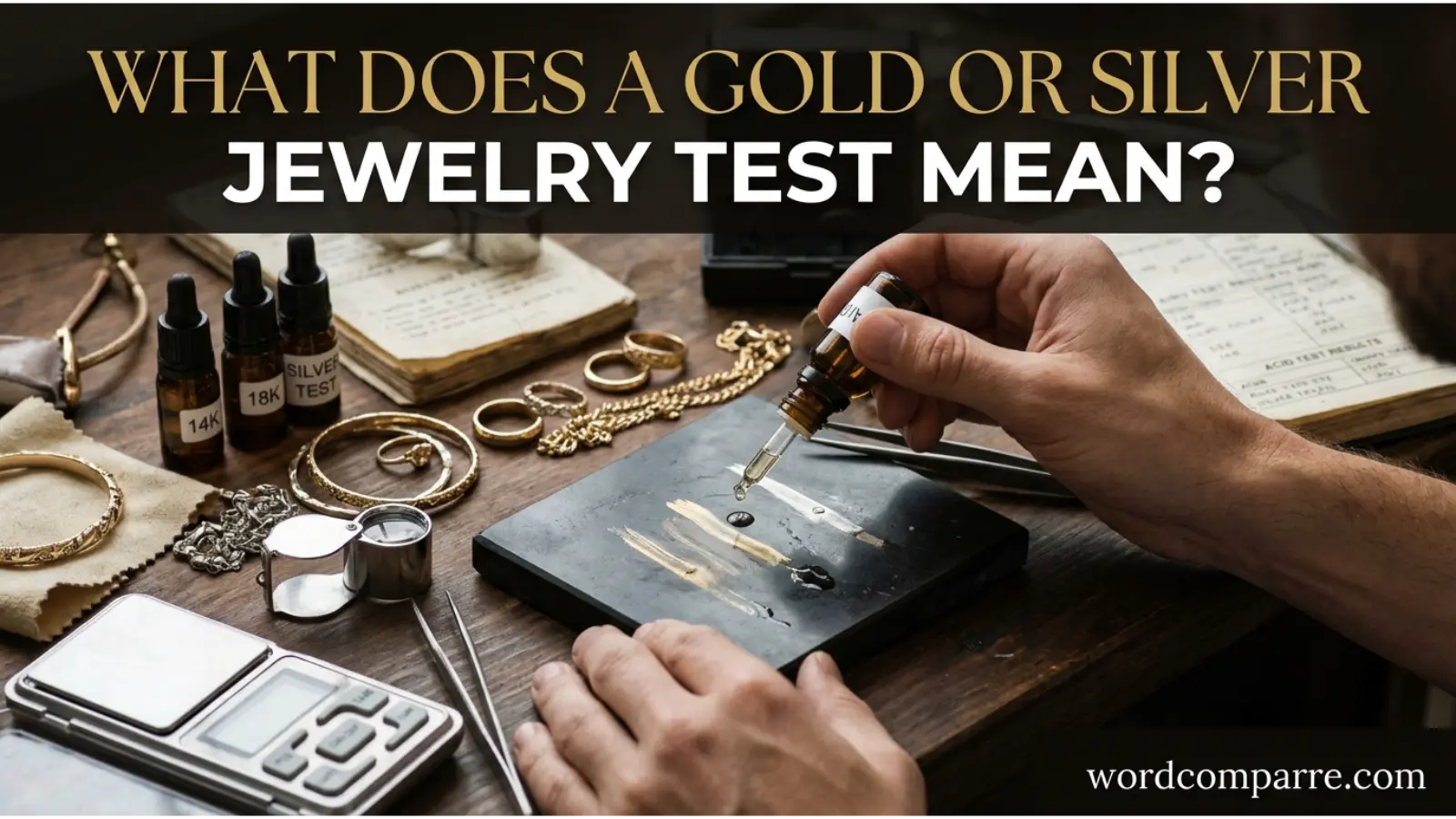
What Does a Gold or Silver Jewelry Test Mean?
A gold or silver jewelry test is a method used to examine the metal composition of a ring, necklace, bracelet, earring, or other jewelry item. It helps determine whether the piece may contain genuine gold or silver, a plated coating, or another metal.
Gold jewelry comes in different purity levels. For example, 18K gold contains 75% gold, while 14K gold contains approximately 58.3% gold. The remaining percentage consists of other metals that improve strength or change the color.
Silver jewelry also has different purity levels. Sterling silver marked 925 contains 92.5% silver, with the remaining 7.5% usually consisting of other metals.
Testing can help you understand what you own, but a professional assessment may be necessary to confirm the composition.
How to Test Gold or Silver Jewelry at Home
You can begin by checking your jewelry carefully with simple tools. These methods are useful for identifying clues, although they cannot replace laboratory analysis.
1. Check the Jewelry Hallmark
The hallmark is one of the first things to inspect when testing gold or silver jewelry. Manufacturers and authorized hallmarking systems use marks to indicate precious metal purity.
Common gold markings include:
- 10K or 417, approximately 41.7% gold.
- 14K or 585, approximately 58.3% gold.
- 18K or 750, 75% gold.
- 22K or 916, approximately 91.6% gold.
- 24K or 999, approximately 99.9% gold.
Common silver markings include:
- 800, 80% silver.
- 900, 90% silver.
- 925, 92.5% silver.
- 999, approximately 99.9% silver.
Look inside rings, on necklace clasps, or on the back of pendants. Use a magnifying glass if the markings are difficult to read.
However, a stamp alone does not prove authenticity. Counterfeit jewelry can carry false markings, and some genuine older pieces may not have a visible stamp.
2. Try the Magnet Test
A magnet test is a quick preliminary check for gold or silver jewelry.
Hold a strong magnet close to the item and observe whether the metal responds. Pure gold and pure silver are not strongly attracted to ordinary magnets.
If a piece is strongly attracted, it may contain iron, steel, or another magnetic component. Nevertheless, the result is not conclusive because jewelry can contain different metals in its clasp, spring, or internal structure.
Many imitation metals are also nonmagnetic. Therefore, jewelry that does not react to a magnet is not automatically genuine gold or silver.
Best use: Treat the magnet test as an initial screening method rather than final proof of authenticity.
3. Inspect the Color and Surface
Carefully examine your jewelry under bright, neutral lighting. Pay particular attention to edges, corners, clasps, and areas that experience frequent friction.
Gold-plated jewelry may reveal a different-colored base metal when the coating wears away. Silver-colored plating can also hide another metal underneath.
Silver may develop a dark tarnish over time because of chemical reactions with substances in the surrounding environment. However, other metals can also discolor, so tarnish is not definitive proof of genuine silver.
Use a soft cloth to remove surface dust before inspecting the item. Avoid scratching, scraping, or filing valuable jewelry because these actions can permanently damage its finish.
4. Compare the Weight and Size
Gold is denser than silver, so a solid gold object generally weighs more than a silver object of the same volume.
A professional can measure an item’s mass and volume to calculate its density. This information may help narrow down the possible metal composition.
However, jewelry often contains gemstones, hollow sections, solder, or multiple materials. These features can make a simple weight comparison unreliable.
Do not assume that a heavy ring is genuine gold or that a lightweight necklace must be fake. Weight alone cannot establish precious metal purity.
5. Observe How the Jewelry Changes Over Time
The condition of jewelry can provide useful clues about its construction and finish.
For example, a gold-plated bracelet may show a different base color around its edges after extended wear. Sterling silver may darken as tarnish develops, while solid gold generally resists ordinary tarnishing.
These differences are helpful for identifying possible warning signs, but they are not definitive tests. Plating thickness, protective coatings, cleaning products, and environmental exposure can all affect the appearance of jewelry.
If a piece has sentimental or financial value, avoid experimenting with cleaning chemicals. Ask a qualified jeweler to inspect it instead.
6. Use a Jewelry Testing Kit Carefully
Jewelry testing kits are available for checking certain gold and silver items. Some kits use specialized acids, reference materials, or electronic equipment.
Acid testing may provide an estimate of gold purity when performed correctly, but the procedure can leave marks or damage the surface. Testing solutions can also cause chemical burns if handled improperly.
Electronic testers have their own limitations, depending on the metal, coating, shape, and instrument.
Before using a kit, read the manufacturer’s instructions and safety information. Do not apply testing chemicals to gemstones, plated surfaces, or valuable jewelry without understanding the risks.
For expensive pieces, professional testing is generally a better option.
7. Get a Professional Jewelry Test
Professional testing is the most dependable next step when you need greater confidence about the composition of gold or silver jewelry.
A qualified jeweler or assay laboratory can select a method appropriate for the item and explain the limitations of the results.
Common professional methods include:
X-ray fluorescence testing. This technique, commonly called XRF, analyzes the metals present near the jewelry’s surface. It is generally nondestructive, although surface plating can affect the result.
Professional acid testing. A trained professional may use specific testing solutions and reference materials to estimate precious metal purity. Some procedures can mark or damage the item.
Fire assay. This laboratory technique can provide highly accurate gold-content measurements, but it is destructive and is not suitable for preserving a finished jewelry piece.
Ask whether the test examines only the surface or can provide information about the underlying metal. This distinction is especially important for plated jewelry.
Gold vs. Silver Jewelry: Key Differences
Gold and silver have different physical properties, purity markings, and maintenance needs.
| Feature | Gold Jewelry | Silver Jewelry |
|---|---|---|
| Common purity marks | 10K, 14K, 18K, 22K | 800, 900, 925, 999 |
| Natural appearance | Yellow, white, or rose tones | Usually silvery white |
| Tarnishing | Generally resists tarnishing | Commonly develops tarnish |
| Magnetic response | Not strongly magnetic | Not strongly magnetic |
| Density | Generally higher | Generally lower |
| Common imitation | Gold-plated base metals | Silver-plated base metals |
| Reliable confirmation | Appropriate professional analysis | Appropriate professional analysis |
Color alone cannot distinguish gold from silver. White gold, for example, may resemble silver, particularly when coated with rhodium.
The purity mark and the item’s composition provide more useful information than appearance alone.

Can You Test Real Gold or Silver with Household Items?
Many online guides recommend household experiments, but several popular methods can produce misleading results.
Does the Vinegar Test Work?
Vinegar is not a reliable way to confirm gold purity. Different metal compositions and protective coatings can affect how an item responds, so the result cannot establish whether jewelry is genuine.
Avoid using household acids as a substitute for professional testing.
Can Ice Identify Real Silver?
Silver conducts heat efficiently, which can cause ice to melt quickly when placed on a silver object. However, other metals also transfer heat, and the result depends on the temperature and size of the object.
The ice test cannot prove that a piece contains genuine silver or determine its purity.
Does Real Gold Leave a Mark on Your Skin?
Skin discoloration can occur when copper or other metals in jewelry react with sweat, cosmetics, or environmental substances. This can happen with some genuine gold alloys as well as imitation jewelry.
The absence of a mark also does not establish authenticity.
Is the Ceramic Scratch Test Reliable?
Some guides recommend rubbing jewelry against unglazed ceramic. This method can scratch the item and damage its finish. The resulting mark is not conclusive evidence of gold or silver purity.
For valuable jewelry, choose nondestructive inspection methods whenever possible.
Gold-Plated vs. Solid Gold Jewelry
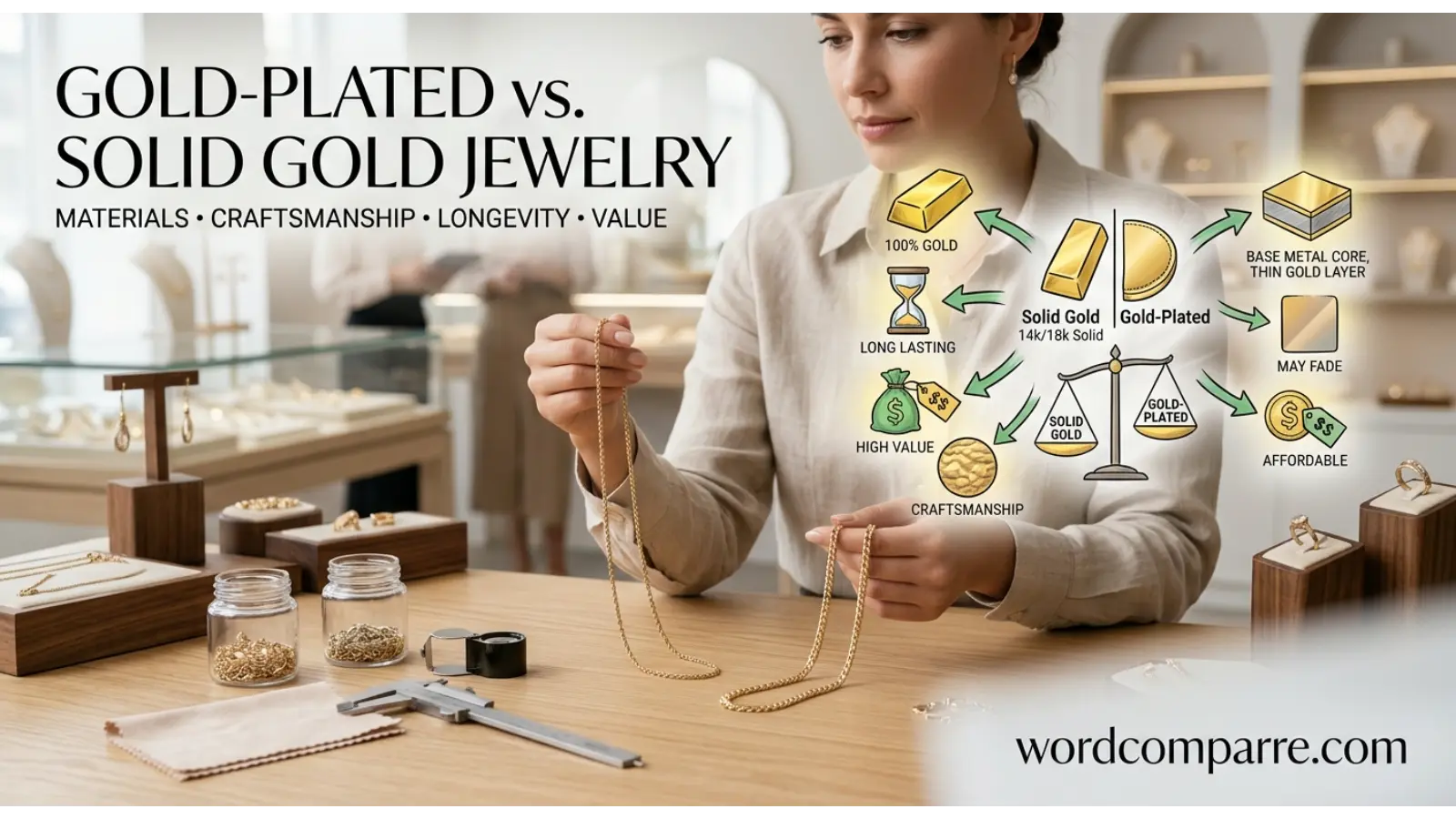
Understanding the difference between solid gold and gold-plated jewelry is essential when assessing value.
Solid gold jewelry is made from a gold alloy throughout the main metal body, although it may also contain solder, stones, or other components.
Gold-plated jewelry has a layer of gold applied over a different base metal. The thickness and durability of the coating can vary.
Gold-filled jewelry generally has a thicker mechanically bonded gold layer than ordinary gold-plated jewelry. It is still different from solid gold.
A gold-colored appearance does not indicate how much gold an item contains. Look for accurate product descriptions, appropriate markings, purchase documentation, and independent testing when needed.
Silver jewelry also comes in solid sterling silver, silver-plated, and other silver-containing forms. These categories should not be treated as equivalent.
Common Mistakes to Avoid When Testing Jewelry
A few common misunderstandings can lead to incorrect conclusions.
- Assuming that every jewelry item with a hallmark is genuine.
- Believing that nonmagnetic jewelry must be real gold or silver.
- Treating tarnish as definite proof of genuine silver.
- Using bleach, household acids, or unknown chemicals.
- Scratching valuable jewelry to reveal the metal underneath.
- Confusing gold-plated jewelry with solid gold.
- Estimating purity from weight or color alone.
- Buying expensive jewelry without appropriate documentation or independent verification.
The best approach is to combine visual observations with reliable evidence and professional testing when the value justifies it.
How to Choose a Reliable Jewelry Testing Service
If you plan to buy, sell, or insure valuable jewelry, selecting a qualified testing service can help you make a better decision.
First, ask what testing method the jeweler uses and whether it can distinguish surface plating from the underlying metal. Then confirm whether the service can provide a written report of the results.
For high-value items, consider an independent assay laboratory or a recognized hallmarking service in your country. Ask about fees, possible damage, and whether gemstones need to be removed before testing.
If you are buying jewelry, request a receipt that clearly states the metal type, purity, weight where relevant, and whether the piece is solid or plated.
These steps help you compare offers and reduce the risk of paying solid gold or silver prices for an item with a thin precious metal coating.
Frequently Asked Questions
How can I test golds or silvers jewelry at home?
Check the hallmark, inspect the surface, and use a magnet as an initial screening method. These checks can reveal warning signs, but professional analysis is needed when reliable confirmation matters.
How can I tell if gold jewelry is real without damaging it?
Start with the hallmark, product documentation, and careful visual inspection. A professional XRF test may provide useful surface-composition information without normally damaging the jewelry, although plating can affect the results.
Does real silver stick to a magnet?
Pure silver is not strongly attracted to an ordinary magnet. However, nonmagnetic imitation metals can resemble silver, so a negative magnet test does not prove authenticity.
What does 925 mean on silver jewelry?
A 925 marking indicates that the metal is intended to contain 92.5% silver, as in sterling silver. The remaining percentage usually consists of other metals. The stamp itself does not guarantee that the item is authentic.
Is 18K gold better than 14K gold?
18K gold contains more gold by weight than 14K gold. However, 14K gold is often harder and may be more suitable for frequently worn jewelry, depending on its alloy and design. The better choice depends on your budget, preferences, and intended use.
Can gold-plated jewelry pass a magnet test?
Yes. Gold-plated jewelry can contain a nonmagnetic base metal and may not react to a magnet. A magnet test cannot reliably distinguish solid gold from gold-plated jewelry.
What is the safest way to test expensive jewelry?
Have the piece examined by a reputable jeweler or qualified assay laboratory. Ask about nondestructive testing options, the limitations of the method, and whether the results can be documented.
Conclusion
Learning how to test golds or silvers jewelry at home can help you identify useful clues before buying or selling precious metals. Hallmarks, surface inspection, magnetic response, and weight comparisons are useful starting points, but none can independently confirm authenticity or exact purity.
For valuable jewelry, a qualified professional can select an appropriate testing method and explain whether the result reflects surface composition or the underlying metal. By avoiding risky household experiments and checking product descriptions carefully, you can make more informed decisions and protect your jewelry investment.