
Have you ever paused while typing and wondered how to spell teepee correctly? You are not alone. In fact, English uses three common forms: teepee, tepee, and tipi. As a result, many writers feel unsure about which one to choose. Some even add a space and write “tee pee,” which makes things more confusing.
Wondering how to spell teepee correctly? You are not alone because this word has several accepted spelling variations, including teepee, tepee, and tipi. If you want to know how to spell teepee correctly, it is important to understand how dictionaries recognize these different forms. The question of how to spell teepee correctly often comes up in school assignments, writing projects, and everyday conversations. In this guide, you will discover the correct spelling, meaning, pronunciation, and differences between these variations. By the end, you will know how to spell teepee correctly and choose the most suitable form for your writing.

Teepee, Tepee, or Tipi: Which Spelling Is Correct?
First of all, all three spellings are correct in English. Therefore, none of them is a mistake. Still, writers do not use them equally often, and each one has a slightly different feel.
- Teepee is the spelling most people recognize in everyday American English. For example, you will see it on party decorations, in kids’ books, and in camping stores.
- Tepee is a form that many dictionaries list as a main entry. Meanwhile, it appears often in older books and news articles.
- Tipi is the spelling closest to the original Lakota word. Consequently, it is common in museum texts, academic writing, and Native-authored content.
In short, you can use any of the three. Nevertheless, you should stay consistent within one piece of writing. If you start with “teepee,” finish with “teepee.”

Where Does the Word Come From?
The word comes from the Lakota language, which belongs to the Siouan language family. In Lakota, the word is thípi. People usually explain it as “they dwell” or simply “a dwelling.” The root means “to live in a place,” so the word describes a home.
Because of this origin, many writers prefer “tipi.” After all, it reflects the original word more closely than the other two spellings. In addition, many Native communities use this spelling themselves. For that reason, it is often the safest choice for respectful and accurate writing.
Over time, however, English speakers adapted the word. Early English writers heard the sound and spelled it as they heard it. Since English spelling often follows sound, “teepee” and “tepee” appeared. Thus, these variations show how a borrowed word settles into a new language.
The same thing happened with many other borrowed words. For example, English speakers changed the spelling of words from French, Spanish, and Arabic to fit English habits. So, the three spellings of this word are not unusual. Rather, they are a normal part of how languages grow.
What Is a Teepee?
Before you pick a spelling, it helps to understand the object itself. A teepee is a cone-shaped tent. Traditionally, Plains peoples such as the Lakota, Cheyenne, Blackfeet, and Crow built them. These nations lived across the Great Plains, where wind and open land made a strong, movable home very useful.
Importantly, people designed tipis for life on the move. Because the cover came down quickly, families could follow the buffalo herds across the plains. Moreover, the home was light enough to carry. Families packed the poles and the cover, and then they moved to the next camp.
A tipi was also far more than a tent. It was the center of family life. People cooked, slept, told stories, and welcomed guests inside. Likewise, many families decorated the outside with painted designs. These designs often told stories or showed family history.
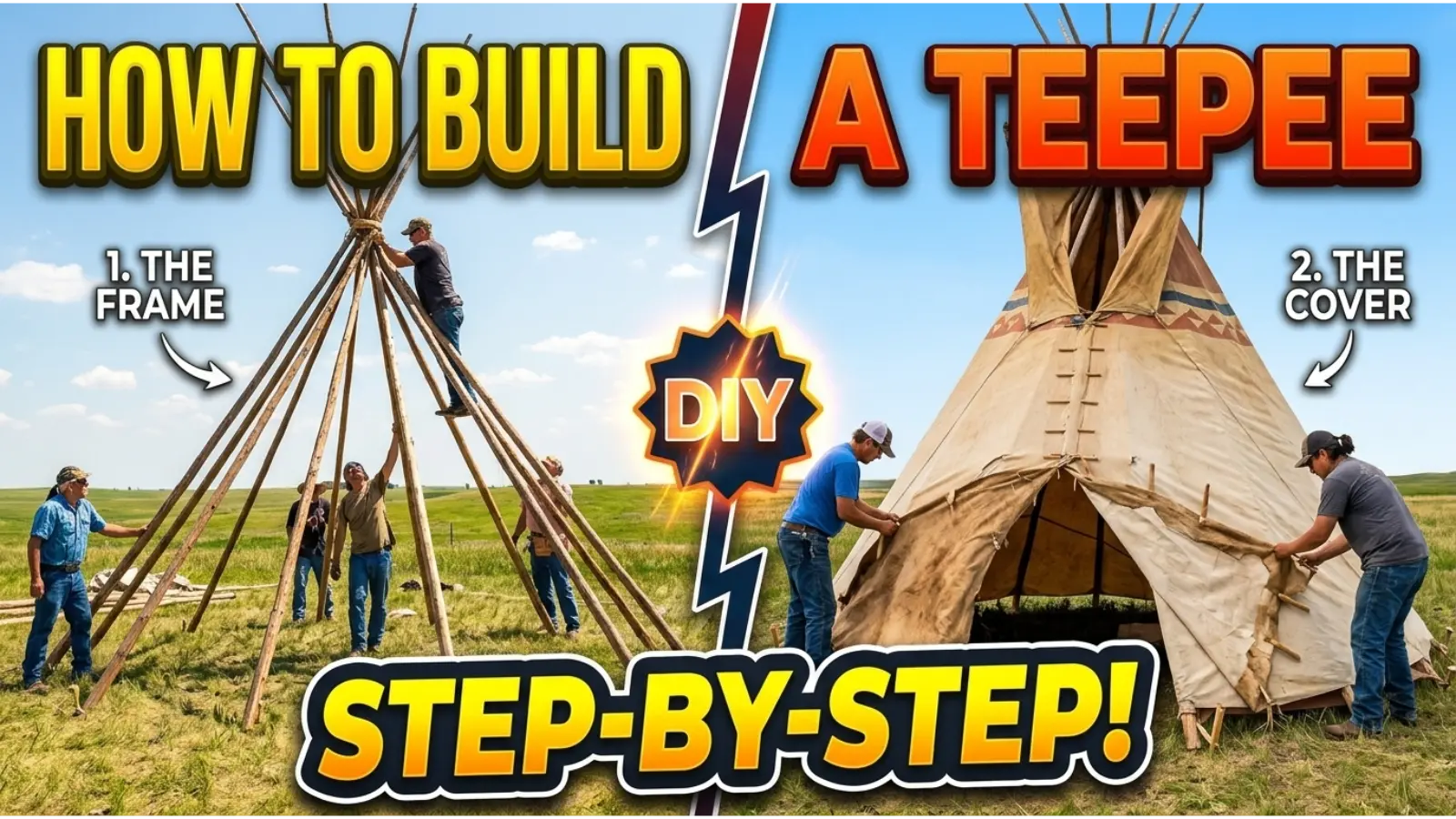
How Do People Build a Teepee?
The method is clever, and it explains why the shape works so well. Although details vary from nation to nation, the basic steps are similar.
First, builders tie a small group of long poles together near the top. Then they stand the poles up and spread the bottom ends into a circle. This step creates a strong base, often called the foundation.
Next, they add more poles. Each pole leans against the first group and rests in the fork at the top. As a result, the frame becomes stable and can face strong wind.
After that, builders wrap the cover around the frame. Traditionally, the cover was made from sewn buffalo hides. Later, many groups used canvas instead. Then, they fasten the front with wooden pins and add a door flap.
Finally, they set two outer poles to control the smoke flaps at the top. By turning these flaps, people could guide smoke out of the home and keep the wind from blowing it back inside.
This design offers several clear benefits:
- Wind resistance: The cone shape lets wind flow around the home.
- Warmth in winter: A small fire inside heats the space well. In addition, a liner on the inside wall helps hold the heat.
- Coolness in summer: Builders could roll up the bottom edge of the cover and let air flow through.
- Fast setup: Experienced builders could pitch a home in a short time.
In many Plains communities, women built and cared for the home. Therefore, they held great skill in sewing, tying, and setting the poles. Their work kept families safe and comfortable through every season.
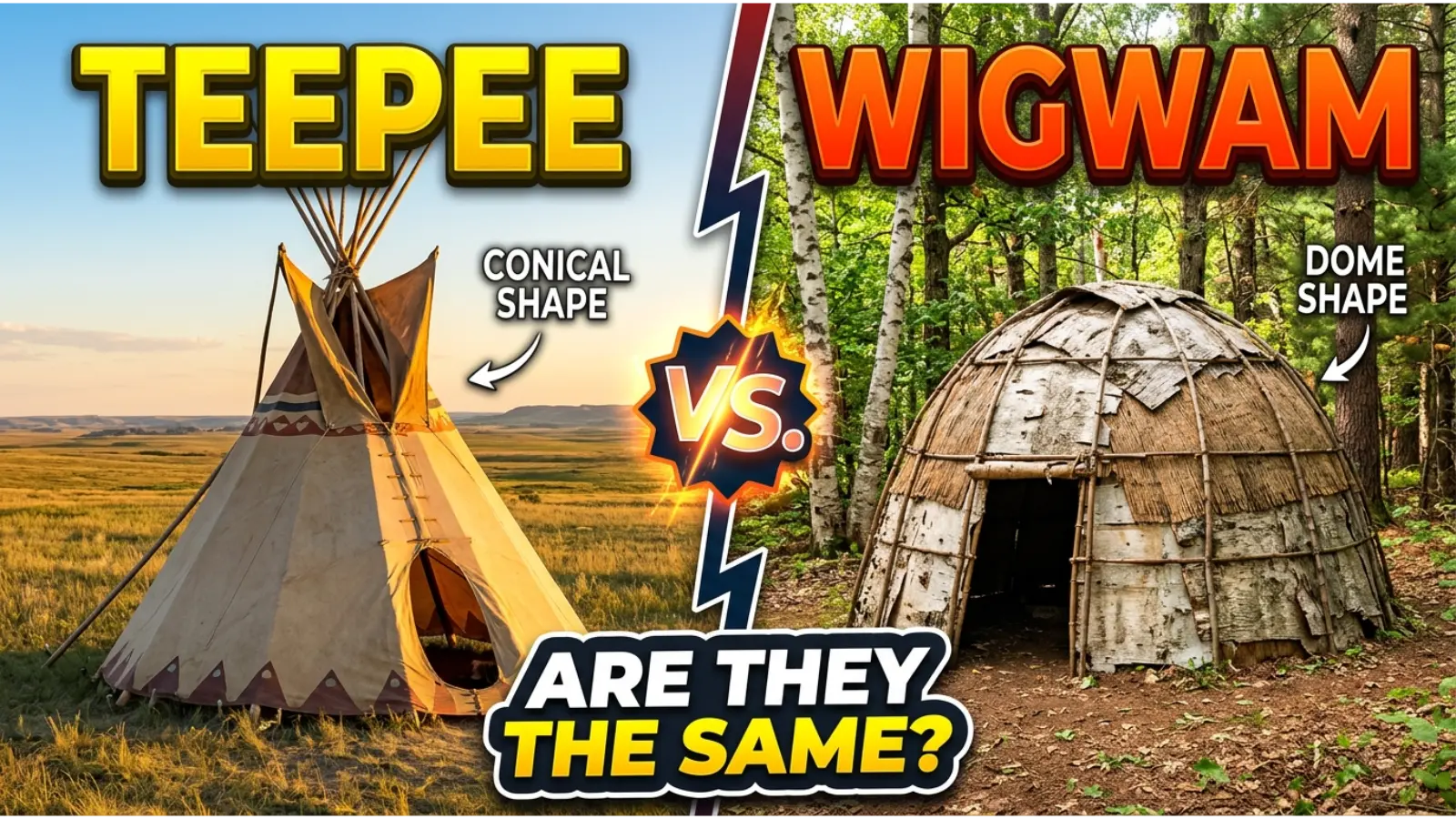
Teepee vs. Wigwam: Are They the Same?
Many people confuse these two homes. However, they are not the same. A teepee is a cone-shaped tent that Plains peoples used. A wigwam, on the other hand, is a dome-shaped home that peoples in the Eastern Woodlands built. Builders bent young trees into a rounded frame and then covered it with bark or woven mats.
Likewise, other nations built different homes. For instance, some groups built longhouses, earth lodges, or adobe homes. Each home fit the land, the weather, and the way of life of its people.
So, not every Native American home is a teepee. Therefore, use the word “teepee” or “tipi” only when it fits. This simple habit keeps your writing accurate and respectful.
Which Spelling Should You Use?
Your choice depends mostly on your audience and purpose. Here is a quick guide:
- Casual or general audiences: Use “teepee.” It is easy to recognize, and many people type it into search engines.
- Traditional or dictionary-style writing: Use “tepee.” Besides that, it works well if your style guide follows a classic dictionary.
- Cultural, historical, or academic content: Use “tipi.” Moreover, it shows respect for the word’s Lakota roots.
Additionally, check your publisher’s style guide. A school, magazine, or website may already have a preference. If you write for a Native audience, “tipi” is usually the better choice.
What if you write for search engines? In that case, you might use “teepee” in your title and “tipi” in the body, but this can confuse readers. Instead, pick one main spelling. Then, mention the other spellings once, near the start, so readers know they are all valid.
Common Mistakes to Avoid
Although the word looks simple, a few errors appear often.
- Wrong forms: “Teapee,” “teepe,” and “tipee” are incorrect. Instead, use teepee, tepee, or tipi.
- Two words: “Tee pee” is incorrect. Therefore, write the word as one word.
- Mixed spellings: For instance, writing “teepee” in one paragraph and “tipi” in the next looks careless. So, pick one spelling and keep it.
- Wrong use of the word: Not every Native American nation lived in tipis. In fact, many groups built other kinds of homes. For that reason, check the facts before you use the word.
- Treating it as a costume or toy only: Today, many people see the word on toys and party items. However, the tipi is also a real home with deep cultural meaning. As a result, write about it with care.
Quick Memory Tips
Here is an easy way to remember all three.
- “Teepee” shows how the word sounds. Think of the long “ee” sound twice.
- “Tepee” is the classic dictionary form. It looks short and tidy.
- “Tipi” is closest to the original word. Think of “i” for the original sound.
Another trick helps with the double “ee.” The word has a pointed top, and the letter “e” repeats like the poles that lean together. It sounds silly, but a silly trick often sticks. As a result, you can match your spelling to your goal in seconds.
Teepees in Modern Life
Today, people use modern versions of teepees in many ways. For example, families set up small teepees as play tents for children. Likewise, parents enjoy them as cozy reading corners in bedrooms.
In addition, campers and glampers love larger canvas versions. These tents feel spacious, and the shape sheds rain well. Meanwhile, event planners use them for weddings and festivals. Some hotels even offer them as unique places to stay.
At the same time, many Native communities still use traditional tipis. They raise them for ceremonies, gatherings, and cultural events. Therefore, the tipi is not just a part of history. It remains a living part of Native life today.
Because the word appears in so many places, spelling matters more than ever. A store owner, a teacher, a blogger, and a camper all use it. Consequently, knowing the three spellings helps you write with confidence in any setting.
Frequently Asked Questions
Is “teepee” spelled correctly?
Yes. “Teepee” is a correct and widely used spelling in English.
Which spelling do dictionaries prefer?
Many dictionaries list “tepee” as a main form. Even so, they also accept “teepee” and “tipi” as variants. Therefore, check the dictionary your publisher follows.
Is “tipi” the original spelling?
It is the closest to the original Lakota word thípi. For this reason, many Native writers and scholars prefer it.
Can I use all three spellings in one article?
You can, but you should not. Instead, choose one spelling and use it throughout your article. You may mention the others once to help readers.
Is “tee pee” with a space correct?
No. Writers should use one word. Therefore, write teepee, tepee, or tipi.
Does a teepee have the same meaning as a tipi?
Yes. Both words name the same cone-shaped tent. Only the spelling differs.
What is the difference between a teepee and a wigwam?
A teepee is cone-shaped and comes from the Plains. A wigwam is dome-shaped and comes from the Eastern Woodlands.
Conclusion
So, how do you spell teepee correctly? The truth is that teepee, tepee, and tipi are all correct. Still, “teepee” is the most common in general use, while “tipi” best reflects the word’s Lakota origin. Meanwhile, “tepee” remains a solid choice for traditional writing.
Above all, choose the spelling that fits your audience, and then use it consistently. In addition, remember that the word names a real home with a rich history. If you keep these two ideas in mind, you will write the word with confidence every time.