Choosing between effective or affective can be confusing because these two words look and sound similar. However, they have different meanings and serve different purposes in English sentences. Understanding their differences can help you avoid mistakes in academic assignments, professional emails, and everyday conversations.
The word effective describes something that produces a successful result or achieves a specific goal. In contrast, affective relates to emotions, feelings, and moods. Although both words are correct, using the wrong one can change the meaning of your sentence. Learning their definitions, grammar rules, and examples will help you choose the right word confidently.
Quick Answer: Effective vs. Affective
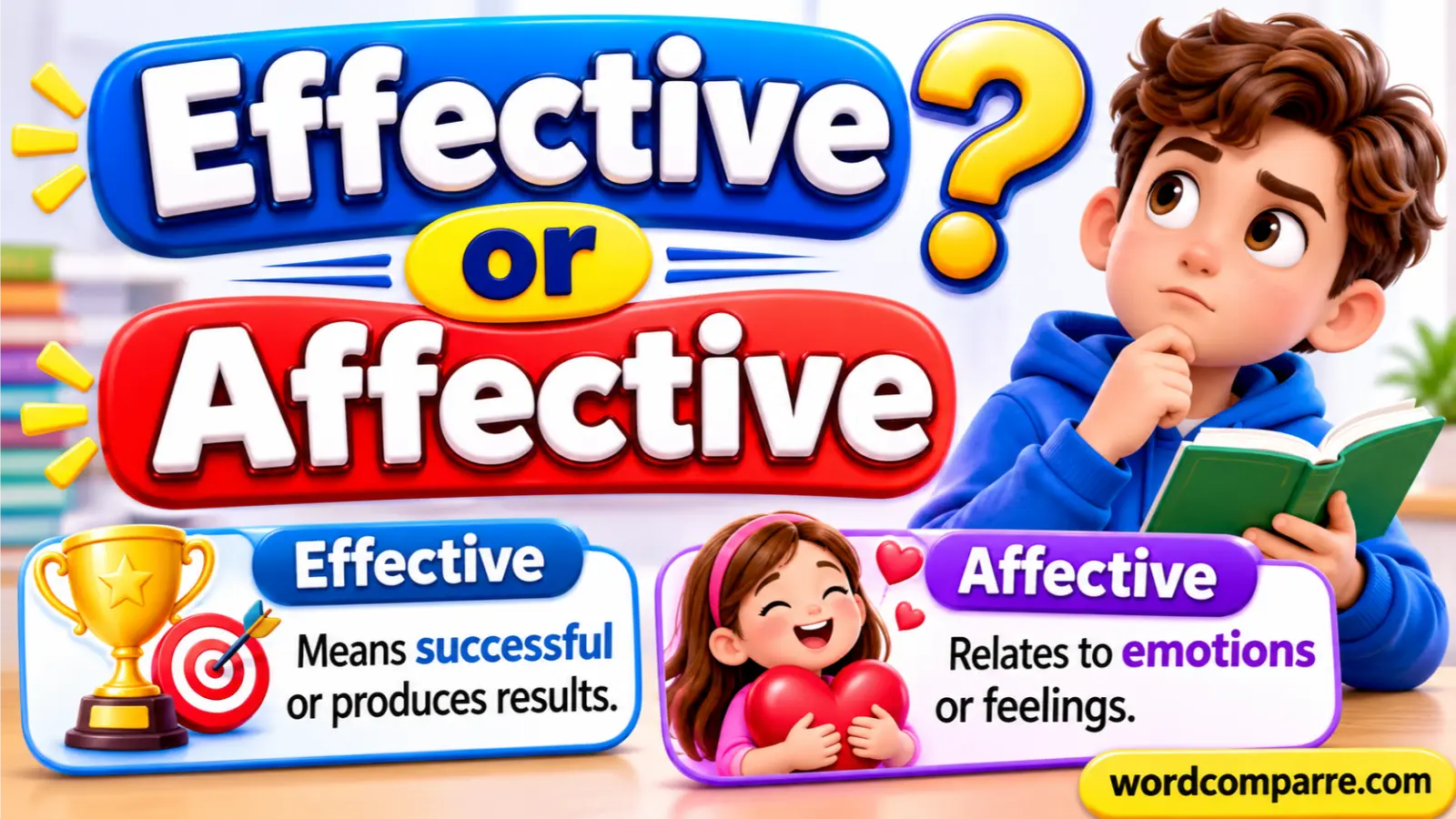
Effective means successful, useful, or capable of producing the intended result.
Affective means related to emotions, feelings, or moods.
For example:
- The new teaching method is effective.
- The study examines affective development in children.
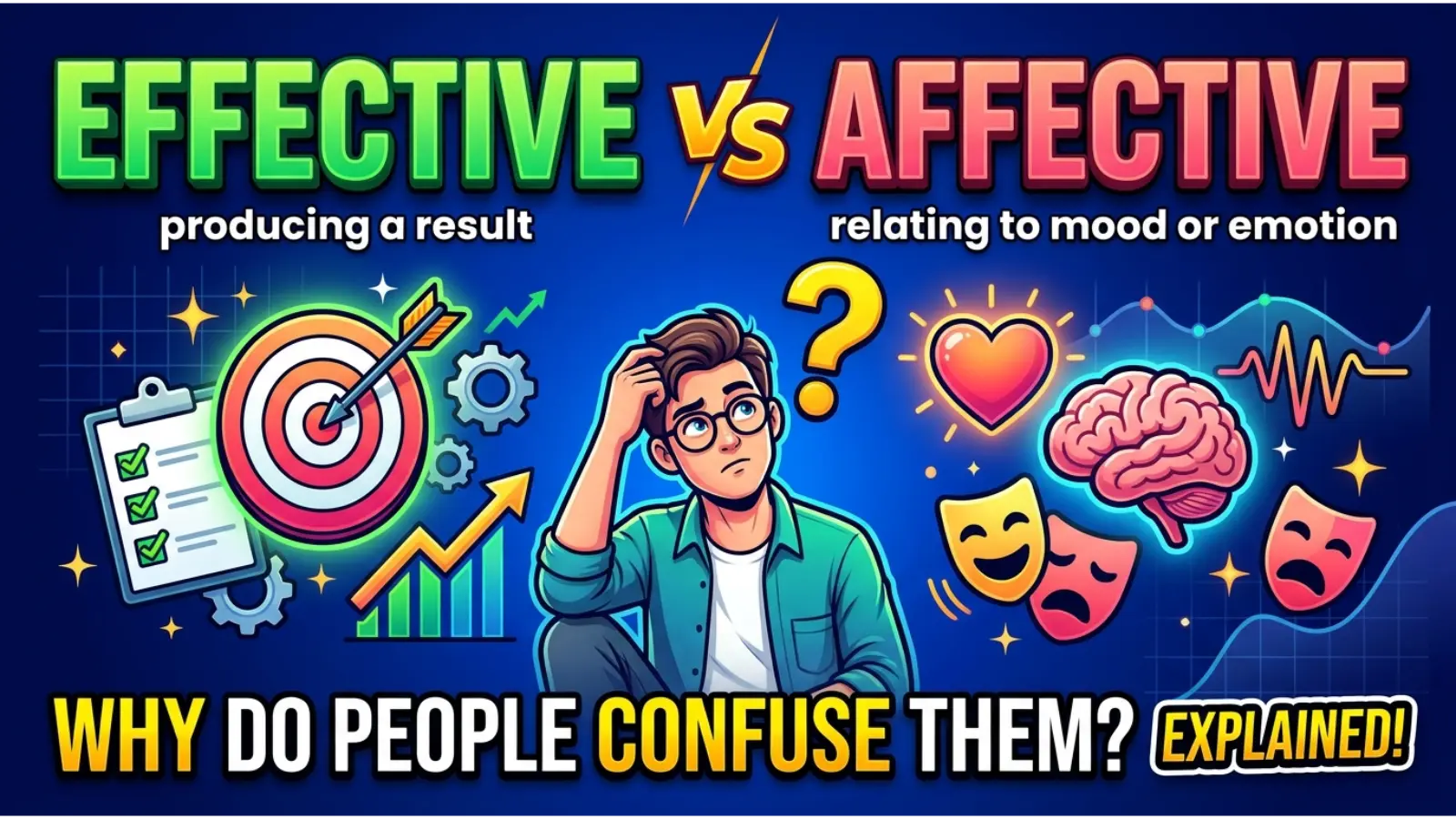
Remember that effective focuses on results, while affective focuses on emotions.

What Does Effective Mean?
The adjective effective describes something that works well or produces the desired outcome. People commonly use it when discussing methods, treatments, strategies, communication, and solutions.
An effective approach helps someone achieve a particular goal without unnecessary effort.
Examples of Effective in Sentences
- This medicine is effective against the infection.
- The company introduced an effective marketing strategy.
- Good communication is essential for effective teamwork.
- Regular exercise is an effective way to improve fitness.
- The teacher developed an effective learning method.
- We need an effective solution to this problem.
In each example, effective describes something that produces a useful or successful result.
What Does Affective Mean?
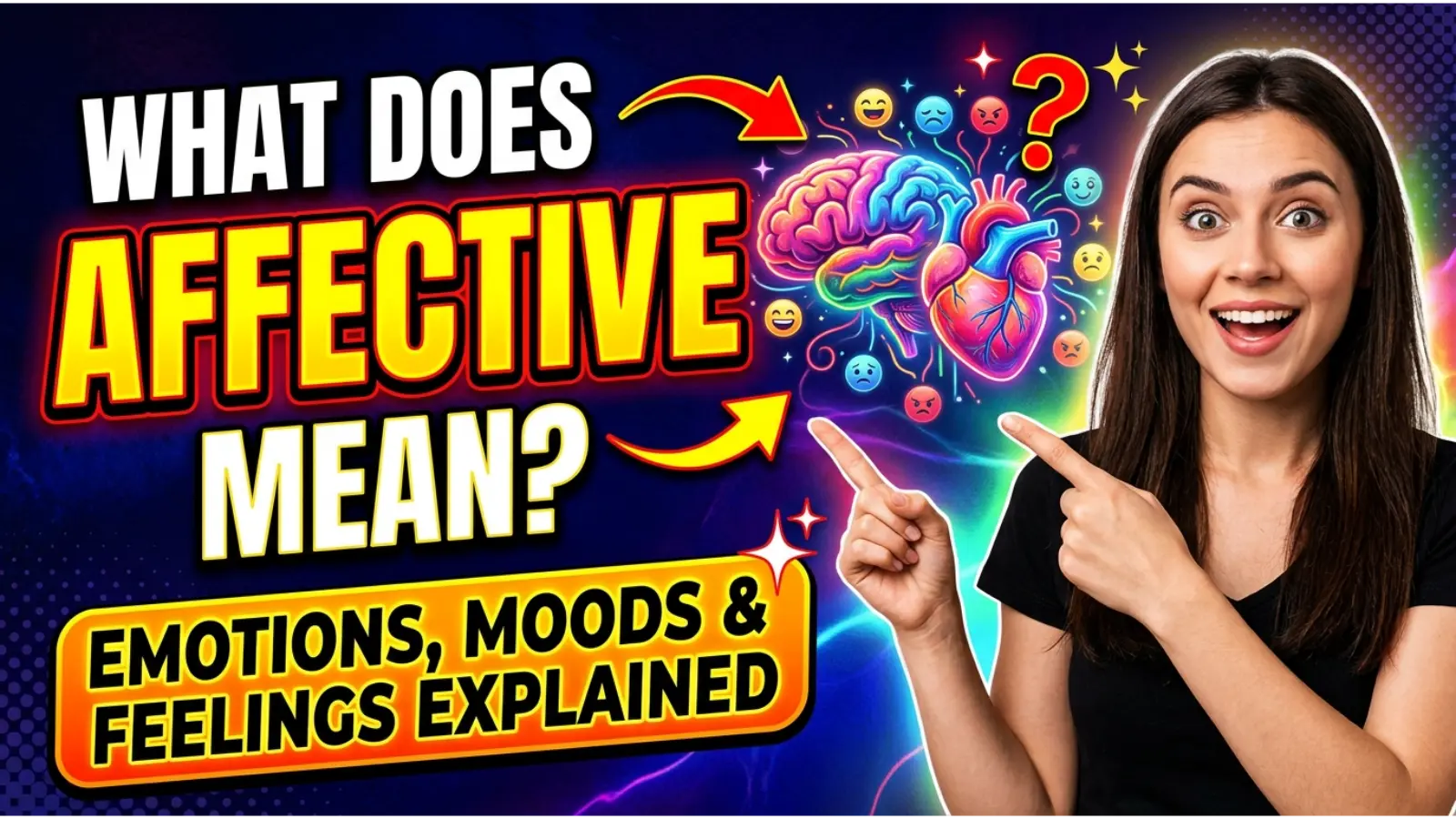
The adjective affective relates to emotions, feelings, moods, and emotional experiences. It frequently appears in psychology, education, neuroscience, and academic research.
For example, researchers may study affective development to understand how people experience and manage emotions.
Examples of Affective in Sentences
- The research examines affective development in young children.
- Emotional intelligence involves important affective skills.
- The psychologist studied affective responses to stress.
- Teachers should consider students’ affective needs.
- The treatment may influence affective behavior.
- Music can have a strong affective impact on listeners.
These examples show how affective describes emotional experiences rather than successful results.
Effective vs. Affective: Key Differences
| Feature | Effective | Affective |
|---|---|---|
| Part of speech | Adjective | Adjective |
| Main meaning | Producing a desired result | Related to emotions |
| Focus | Success and performance | Feelings and moods |
| Common fields | Business, education, medicine | Psychology, education, neuroscience |
| Example | Effective treatment | Affective response |
| Common question | Does it work? | Does it relate to emotions? |
Origin and History of Effective and Affective
Although these words look similar, they developed from different Latin roots.
Origin of Effective
The word effective comes from Latin effectivus, which is connected to effectus, meaning accomplishment or performance. It entered English through French and Latin influences.
Over time, effective developed its modern meaning of producing a successful result or bringing something about.
Origin of Affective
The word affective comes from Latin affectus, meaning feeling, emotion, or disposition. It is related to the Latin verb afficere, meaning to influence or affect.
English adopted affective to describe emotional experiences and feelings, particularly in psychology and related academic subjects.
Why Do People Confuse Effective and Affective?
Several reasons explain why writers mix up these words.
1. Similar Spelling
Both words contain the letters and sounds associated with effect and affect. Their similar appearance makes them easy to confuse.
2. Related Word Forms
Effective comes from effect, while affective comes from affect. Since affect and effect are also commonly confused, their adjective forms create additional difficulty.
3. Academic Writing
Both words appear in educational and professional settings. However, their meanings depend on the subject being discussed.
4. Unfamiliar Vocabulary
Many everyday writers use effective regularly but encounter affective less frequently. As a result, they may assume affective is simply another spelling of effective.

What Do Dictionaries Say About Effective and Affective?
Major English dictionaries recognize both words as correct, but they distinguish their meanings.
- Merriam-Webster: Defines effective in terms of producing a desired effect and affective in relation to emotions or feelings.
- Oxford English Dictionary: Recognizes effective as relating to producing an effect or result and affective as relating to feelings and emotions.
- Cambridge Dictionary: Explains effective as successful in achieving the intended result, while affective relates to feelings and emotions.
These definitions confirm that neither spelling is incorrect. The right choice depends on the meaning you want to communicate.
Grammar Rules: How to Use Effective and Affective
Both words function as adjectives. They describe nouns and provide additional information about people, things, methods, or experiences.
Rule 1: Use Effective Before a Noun
Place effective before a noun when describing something successful or useful.
Examples:
- She created an effective plan.
- We need an effective treatment.
- They developed an effective strategy.
Rule 2: Use Affective Before an Emotion-Related Noun
Use affective when the noun relates to feelings, emotional responses, or moods.
Examples:
- The patient showed affective symptoms.
- Children experience affective development.
- The research explores affective learning.
Rule 3: Use Effective After Linking Verbs
Effective can follow linking verbs such as is, seems, and becomes.
Examples:
- This method is effective.
- The new system seems effective.
- Her communication style became more effective.
Rule 4: Use Affective to Describe Emotional Characteristics
Affective can also follow linking verbs when discussing emotional characteristics.
Examples:
- His response was affective in nature.
- The discussion became focused on affective experiences.
Common Mistakes to Avoid
Understanding these mistakes will improve your writing.
| Incorrect Usage | Correct Usage | Explanation |
|---|---|---|
| This is an affective solution. | This is an effective solution. | A solution should produce a successful result. |
| The study examines effective responses to emotions. | The study examines affective responses to emotions. | Affective refers to emotional responses. |
| We need an affective teaching strategy. | We need an effective teaching strategy. | Effective describes a successful strategy. |
| The research explores effective development. | The research explores affective development. | Affective relates to emotional development. |
Remember that context determines which word belongs in a sentence.
Effective or Affective in Professional Writing
Choosing the correct word is particularly important in workplace communication, research, education, and healthcare.
When to Use Effective
Use effective when writing about:
- Business strategies
- Medical treatments
- Marketing campaigns
- Problem-solving methods
- Communication skills
- Educational techniques
Example: The management team introduced an effective strategy to improve productivity.
When to Use Affective
Use affective when discussing:
- Emotional intelligence
- Psychological research
- Emotional development
- Mood disorders
- Emotional learning
- Human feelings and responses
Example: The research investigates affective factors that influence student motivation.
Effective vs. Affective: Real-Life Conversations
Conversation 1: At Work
Ali: How can we improve our team’s performance?
Sara: We should develop an effective communication strategy.
Ali: That sounds like a good idea.
Conversation 2: In a Psychology Class
Student: What does affective development mean?
Teacher: It refers to the development of emotions, feelings, and emotional responses.
Student: So, it is different from effective learning?
Teacher: Exactly. Effective learning focuses on successful learning outcomes.
Easy Memory Trick: Effective or Affective?
Use these simple tricks to remember the difference.
- Effective = Effect = Result: If something produces a successful result, use effective.
- Affective = Affect = Emotion: If something relates to feelings or emotions, use affective.
Ask yourself two questions:
- Am I describing something that works successfully? Use effective.
- Am I describing feelings or emotional experiences? Use affective.
These simple questions can help you select the correct word.
Frequently Asked Questions (FAQ)
1. Is Effective or Affective the Correct Spelling?
Both effective and affective are correct English words. Effective means successful in producing a result, while affective relates to emotions and feelings.
2. What Is the Main Difference Between Effective and Affective?
Effective describes something that achieves its intended purpose. Affective describes something connected to emotions, moods, or feelings.
3. Is Effective a Positive Word?
Generally, yes. Effective usually has a positive meaning because it describes something that works successfully or produces the desired outcome.
4. What Does Affective Mean in Psychology?
In psychology, affective refers to emotions, moods, feelings, and emotional responses. It is commonly used when discussing emotional development and behavior.
5. Can Effective and Affective Be Used Interchangeably?
No. These words have different meanings. Replacing one with the other can change the meaning of a sentence.
6. Is Affective Commonly Used in Everyday English?
Affective appears less frequently in everyday conversations than effective. However, it is common in psychology, education, and scientific writing.
7. How Can I Remember the Difference Between These Words?
Remember that effective relates to results, while affective relates to emotions. Connecting each word with its root can make the distinction easier to remember.
Conclusion
Understanding effective or affective is important for clear and accurate English writing. Both words are correct, but they serve different purposes. Use effective when describing something that produces a successful result, such as an effective strategy or treatment. Choose affective when discussing emotions, feelings, or psychological experiences, such as affective development or affective responses.
The easiest way to remember the difference is simple: effective is about results, whereas affective is about emotions. By following these distinctions and practicing the examples, you can use both words confidently in academic, professional, and everyday writing.