When writing in English, small spelling differences can sometimes cause confusion, especially when adding endings to verbs. One common question is using or useing. Although both forms may look reasonable, only one follows standard English spelling rules. The correct spelling is using, which is the present participle and gerund form of the verb “use.” The incorrect form, “useing,” results from keeping the final letter of the original verb when it should be removed. Understanding this simple spelling rule can help you write more confidently in emails, school assignments, professional documents, and everyday conversations.
The English language has many spelling rules that can sometimes confuse writers, especially when adding suffixes to common words. One frequent question is whether using or useing is the correct spelling. Although both forms may look reasonable, only one follows standard English spelling rules. Understanding the difference between using and useing will help you avoid common spelling mistakes and improve your writing. In this article, we will explain the correct spelling, its meaning, grammar rules, and practical examples to help you use the word confidently in everyday communication.
Quick Answer: Using or Useing?
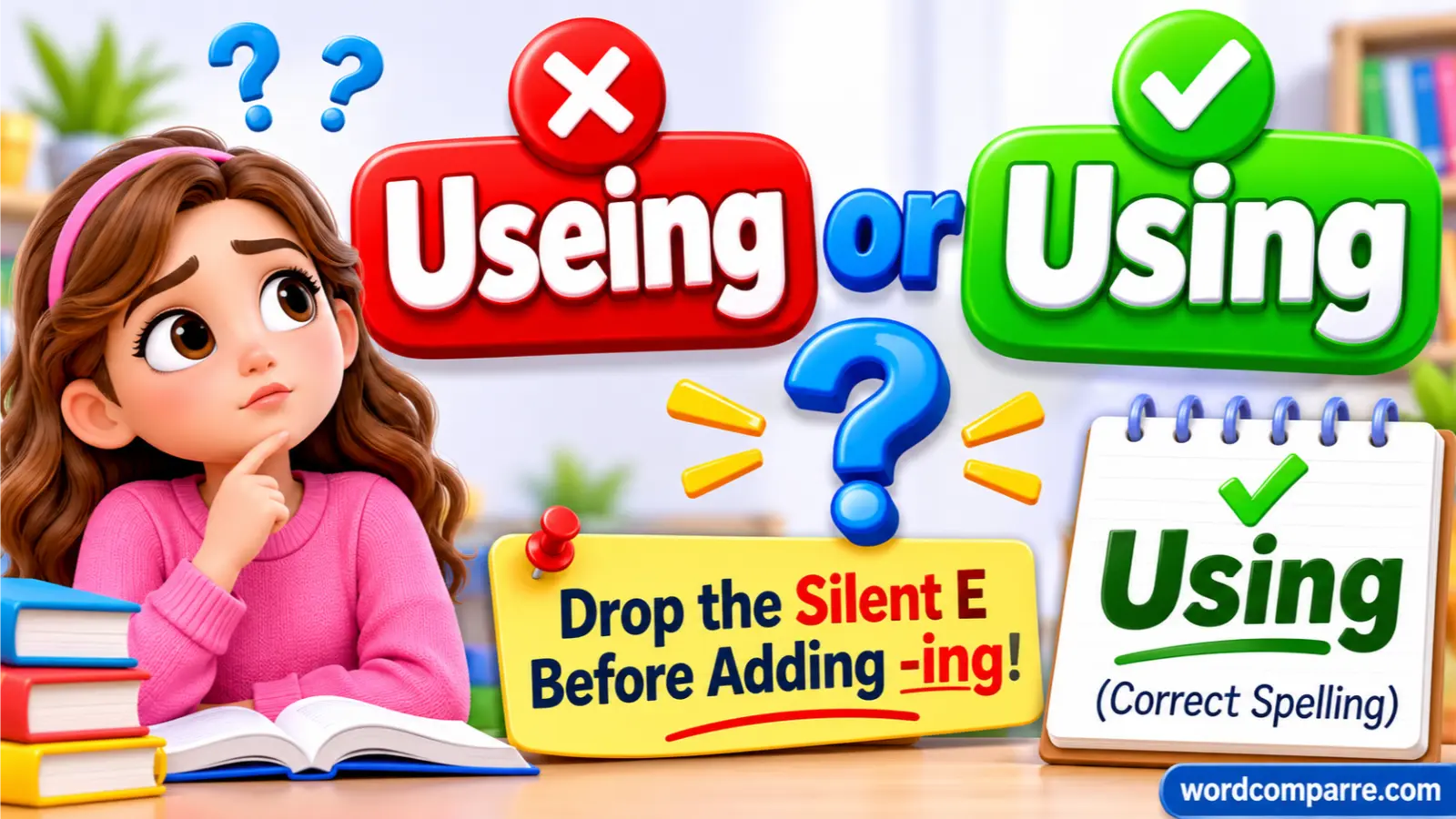
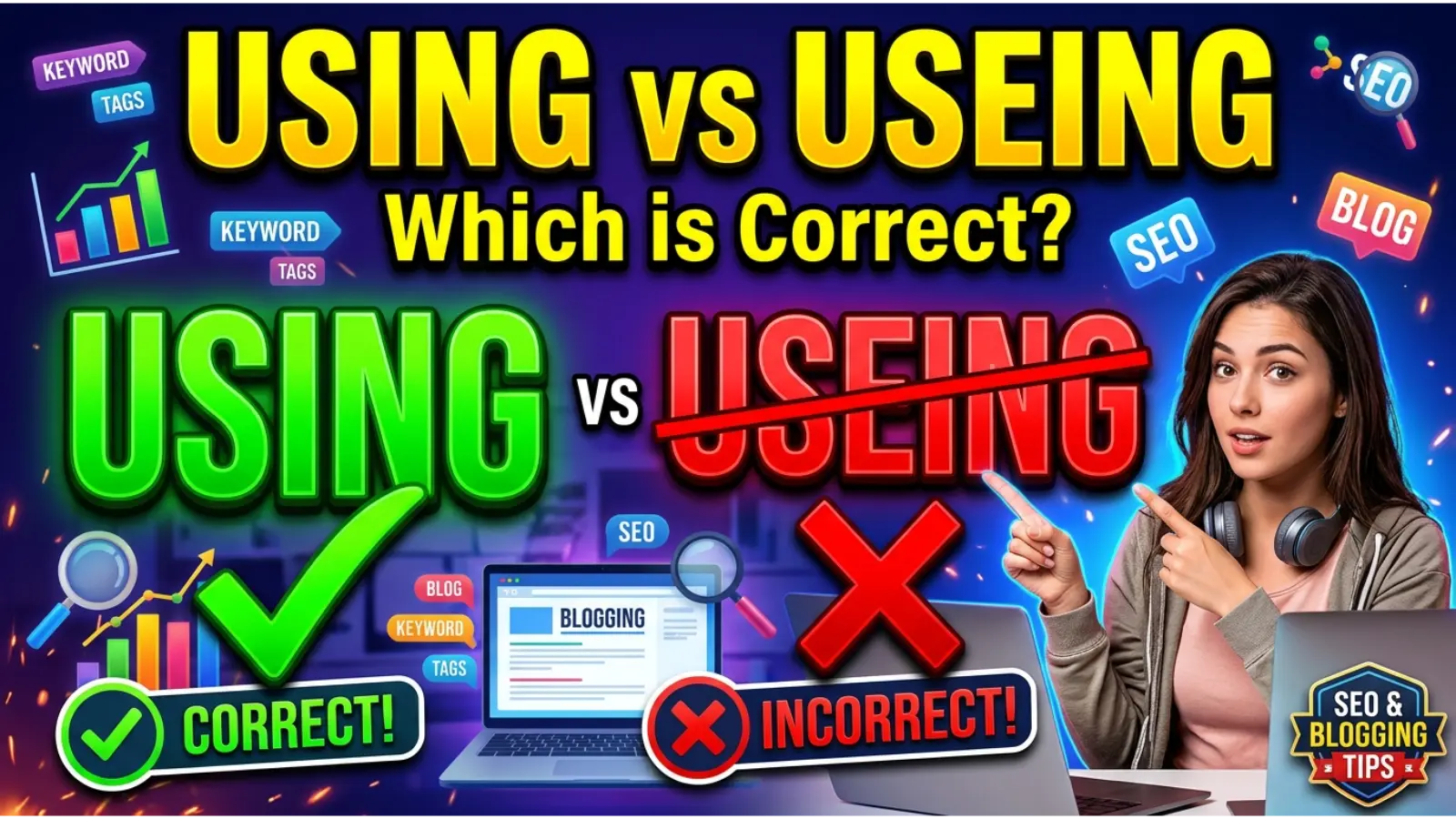
Using is the correct spelling in standard English. The word “useing” is a spelling mistake and should not appear in formal or professional writing.
When adding “-ing” to the verb “use,” remove the silent final “e” before adding the ending.
- Correct: Using
- Incorrect: Useing
- Base verb: Use
- Added ending: -ing
Example: She is using her laptop to complete the assignment.
Meaning of Using and Useing
Understanding the difference between these two spellings is straightforward because only one is a recognized standard form.
What Does Using Mean?
“Using” is the present participle and gerund form of the verb “use.” It describes the action of employing something for a particular purpose or taking advantage of a resource, tool, method, or opportunity.
It can appear in continuous verb tenses or function as a noun-like gerund.
Examples:
- He is using a new computer.
- Using fresh ingredients improves the taste of food.
- They are using modern technology in their business.
- She learned English by using online resources.
What Does Useing Mean?
“Useing” is not a standard English spelling. It is an incorrect attempt to form the “-ing” version of the verb “use.”
The mistake happens when writers add “-ing” without removing the final silent “e.”
Instead of writing “useing,” always write “using.”
Incorrect: I am useing my phone.
Correct: I am using my phone.
Using vs. Useing: Comparison Table
| Feature | Using | Useing |
|---|---|---|
| Spelling status | Correct | Incorrect |
| Dictionary recognition | Standard word form | Nonstandard misspelling |
| Base verb | Use | Use |
| Formation | Remove e + ing | Incorrectly retain e |
| Grammatical role | Gerund and present participle | None in standard English |
| Professional writing | Recommended | Avoid |
| Example | Using a pen | Useing a pen |
The main difference is the spelling rule. English generally drops a silent final “e” before adding “-ing” to verbs such as “use.”

Why Is Using the Correct Spelling?
The spelling of “using” follows an established English verb-forming rule.
When a verb ends in a silent “e,” writers generally remove that letter before adding the suffix “-ing.”
For example:
- Use → Using
- Make → Making
- Write → Writing
- Take → Taking
- Drive → Driving
- Dance → Dancing
The final “e” disappears because the “-ing” ending begins with a vowel. Keeping both letters would produce an incorrect spelling in these examples.
Therefore, “useing” does not follow the standard spelling pattern.
Origin and Formation of the Word Using
The word “using” comes from the verb “use,” which has a long history in the English language.
The verb developed from earlier French and Latin linguistic forms. Over time, it became an established English word associated with employing something for a particular purpose.
The modern form “using” is created by combining the verb “use” with the suffix “-ing.”
However, English spelling conventions require the final silent “e” to disappear before this suffix is added.
The formation is simple:
Use + ing = Using
This spelling has become the accepted form in modern written English.
Why Do People Confuse Using and Useing?
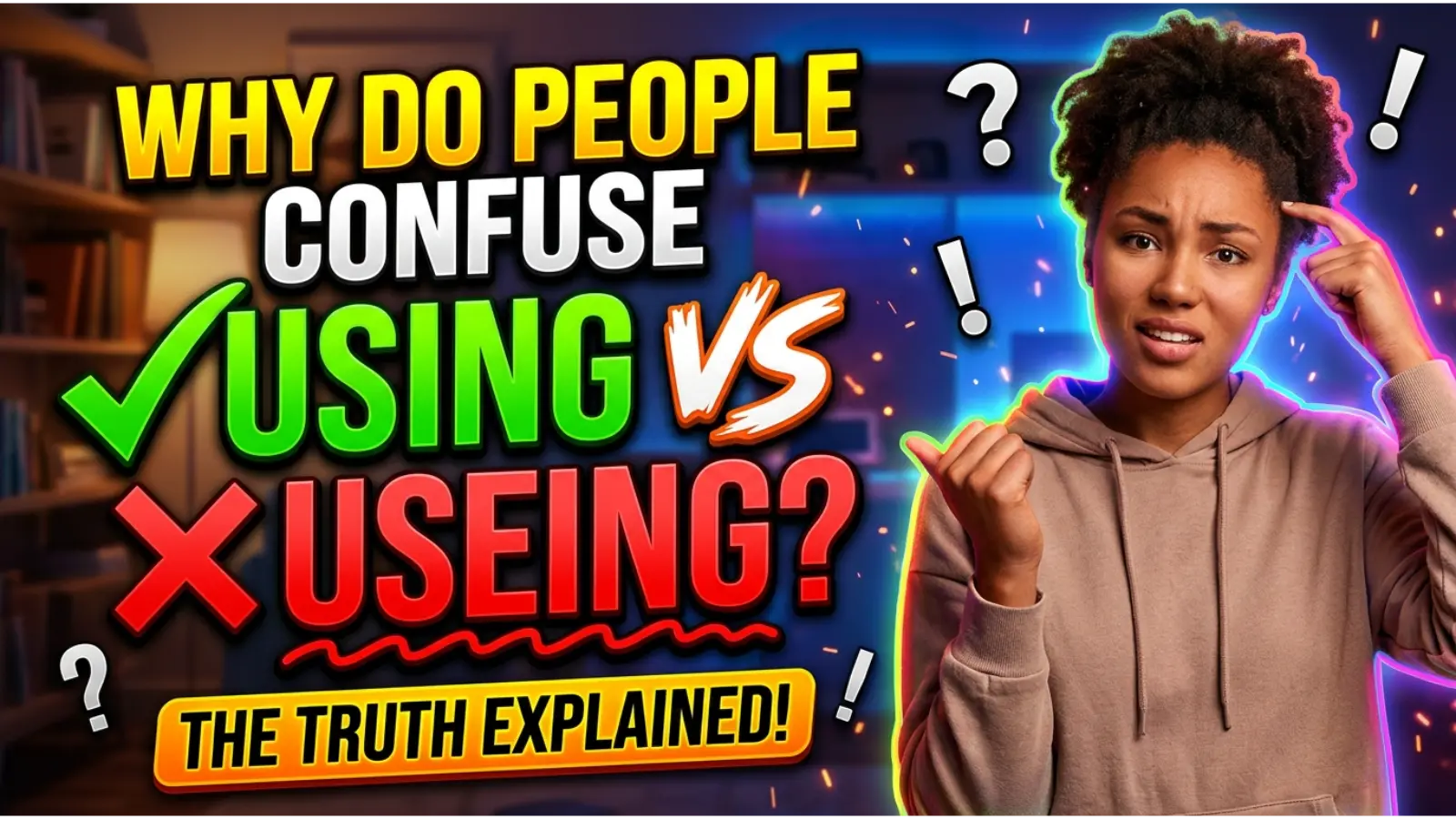
Several reasons explain why writers sometimes choose the incorrect spelling.
1. Keeping the Original Final E
Some writers assume that every letter in the original verb must remain when adding an ending.
However, English spelling rules frequently remove a silent final “e” before “-ing.”
2. Pronunciation Can Be Misleading
The word “use” contains a final sound that does not require the letter “e” to remain in its “-ing” form.
Because spelling and pronunciation do not always match perfectly in English, learners may find this transformation confusing.
3. Applying the Wrong Spelling Pattern
Some verbs keep their final consonants or follow different spelling patterns when adding “-ing.”
Writers may incorrectly apply those patterns to “use.”
4. Typing Too Quickly
People sometimes write “useing” because they add the suffix without checking the spelling.
A quick proofreading check can prevent this mistake.
Dictionary Recommendations and Modern Usage
Major English dictionaries recognize “using” as the standard form of the verb “use” with the “-ing” ending.
You can verify its spelling and grammatical functions through established dictionary resources, including:
- Cambridge Dictionary: Recognizes “using” as a form of the verb “use.”
- Oxford English Dictionary: Documents the verb “use” and its inflected forms.
- Merriam-Webster: Recognizes “using” as the standard present participle and gerund form.
In modern English, “using” appears in academic writing, business communication, online publications, educational materials, and everyday conversations.
By contrast, “useing” is considered a spelling error rather than an alternative spelling.
Real-Life Examples of Using in Sentences
The best way to understand the correct spelling is to see how it works in different situations.
Everyday Conversation
- I am using your charger for a few minutes.
- She is using my favorite notebook.
- Are you using this chair?
- He enjoys using his new smartphone.
Academic Writing
- Students are using online resources for research.
- Using clear examples makes lessons easier to understand.
- The researcher is using a different method.
- Teachers encourage students to learn by using practical examples.
Professional Communication
- Our company is using new software to manage its records.
- We are using customer feedback to improve our services.
- The team is using updated information for the report.
- Please avoid using outdated figures in the presentation.
Technology and Digital Communication
- Millions of people are using social media every day.
- I am using artificial intelligence to organize my notes.
- She is using a secure password for her account.
- They are using cloud storage to protect important files.
Common Mistakes to Avoid
Even though the spelling rule is simple, writers can make several related mistakes.
| Incorrect Form | Correct Form |
|---|---|
| Useing | Using |
| Makeing | Making |
| Writeing | Writing |
| Takeing | Taking |
| Driveing | Driving |
| Hopeing | Hoping |
Remember that these examples follow the general rule of dropping a silent final “e” before adding “-ing.”
However, English has exceptions, so it is important to learn individual spelling patterns rather than assume every verb follows exactly the same rule.
Memory Trick: How to Remember Using
A simple memory trick can help you avoid writing “useing” again.
Drop the silent E before adding ING.
Remember this pattern:
- Use → Using
- Make → Making
- Write → Writing
- Take → Taking
Think of the final “e” as a letter that steps aside when “-ing” joins the word.
You can also remember this short formula:
Silent E + ING = Remove E + ING
Whenever you write the “-ing” form of “use,” remember that the correct result is “using.”
Professional Writing Recommendation
In professional and academic writing, always use “using” instead of “useing.”
The correct spelling matters because spelling mistakes can affect readability and make written communication appear less polished.
Before publishing an article, sending an email, or submitting an assignment, check verbs that end in silent “e.”
For example:
- Write “using modern technology,” not “useing modern technology.”
- Write “using the correct method,” not “useing the correct method.”
- Write “using available resources,” not “useing available resources.”
A reliable spellchecker can identify many such errors, but understanding the underlying rule will help you avoid them naturally.
Frequently Asked Questions (FAQ)
1. Is it using or useing?
“Using” is the correct spelling. “Useing” is an incorrect spelling because the final silent “e” must be removed before adding “-ing.”
2. Why is the E removed in using?
The final “e” is removed because “use” ends in a silent “e.” Standard English spelling generally drops this letter before adding the suffix “-ing.”
3. Is using a real English word?
Yes. “Using” is a standard English word that functions as the present participle and gerund form of “use.”
4. What is the base word of using?
The base word is “use.” Adding “-ing” after removing the final “e” creates “using.”
5. Can I write useing in formal English?
No. “Useing” is not an accepted standard spelling. Always write “using” in formal, academic, and professional documents.
6. What is an example of using in a sentence?
“She is using her computer to prepare a presentation.” In this sentence, “using” describes an ongoing action.
7. What is the spelling rule for use and using?
When adding “-ing” to a verb that ends in a silent “e,” generally remove the final “e” first. Therefore, use becomes using.
Conclusion
The correct choice between using or useing is simple: “using” is the standard English spelling, while “useing” is incorrect. The difference comes from the spelling rule that removes a silent final “e” before adding “-ing.” Once you understand this pattern, you can apply it to other verbs, including make, write, take, and drive. Remember the simple formula: use + ing = using. Following this rule will help you produce clearer, more accurate, and more professional English writing.