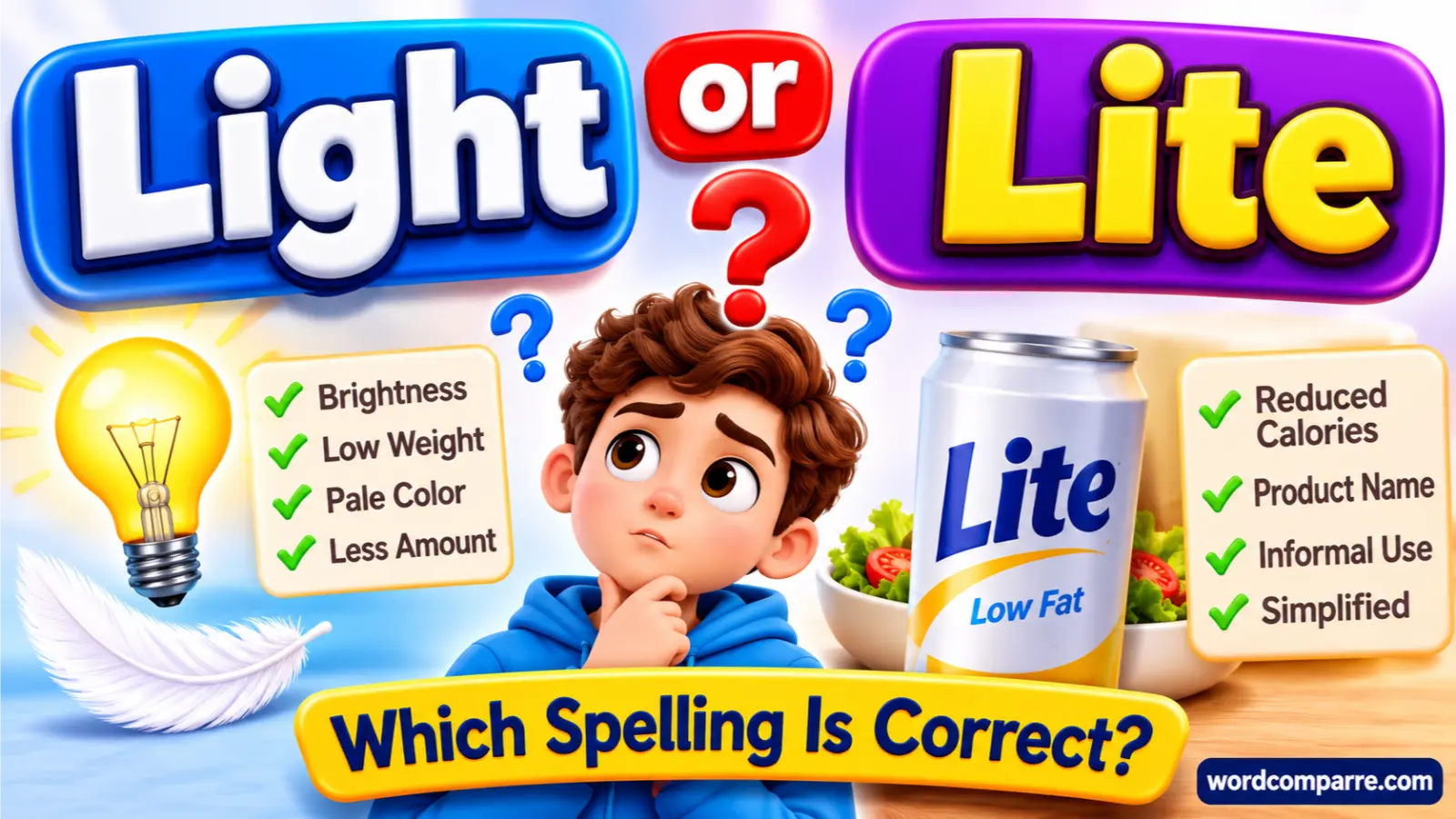
Choosing between light or lite can be confusing because both words have the same pronunciation and share similar meanings. However, they do not work interchangeably in every situation. The word light is the standard English spelling, while lite commonly appears in product names, food labels, advertisements, and informal expressions. Understanding the difference helps you avoid spelling mistakes in everyday conversations and professional writing.
Although both spellings can describe something reduced or less substantial, their usage depends on context. For example, you might describe a suitcase as light because it weighs very little, but a company might advertise a reduced-calorie product as lite. So, which spelling should you choose? Let’s explore their meanings, differences, origins, and practical examples.
Quick Answer: Light or Lite?
Light is the standard and preferred spelling in everyday and formal English. It can describe illumination, something that weighs little, a pale color, or something with reduced intensity.
Lite is an informal alternative spelling that usually appears in advertising, product branding, food packaging, and descriptions of simplified versions of products or services.
Examples:
- The box is surprisingly light.
- Please turn on the light.
- I downloaded the lite version of the application.
- This restaurant offers a lite menu.
Remember: Use light in standard writing and reserve lite for established product names, branding, and suitable informal contexts.
What Does Light Mean?
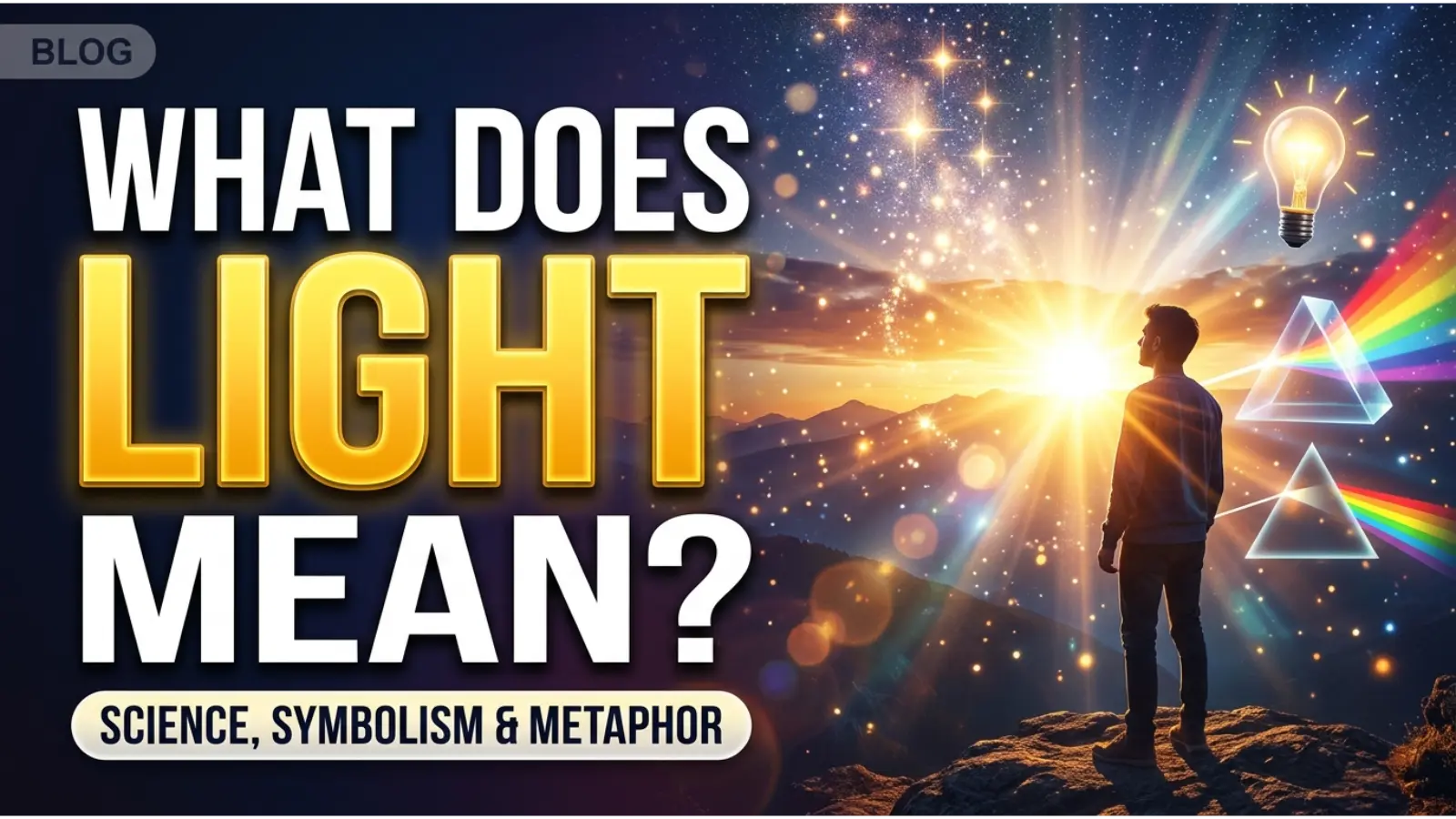
The word light has several meanings and functions as a noun, adjective, adverb, and verb. It is one of the most versatile words in English.
As a noun, light refers to the natural or artificial energy that allows people to see things. As an adjective, it can describe something that weighs little, has a pale color, or contains a reduced amount of something.
Different Meanings of Light
- Illumination: Something that makes objects visible.
- Low weight: Something that is easy to lift or carry.
- Pale color: A shade that is not dark.
- Reduced intensity: Something that is mild or not particularly strong.
- Ignite: To make something start burning.
Examples of Light in Sentences
- Natural light enters the room through the windows.
- This backpack is light enough to carry all day.
- She prefers light blue walls in her bedroom.
- We enjoyed a light meal before the meeting.
- Please light the candles before the guests arrive.
- The room needs more light during the evening.
These examples show why light remains the appropriate spelling in standard English.

What Does Lite Mean?
The word lite is an informal alternative spelling of light. It generally describes a product containing less fat, sugar, calories, or another ingredient than its regular version.
Companies frequently use this spelling in advertising because it creates a short and recognizable product label. It also appears in technology when a simplified version of an application or service offers fewer features than the full version.
Different Uses of Lite
- Food products: Foods with reduced calories, sugar, or fat.
- Drinks: Beverages marketed with reduced ingredients or alcohol content.
- Software: Applications with fewer features than their standard versions.
- Informal descriptions: Something less serious, complicated, or demanding.
Examples of Lite in Sentences
- The supermarket sells lite yogurt.
- I downloaded the lite version of the application.
- The company introduced a lite edition of its software.
- We selected the lite menu for our meeting.
- The website offers a lite version for mobile users.
The word lite is acceptable in these contexts, especially when it appears in a product’s official name or marketing description.
Light vs. Lite: Key Differences
Although both words sound identical, their spelling and usage differ. Understanding their functions makes it easier to choose the right one.
| Feature | Light | Lite |
|---|---|---|
| Spelling | Standard English | Informal alternative |
| Pronunciation | /laɪt/ | /laɪt/ |
| Main use | General English | Marketing and informal usage |
| Illumination | Yes | No |
| Describing weight | Yes | Generally no |
| Reduced calories | Yes | Yes, especially in product labels |
| Software versions | Standard description | Common informal label |
| Formal writing | Recommended | Usually avoided unless part of a name |
The most important distinction is that light works across many grammatical situations, whereas lite has a much narrower role.
Origin and History of Light and Lite
Understanding the history of these words explains why their spellings differ today.
Origin of Light
The word light has ancient Germanic roots. It developed from Old English forms such as lēoht and lēht, which referred to brightness and something that was not heavy.
Over time, English speakers continued using the word for illumination, low weight, and other related meanings. Its spelling became established in modern English, making it the standard form across different types of writing.
Origin of Lite
The spelling lite developed as a simplified alternative to light. It became particularly noticeable in commercial language during the twentieth century.
Businesses adopted it to describe products with fewer calories, less fat, or reduced ingredients. Later, companies also used it for simplified software, services, and product editions.
According to Etymonline, the alternative spelling was recorded by 1962, although it had appeared earlier in product-related names.
The two spellings eventually developed different roles: light remained the standard English word, while lite became associated with branding and informal descriptions.
Why Do People Confuse Light and Lite?
There are several reasons people mix up these words.
1. Identical Pronunciation
Both words are pronounced /laɪt/. Because they sound exactly alike, listeners cannot identify the correct spelling simply by hearing them.
2. Similar Meanings
Both words can describe something reduced or less substantial. For example, a light meal and a lite meal may communicate similar ideas, depending on the context.
3. Product Advertising
Food companies and technology brands frequently use lite on packaging and product names. Seeing this spelling regularly can make people believe it is suitable everywhere.
4. Informal Online Writing
Social media posts, advertisements, and casual conversations often use shorter or simplified spellings. As a result, some writers mistakenly replace light with lite in formal documents.
The best solution is to consider the meaning and purpose of the sentence before choosing a spelling.

What Do Major Dictionaries Say About Light and Lite?
Established dictionaries recognize both words, but they explain their different functions.
Cambridge Dictionary
The Cambridge Dictionary defines lite as an informal spelling used particularly for food and drinks containing fewer calories. It also recognizes its use for things that are less serious or less complete than their standard equivalents.
The dictionary distinguishes this informal spelling from the standard word light.
Collins Dictionary
Collins Dictionary recognizes lite as a word used for foods and drinks with reduced calories, sugar, fat, or alcohol. It also explains its use for simplified or less substantial versions of something.
Dictionary.com
Dictionary.com describes lite as an informal spelling associated with commercial products containing fewer calories or reduced amounts of certain ingredients. It also recognizes its use for simplified versions of products and services.
Dictionary recommendation: Use light as your default spelling in general and professional writing. Choose lite when it appears in a recognized product name, branding, or an appropriate informal description.
Real-Life Examples: Light or Lite?
The following examples demonstrate how both spellings work in everyday situations.
Examples Using Light
- The morning light filled the entire bedroom.
- My new laptop is surprisingly light.
- She painted the kitchen a light shade of yellow.
- We prepared a light breakfast before leaving.
- Please switch off the light when you leave.
- He carried a light suitcase through the airport.
- The teacher explained the topic in a light and friendly manner.
- This fabric feels light and comfortable.
- The room looks brighter in natural light.
- They decided to light a fire during the camping trip.
Examples Using Lite
- This brand sells lite mayonnaise.
- I prefer the lite version of the application.
- The company introduced a lite edition of its software.
- We ordered a lite meal at the restaurant.
- The manufacturer launched a new lite product.
- This website provides a lite browsing experience.
- The package displays the word lite prominently.
- Customers can choose between the regular and lite versions.
- The company promoted its lite product online.
- The application offers a lite option for older devices.
Common Mistakes to Avoid
Writers sometimes use light and lite interchangeably without considering their context. Here are some common mistakes and their corrections.
| Incorrect or unsuitable usage | Better usage |
|---|---|
| Turn on the lite. | Turn on the light. |
| This bag is very lite. | This bag is very light. |
| The room needs more lite. | The room needs more light. |
| I prefer a lite blue shirt. | I prefer a light blue shirt. |
| Please lite the candle. | Please light the candle. |
| Download the Light version (when the official product is named Lite). | Download the Lite version. |
One important point: lite is not always incorrect. If a manufacturer officially names its product Lite, preserve that spelling when referring to the brand or product.
Memory Trick: How to Remember Light vs. Lite
A simple memory trick can help you remember the difference.
Remember LIGHT for general English:
- LIGHT has an extra letter, just like its wide range of meanings.
- Use it for brightness, weight, colors, and ordinary descriptions.
- It is the safest choice in professional writing.
Remember LITE for products:
- LITE is commonly found on product packaging.
- Think of reduced-calorie foods and simplified software.
- Use it when the branding or informal context supports it.
For example, a lamp produces light, while a product may carry the name Lite.
Which Spelling Should You Use in Professional Writing?
When writing professional documents, academic papers, business emails, or website articles, choose light whenever you mean the standard English word.
For example:
- The equipment is light enough to transport easily.
- The office receives plenty of natural light.
- We prepared a light lunch for the visitors.
- The designer selected a light background for the website.
However, you should retain lite when discussing a product with that official spelling.
For example:
- The company released a new Lite edition.
- Customers can download the official Lite application.
Professional writers should prioritize standard spelling, clarity, and consistency. Avoid using lite simply because it looks shorter or more modern.
Frequently Asked Questions (FAQs)
1. Is Light or Lite the Correct Spelling?
Both spellings are correct, but they have different uses. Light is the standard spelling, while lite is an informal alternative commonly used in advertising and product names.
2. Is Lite a Real English Word?
Yes. Major dictionaries recognize lite as an English word. It commonly describes products with reduced ingredients or simplified versions of something.
3. Is Lite an Informal Version of Light?
Yes. Lite developed as an informal alternative spelling of light, particularly in commercial and advertising language.
4. Should I Use Light or Lite in Formal Writing?
Use light in formal writing. Use lite only when referring to an established product name or when the informal meaning is specifically intended.
5. Is It Light Beer or Lite Beer?
Both forms appear in commercial usage. The spelling depends on the product’s branding and labeling. For example, some beer brands use Lite, while others use Light.
6. Can Lite Mean Less Complicated?
Yes. In informal English, lite can describe a simplified or less complete version of something, such as a lite software edition.
7. Do Light and Lite Have the Same Pronunciation?
Yes. Both words have the same pronunciation: /laɪt/. Their meanings and spelling conventions distinguish them.
8. Is Light the More Common Spelling?
Yes. Light is the standard spelling used throughout everyday, academic, and professional English. Lite has a more specialized role.
Conclusion
Choosing between light or lite becomes simple once you understand their different purposes. Light is the standard English spelling and works for illumination, weight, colors, and many other meanings. In contrast, lite is an informal alternative commonly used in advertising, food labels, product names, and simplified versions of services or software.
Both spellings have legitimate uses, but they are not interchangeable in every sentence. When writing articles, academic assignments, business documents, or professional emails, choose light unless you are referring to a product or name that specifically uses lite. Understanding this distinction will help you write clearly and confidently.