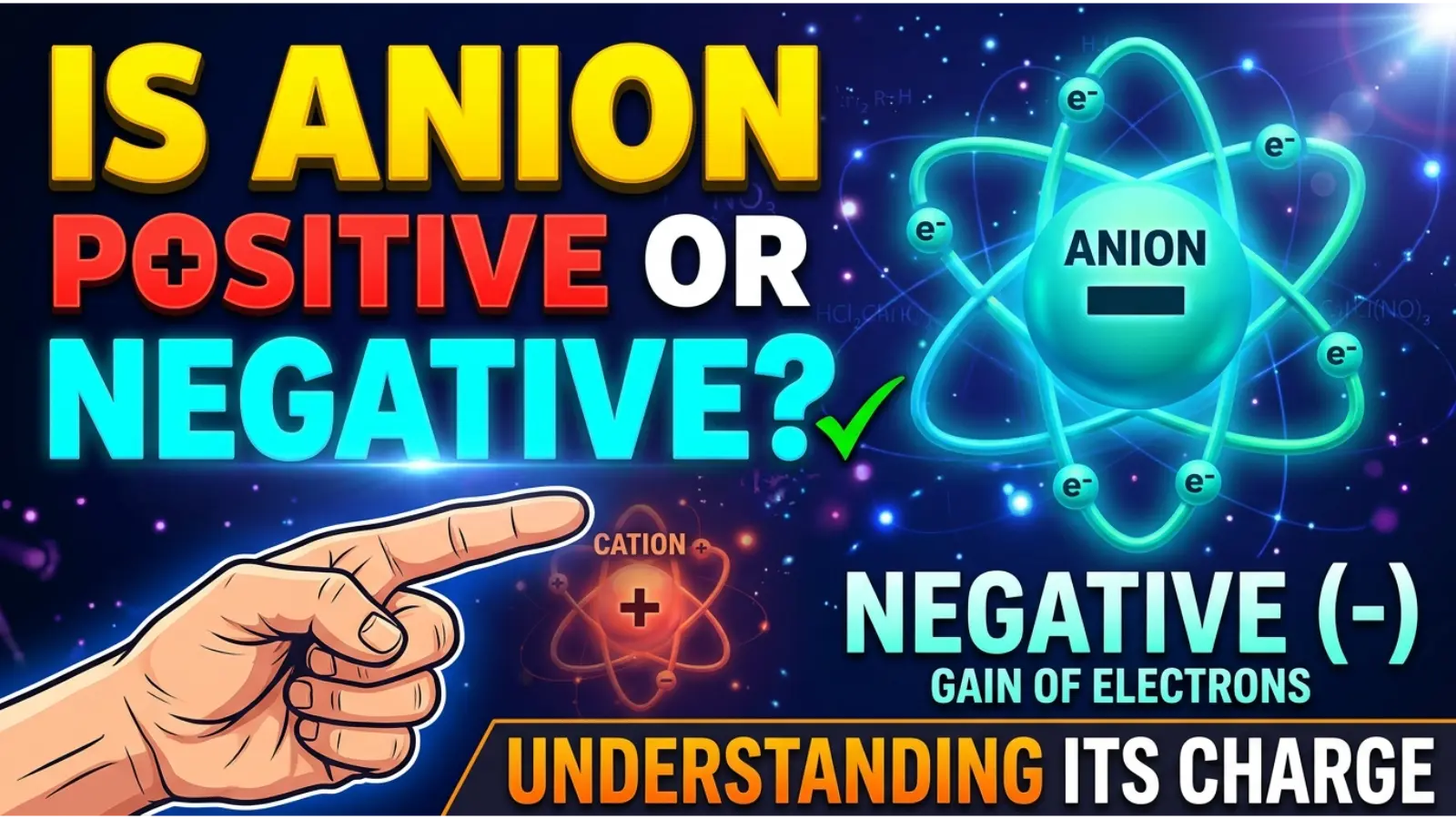
Is anion positive or negative? An anion is negative because it gains one or more electrons during a chemical reaction. Electrons carry a negative electrical charge, so gaining them gives an atom or molecule an overall negative charge. In chemistry, anions play an important role in chemical reactions, ionic compounds, and electrical conductivity.
Understanding the difference between anions and cations makes chemistry much easier. Although both are types of ions, they have opposite electrical charges. Anions carry negative charges, while cations carry positive charges. This guide explains how anions form, why they are negative, and how to recognize them with simple examples and memory tricks.

What Is an Anion in Chemistry?
An anion is an atom or group of atoms that carries a negative electrical charge. It forms when an atom or molecule gains one or more electrons.
Electrons have a negative charge, while protons have a positive charge. When an atom gains extra electrons, it has more electrons than protons. As a result, its overall electrical charge becomes negative.
For example, a chlorine atom normally has 17 protons and 17 electrons. When it gains one electron, it has 17 protons and 18 electrons. This creates a negatively charged chloride ion, written as Cl⁻.
Anions can contain a single atom or several atoms joined together.
Examples include:
- Chloride (Cl⁻)
- Oxide (O²⁻)
- Fluoride (F⁻)
- Sulfide (S²⁻)
- Hydroxide (OH⁻)
- Sulfate (SO₄²⁻)
- Nitrate (NO₃⁻)
Why Is an Anion Negatively Charged?
An anion becomes negative because it gains electrons.
To understand this process, remember the electrical charges of the three main subatomic particles:
| Particle | Electrical Charge |
|---|---|
| Proton | Positive (+) |
| Electron | Negative (−) |
| Neutron | Neutral (0) |
In a neutral atom, the number of protons and electrons is equal. Therefore, their positive and negative charges cancel each other.
However, when an atom gains electrons, the balance changes. It now has more negative charges than positive charges.
For example:
- Protons: 8
- Electrons before gaining: 8
- Electrons after gaining: 10
- Overall charge: −2
This produces an oxide ion (O²⁻).
Therefore, an anion always has a negative overall electrical charge.
Anion vs. Cation: What Is the Difference?
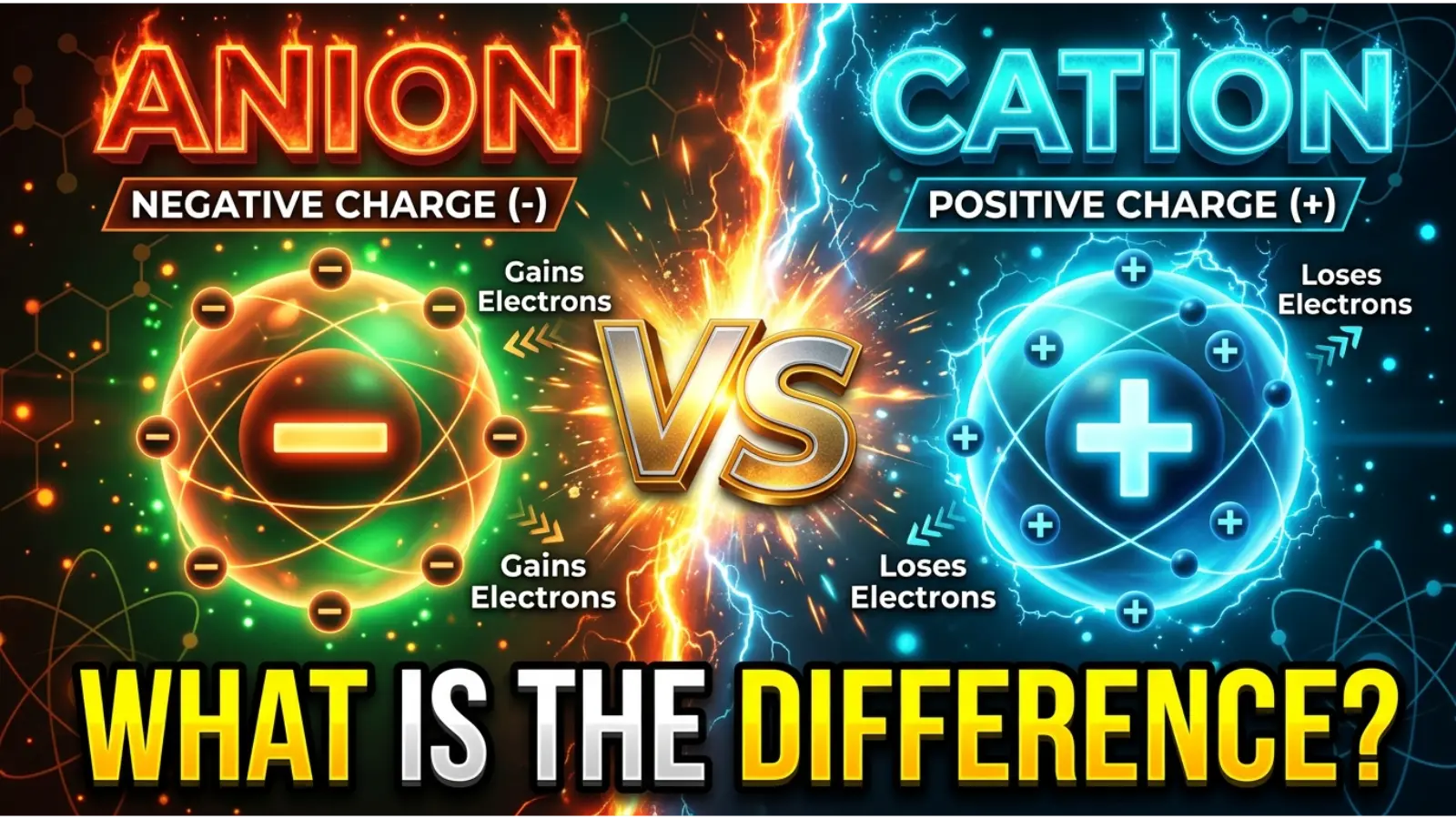
Anions and cations are both ions, but they have opposite electrical charges. The main difference comes from whether an atom gains or loses electrons.
| Feature | Anion | Cation |
|---|---|---|
| Electrical charge | Negative (−) | Positive (+) |
| Formation | Gains electrons | Loses electrons |
| Electron balance | More electrons than protons | Fewer electrons than protons |
| Attraction | Attracted to positive charges | Attracted to negative charges |
| Example | Cl⁻ | Na⁺ |
| Common elements | Chlorine, oxygen, fluorine | Sodium, calcium, potassium |
For example, sodium loses one electron and becomes Na⁺, while chlorine gains one electron and becomes Cl⁻.
These oppositely charged ions attract each other and form sodium chloride, commonly known as table salt (NaCl).
How Do Anions Form?
Anions form when atoms or molecules gain electrons through chemical processes.
Atoms often gain electrons to achieve a more stable electron arrangement. This process commonly occurs when nonmetals react with metals.
Here is a simple example using chlorine:
- A neutral chlorine atom has 17 protons and 17 electrons.
- It gains one electron during a chemical reaction.
- It now has 18 electrons and 17 protons.
- Its overall charge becomes −1.
- It becomes a chloride ion (Cl⁻).
Oxygen can also gain electrons. When an oxygen atom gains two electrons, it becomes an oxide ion (O²⁻).
Understanding Anion Charges With Examples
Anions can carry different negative charges depending on how many electrons they gain.
| Anion | Chemical Symbol | Negative Charge |
|---|---|---|
| Fluoride | F⁻ | −1 |
| Chloride | Cl⁻ | −1 |
| Bromide | Br⁻ | −1 |
| Oxide | O²⁻ | −2 |
| Sulfide | S²⁻ | −2 |
| Nitride | N³⁻ | −3 |
| Sulfate | SO₄²⁻ | −2 |
| Phosphate | PO₄³⁻ | −3 |
| Nitrate | NO₃⁻ | −1 |
Notice that the number written next to an ion indicates its overall electrical charge. For example, O²⁻ has a negative two charge, while Cl⁻ has a negative one charge.
Simple Rules for Remembering Anions and Cations
You can remember the difference between these two ions by following a few simple rules.
Rule 1: Anions gain electrons.
Electrons carry negative charges. Therefore, gaining electrons makes an ion negative.
Rule 2: Cations lose electrons.
When an atom loses negatively charged electrons, its remaining charge becomes positive.
Rule 3: Opposite charges attract.
Negative anions attract positive cations. This attraction helps form ionic compounds.
Rule 4: Check the chemical symbol.
A minus sign indicates an anion, while a plus sign indicates a cation.
Common Mistakes Students Make About Anions
Students sometimes confuse anions and cations because both are electrically charged ions. These mistakes are easy to avoid once you understand how electrons affect electrical charge.
Mistake 1: Thinking Anions Are Positive
This is incorrect. Anions have negative charges because they gain electrons.
Mistake 2: Confusing Electron Gain With Electron Loss
Gaining electrons makes an atom negative, while losing electrons makes it positive.
Mistake 3: Thinking All Ions Have a Single Charge
Not all ions carry the same charge. For example, chloride has a −1 charge, while oxide has a −2 charge.
Mistake 4: Confusing Anions With Neutral Atoms
A neutral atom has equal numbers of protons and electrons. An anion has more electrons than protons.
Mistake 5: Forgetting Polyatomic Anions
Anions do not always contain just one atom. Sulfate (SO₄²⁻) and nitrate (NO₃⁻) are examples of negatively charged groups of atoms.
How Anions Are Used in Everyday Life
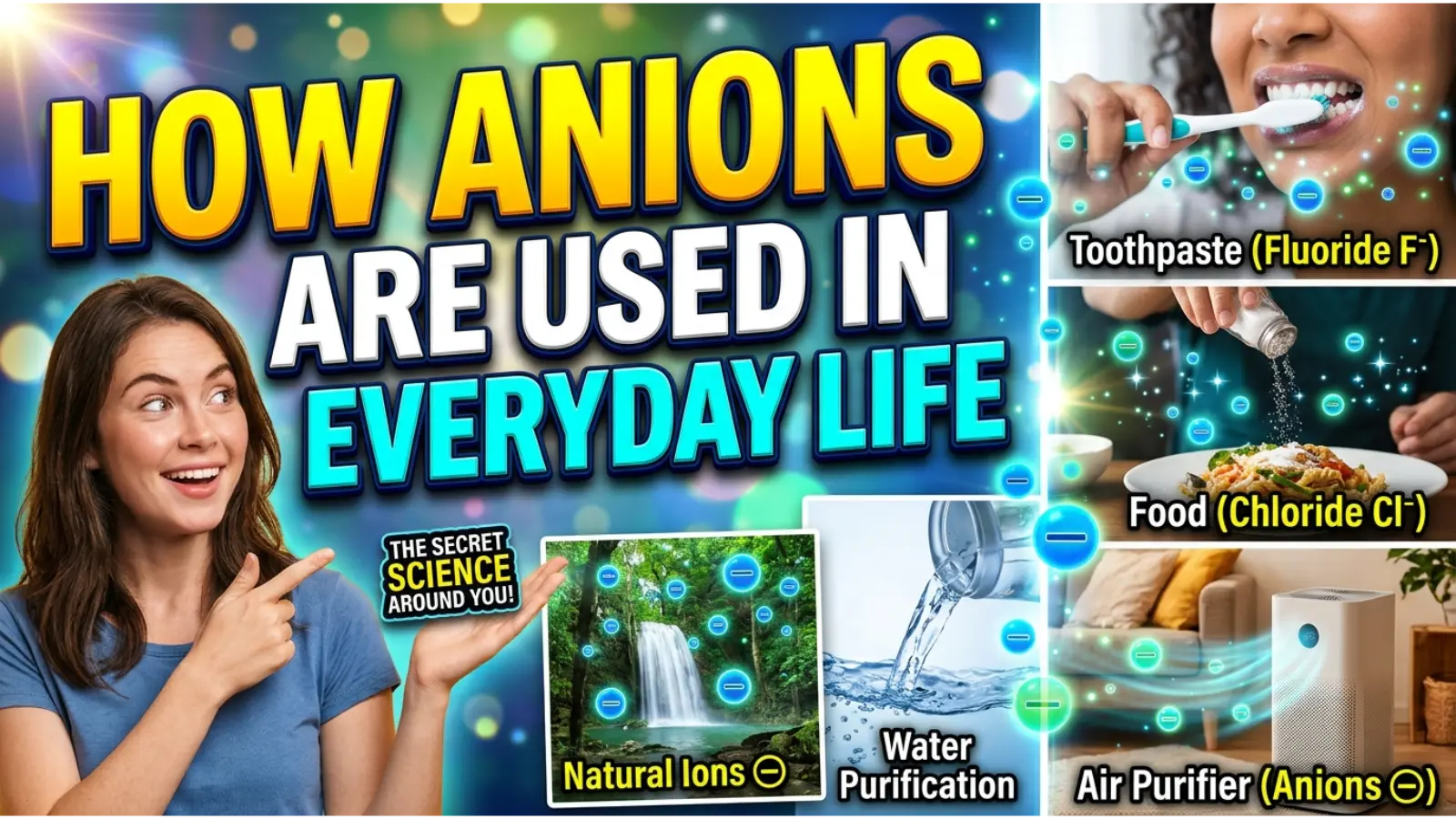
Anions are not limited to chemistry textbooks. They exist in many substances and play important roles in everyday life, biology, and industry.
1. Table Salt
Table salt contains sodium ions (Na⁺) and chloride ions (Cl⁻). The negative chloride ions attract the positive sodium ions to form sodium chloride.
2. Human Body
Chloride, bicarbonate, and phosphate ions help support important biological processes. They contribute to fluid balance, acid-base regulation, and other functions.
3. Fertilizers
Nitrate (NO₃⁻) and phosphate (PO₄³⁻) ions provide essential nutrients that plants use for growth.
4. Batteries
Ions move through electrolytes in many batteries. Depending on the battery chemistry, anions help maintain electrical neutrality and support electrochemical reactions.
5. Water Treatment
Chemists use knowledge of negatively charged ions when analyzing water quality and removing unwanted dissolved substances.
Formal and Scientific Usage of Anion
In scientific writing, anion is the correct technical term for a negatively charged ion.
Chemists, researchers, teachers, and laboratory professionals use the word when describing chemical reactions, ionic compounds, and electrolyte solutions.
For example:
- Scientific: Chloride is a negatively charged anion.
- Simple explanation: Chloride is a negative ion.
- Incorrect statement: Chloride is a positive ion.
Both “anion” and “negative ion” communicate the same basic idea. However, anion is the more precise scientific term.
Easy Memory Tricks: Is Anion Positive or Negative?
If you often forget whether an anion is positive or negative, use these simple memory tricks.
Memory Trick 1: ANion = A Negative Ion
The letters AN in ANion can remind you of “A Negative.”
Memory Trick 2: Anions Add Electrons
Anions gain additional electrons, and electrons have negative charges.
Memory Trick 3: Cations Come With a Plus
Remember that cations are positive, while anions are negative.
Memory Trick 4: Remember the Signs
- Anion = −
- Cation = +
These simple associations can help you remember the difference during chemistry lessons and exams.
Real-Life Chemistry Examples
Consider these simple examples to understand how anions and cations behave.
Example 1: Sodium and Chlorine
Sodium loses one electron and becomes Na⁺. Chlorine gains one electron and becomes Cl⁻. Both ions attract each other and form sodium chloride.
Example 2: Oxygen and Magnesium
Magnesium loses two electrons and becomes Mg²⁺. Oxygen gains two electrons and becomes O²⁻. Their opposite charges attract and form magnesium oxide (MgO).
Example 3: Calcium and Chlorine
Calcium loses two electrons and becomes Ca²⁺. Each chlorine atom gains one electron and becomes Cl⁻. One calcium ion combines with two chloride ions to form calcium chloride (CaCl₂).
These examples show how electron transfer produces oppositely charged ions.
Frequently Asked Questions
1. Is anion positive or negative?
An anion is negative. It gains one or more electrons, giving it more electrons than protons.
2. Why is an anion negative?
An anion is negative because electrons carry negative electrical charges. When an atom gains electrons, its overall charge becomes negative.
3. Is a cation positive or negative?
A cation is positive because it loses one or more electrons. This leaves it with more protons than electrons.
4. Does an anion gain or lose electrons?
An anion gains electrons. This electron gain creates its negative electrical charge.
5. What is an example of an anion?
Chloride (Cl⁻) is a common example. Other examples include fluoride (F⁻), oxide (O²⁻), and sulfate (SO₄²⁻).
6. Can an anion have a −2 or −3 charge?
Yes. Anions can have different negative charges. Oxide has a −2 charge, while phosphate has a −3 charge.
7. What is the difference between an anion and a cation?
An anion carries a negative charge because it gains electrons. A cation carries a positive charge because it loses electrons.
8. Are anions metals or nonmetals?
Many common anions come from nonmetals, such as chlorine, oxygen, and fluorine. However, polyatomic anions can contain several different elements.
9. Do anions attract positive or negative ions?
Anions attract positive ions, called cations, because opposite electrical charges attract each other.
10. Is chloride an anion?
Yes. Chloride (Cl⁻) is an anion because it carries a negative electrical charge.
Conclusion
So, is anion positive or negative? An anion is always negatively charged because it gains one or more electrons. This gives it more electrons than protons and creates an overall negative electrical charge.
The easiest way to remember this concept is that anions gain electrons and become negative, while cations lose electrons and become positive. Understanding this simple difference makes it easier to study ionic compounds, chemical reactions, and other important chemistry concepts.