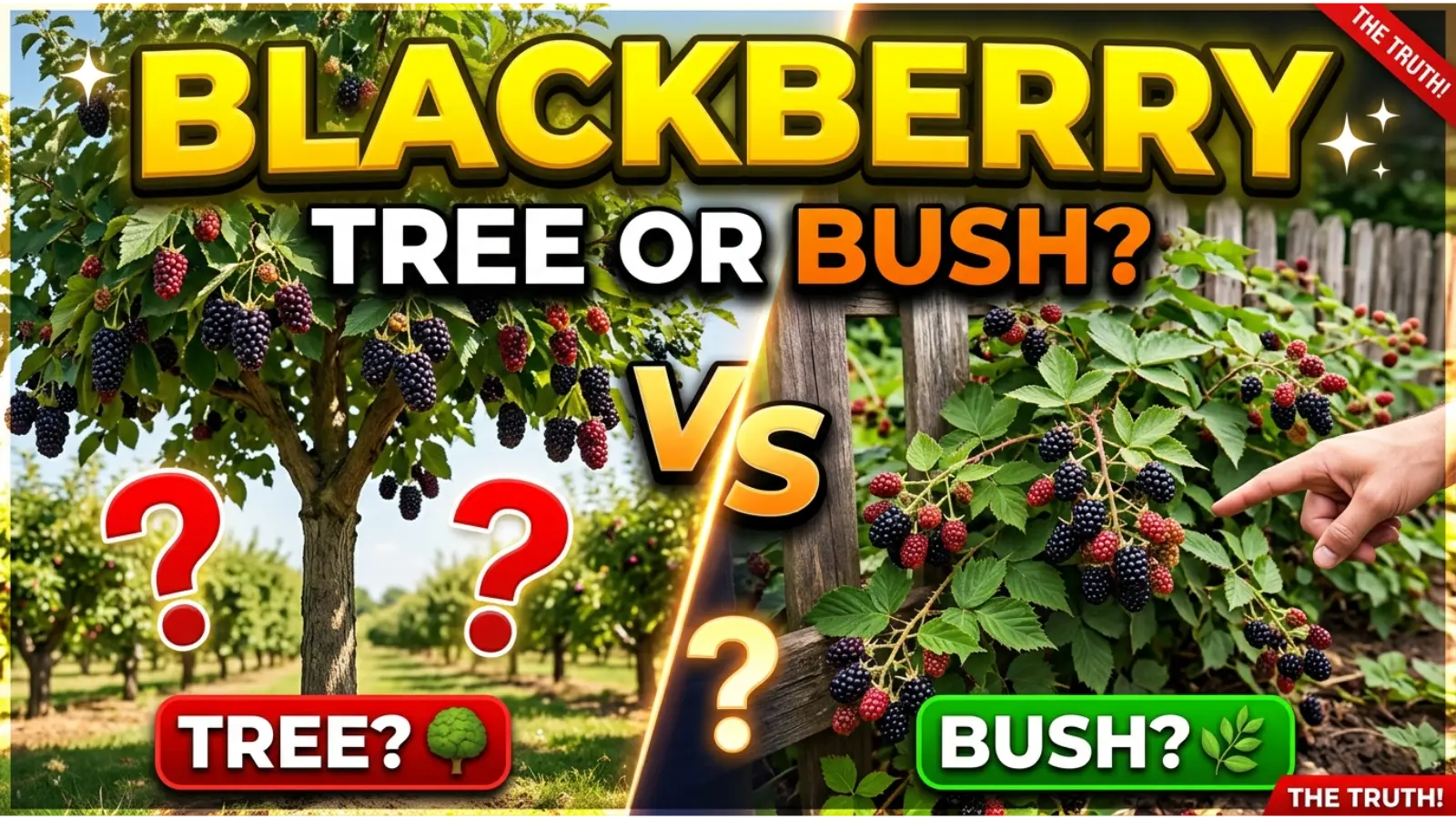
When identifying a blackberry plant, many people wonder if it is a blackberry tree or bush. Because blackberry plants can grow tall, spread across the ground, and develop thick, woody stems, they sometimes look like small trees. However, their actual growth pattern makes them different from traditional trees. Understanding if a blackberry grows as a tree or bush can help gardeners identify it, care for it, and choose the right growing conditions.
In this guide, we will explain the difference between a blackberry tree or bush, explore how blackberry plants grow, discuss their physical characteristics, and provide simple examples to help you understand the correct terminology. If you are growing blackberries in your backyard or simply learning about these fruit-producing plants, this comparison will give you a clear answer.
Is a Blackberry a Tree or a Bush?
A blackberry is generally classified as a bush or shrub, not a tree. Blackberry plants belong to the genus Rubus and produce fruit on woody canes that grow from a perennial root system.
Unlike trees, which usually develop a permanent central trunk and branches, blackberry plants typically produce multiple stems from their base. These stems are commonly called canes.
Some blackberry varieties grow upright, while others spread outward or trail along the ground. Their height and thick stems can sometimes make them look like small trees, but their botanical growth structure remains different.
Therefore, blackberry bush is the more accurate and commonly used description.
What Is a Blackberry Bush?
A blackberry bush is a woody perennial plant that produces edible black or dark purple fruits. It belongs to the rose family, known as Rosaceae.
Blackberry bushes are popular in home gardens, farms, and natural landscapes because they produce delicious fruit and can grow in different environments.
Main Characteristics of a Blackberry Bush
- Multiple canes: Blackberry plants usually grow several stems from their roots.
- Woody stems: Their canes become firm and woody as they mature.
- Thorns: Many varieties have sharp prickles, although thornless varieties are also available.
- Edible fruit: They produce juicy blackberries that people use in desserts, jams, smoothies, and other recipes.
- Perennial roots: The root system survives for many years and produces new canes.
- Seasonal growth: Most varieties produce flowers and fruit during particular growing seasons.
Blackberry bushes can grow upright, semi-upright, or in a trailing pattern, depending on the variety.
Why Do Some People Call It a Blackberry Tree?
People sometimes use the expression blackberry tree because certain blackberry plants grow tall and develop thick, woody stems.
When a plant reaches a considerable height, its structure may resemble a small tree. However, appearance alone does not determine botanical classification.
There are several reasons people confuse blackberry bushes with trees:
1. Tall Growth
Some blackberry varieties produce tall canes that can reach several feet in height. Their upright growth makes them look similar to small trees.
2. Thick Woody Stems
As blackberry canes mature, they become woody and stronger. These stems can resemble the branches of a young tree.
3. Dense Branching
Blackberry plants can develop many overlapping canes, creating a thick structure that looks like a small tree or shrub.
4. Fruit-Producing Appearance
Because blackberries grow on branches rather than underground, some people naturally assume they come from a tree.
Despite these similarities, a blackberry plant is generally considered a shrub or bramble rather than a true tree.
Blackberry Tree vs. Blackberry Bush: Key Differences
Understanding the physical differences between trees and bushes makes it easier to identify a blackberry plant.
| Feature | Blackberry Tree | Blackberry Bush |
|---|---|---|
| Botanical classification | Not the usual classification | Shrub or bramble |
| Main structure | Would suggest a central trunk | Multiple woody canes |
| Growth pattern | Tree-like | Upright, spreading, or trailing |
| Root system | Not a typical description of blackberry growth | Perennial root system |
| Fruit production | Not a standard tree classification | Produces blackberries on canes |
| Common terminology | Informal or inaccurate | Botanically appropriate |
The most important difference is the plant’s growth structure. Blackberry plants generally produce multiple canes instead of developing one permanent tree trunk.
How Does a Blackberry Plant Grow?
Blackberry plants have a distinctive growing cycle. Their roots are perennial, but individual canes usually follow a two-year growth cycle.
Understanding this cycle helps explain why blackberry bushes do not grow like ordinary fruit trees.
First Year: Primocanes
New blackberry stems are called primocanes. They grow from the plant’s root system and develop leaves and branches.
Depending on the variety, these canes may grow upright, arch outward, or spread along the ground.
Most traditional blackberry varieties produce fruit on second-year canes.
Second Year: Floricanes
During the second year, the previous season’s canes are called floricanes.
These canes produce flowers and blackberries before eventually dying.
Gardeners usually remove the old fruiting canes after harvesting to encourage healthy new growth.
New Growth Continues
While older canes produce fruit, new primocanes continue growing from the roots.
This repeating cycle allows blackberry bushes to produce fruit over multiple years.
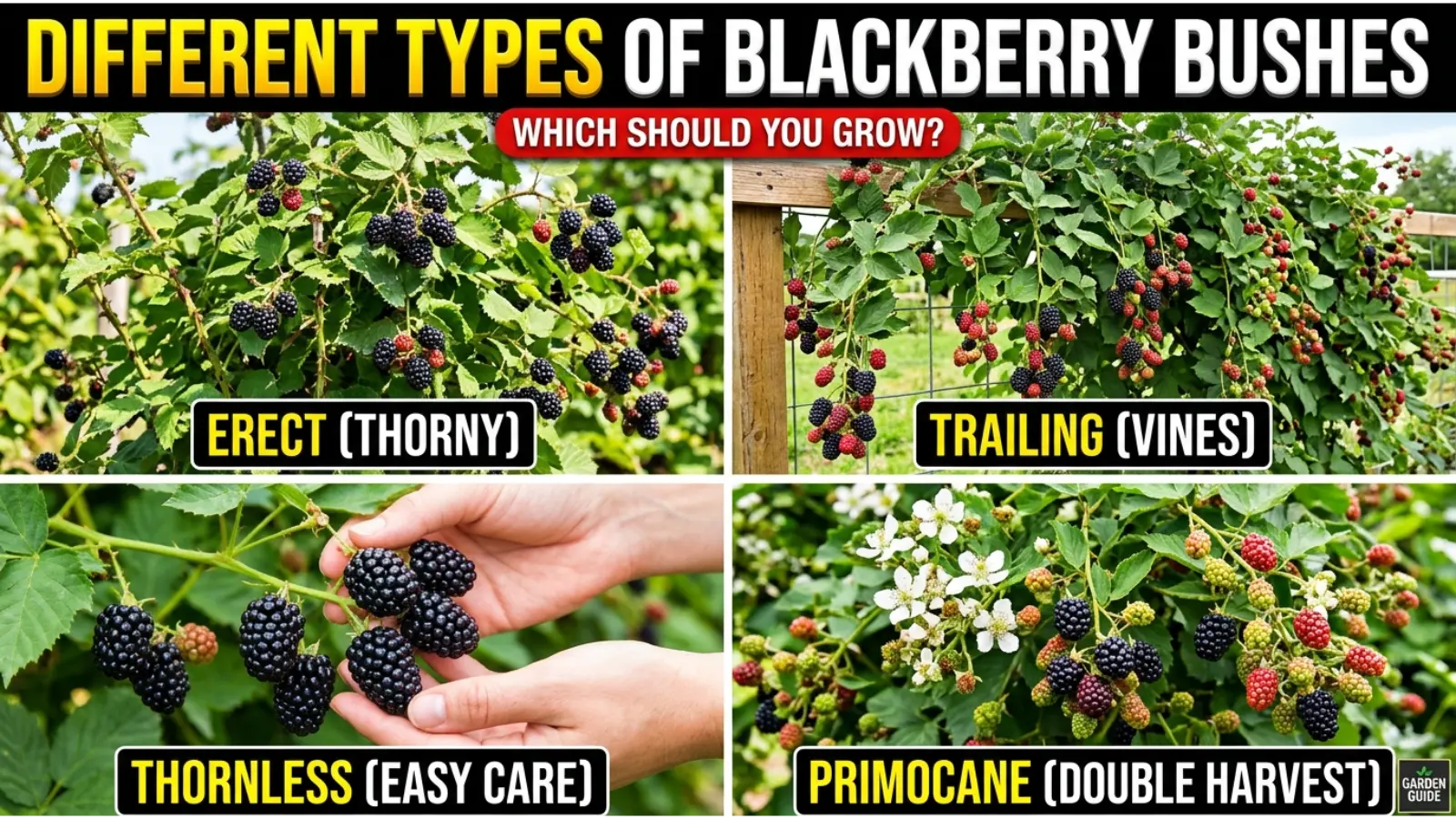
Different Types of Blackberry Bushes
Not all blackberry bushes grow in the same way. Their growth habits depend on their variety and growing conditions.
1. Erect Blackberry Bushes
<PRIVATE_PERSON>
Erect blackberry varieties grow upward and usually have stronger canes that can support themselves.
They are often easier to manage in smaller gardens because they do not spread as extensively as trailing varieties.
2. Semi-Erect Blackberry Bushes
Semi-erect varieties initially grow upward but develop arching canes as they mature.
Gardeners may use supports to keep their stems organized and make harvesting easier.
3. Trailing Blackberry Bushes
Trailing blackberry varieties produce long canes that spread along the ground or grow over supporting structures.
They generally need trellises or other supports to keep their growth manageable.
4. Thornless Blackberry Bushes
Thornless blackberry varieties are popular with home gardeners because harvesting and pruning are easier.
They produce fruit without the sharp prickles found on many traditional blackberry varieties.

Where Do Blackberry Bushes Grow?
Blackberry bushes grow in many regions and can adapt to different environments.
They commonly grow in:
- Home gardens
- Woodland edges
- Open fields
- Roadsides
- Fences and hedgerows
- Sunny and partially shaded areas
Most blackberry varieties perform best in well-drained soil with plenty of sunlight.
However, their exact growing requirements depend on the variety and local climate.

How to Identify a Blackberry Bush
If you find a plant growing outdoors and want to determine whether it is a blackberry bush, look for these characteristics.
Leaves: Blackberry plants usually have compound leaves with several leaflets. Many varieties have three or five leaflets.
Stems: Their stems are woody canes that may have prickles or be completely thornless.
Flowers: Blackberry plants produce small flowers, commonly with five petals. Their flowers are often white or pale pink.
Fruit: Young fruits start green, gradually turn red, and become dark purple or black when ripe.
Growth pattern: Several canes usually emerge from the same root system instead of one permanent central trunk.
These characteristics can help distinguish blackberry plants from other shrubs. However, identification should consider the complete plant rather than fruit color alone.

How to Grow and Care for a Blackberry Bush
Growing blackberries at home is relatively simple when you provide the right conditions.
Choose a Sunny Location
Blackberry bushes generally produce better fruit when they receive plenty of sunlight. Choose a location that gets approximately six to eight hours of direct sunlight daily.
Use Well-Drained Soil
Blackberries prefer fertile, well-drained soil. Avoid areas where water remains around the roots for long periods.
Provide Enough Space
Blackberry plants need room for their canes to grow. The required spacing depends on whether the variety is erect, semi-erect, or trailing.
Water Regularly
Water young blackberry plants consistently while they establish their roots. Mature plants also need adequate moisture, especially during flowering and fruit development.
Prune Old Canes
Remove canes that have already produced fruit and died. Regular pruning helps improve airflow and encourages healthy new growth.
Add Support When Necessary
Trailing and some semi-erect blackberry varieties benefit from trellises. Supports make it easier to manage canes and harvest ripe fruit.
Common Mistakes When Describing Blackberry Plants
People often make a few mistakes when discussing blackberry trees and bushes.
Mistake 1: Calling Every Tall Blackberry Plant a Tree
A blackberry plant does not become a tree simply because its canes grow tall. Its overall botanical structure is more important than its height.
Mistake 2: Assuming All Blackberry Bushes Have Thorns
Some varieties have prickles, while others are naturally thornless. Therefore, the absence of thorns does not mean a plant is not a blackberry.
Mistake 3: Confusing Blackberry Canes With Tree Branches
Blackberry canes are woody stems that grow from the plant’s root system. They may look like branches, but they have a different growth pattern from the permanent branches of a typical tree.
Mistake 4: Thinking Every Blackberry Variety Grows Upright
Some varieties grow upright, while others have arching or trailing canes. Their growth habits vary considerably.
Is Blackberry Bush the Correct Term in Professional Writing?
Yes. Blackberry bush is an appropriate and widely understood term in gardening, horticulture, and everyday English.
Professional gardening articles, plant descriptions, and cultivation guides commonly refer to blackberry plants as bushes, shrubs, or brambles.
The word bramble is particularly useful when discussing wild blackberry plants and related thorny shrubs.
The expression blackberry tree may appear in casual conversations, but it is not the standard botanical description.
For educational articles, gardening websites, and plant identification guides, blackberry bush or blackberry plant is generally the better choice.
Real-Life Examples: Blackberry Tree or Bush
Here are some simple examples showing how to use the correct terminology.
Example 1
Incorrect: A blackberry tree is growing beside my garden fence.
Better: A blackberry bush is growing beside my garden fence.
Example 2
Incorrect: I planted three blackberry trees in my backyard.
Better: I planted three blackberry bushes in my backyard.
Example 3
Correct: My blackberry bush produces delicious fruit every summer.
Example 4
Correct: The wild blackberry bramble is spreading along the fence.
Example 5
Correct: I need to prune the old canes on my blackberry plant.
These examples demonstrate why blackberry bush, blackberry plant, and blackberry bramble are more suitable descriptions.
Frequently Asked Questions
1. Is a blackberry a tree or a bush?
A blackberry is generally a bush or shrub. It grows from a perennial root system and produces multiple woody canes instead of a permanent central trunk.
2. Can blackberry bushes grow like trees?
Yes. Some varieties grow tall and develop thick, upright canes that resemble small trees. However, they are still classified as shrubs or brambles.
3. What is a blackberry plant called?
A blackberry plant is commonly called a blackberry bush, blackberry shrub, or blackberry bramble.
4. Does a blackberry bush have thorns?
Many blackberry varieties have sharp prickles, but thornless varieties are also available.
5. How tall does a blackberry bush grow?
Its height depends on the variety and growing conditions. Many cultivated varieties reach approximately three to six feet, although some can grow taller or spread much farther.
6. Do blackberries grow on trees?
No, blackberries generally grow on woody canes of blackberry bushes. These canes may look like small branches, but they are not the branches of a traditional fruit tree.
7. Is blackberry a perennial plant?
Yes. Blackberry plants are perennial because their root systems survive for multiple years. However, individual canes usually have a two-year life cycle.
8. What is the difference between a blackberry bush and a bramble?
A blackberry bush is a general description of the plant, while bramble is a botanical and gardening term commonly used for thorny plants in the genus Rubus.
Conclusion
When comparing a blackberry tree or bush, the correct general description is blackberry bush. Blackberry plants are woody perennial shrubs that produce multiple canes from their root systems. Although some varieties grow tall and develop thick stems that resemble small trees, they do not have the typical structure of true trees.
Whether you call it a blackberry bush, blackberry plant, or blackberry bramble, understanding its growth pattern makes identification easier. For gardening, educational writing, and professional plant descriptions, blackberry bush is the most appropriate everyday term.