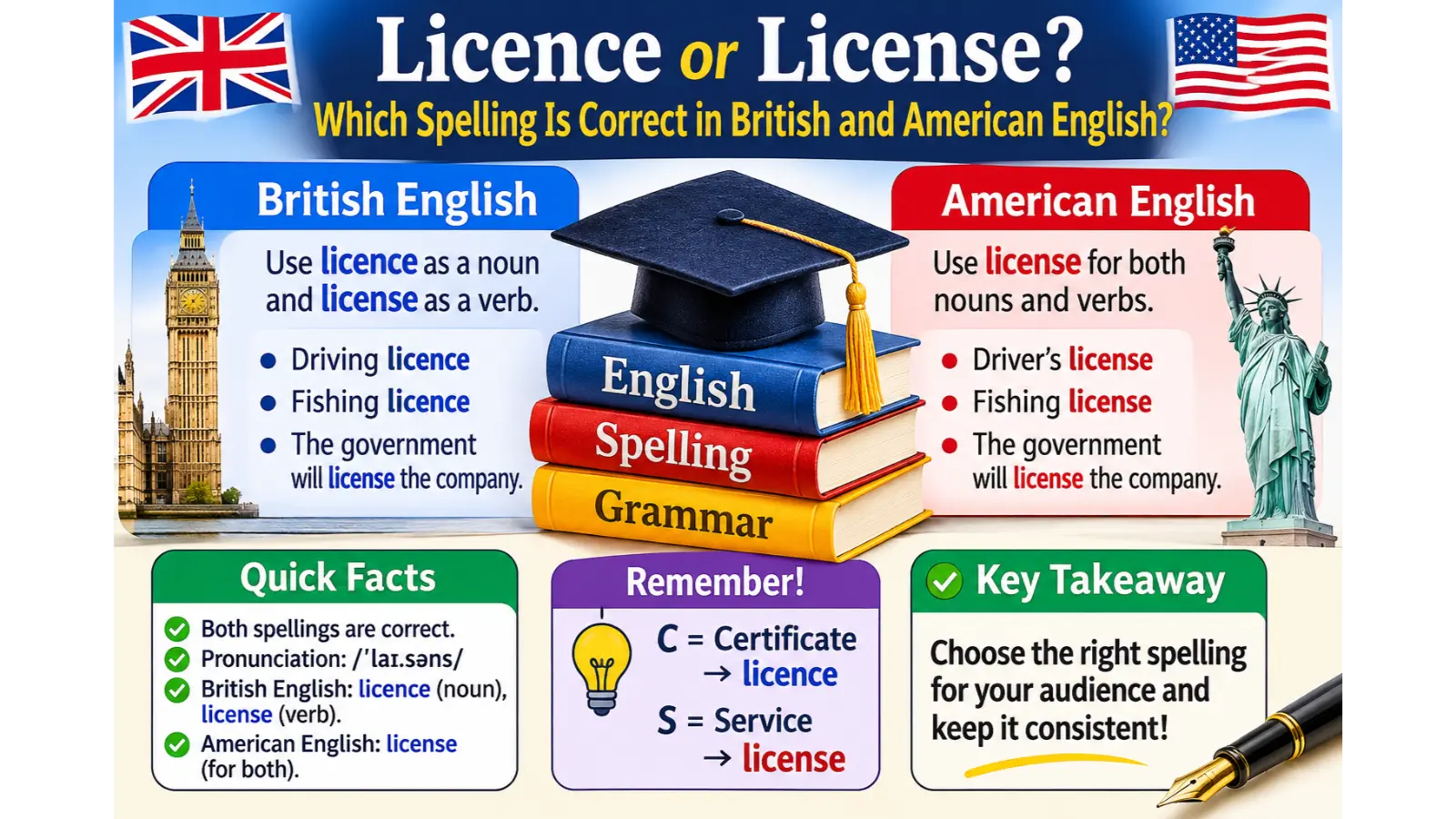
The difference between licence or license often confuses English learners because both spellings are correct, but their usage depends on the type of English you follow. British English uses licence as a noun and license as a verb. However, American English uses license for both grammatical purposes. Although these words have the same pronunciation and similar meanings, choosing the correct spelling is important for clear and professional writing. In this guide, you will learn the differences between licence and license, their meanings, grammatical rules, historical backgrounds, dictionary recommendations, and practical examples.
Licence vs. License: Quick Comparison
| Feature | Licence | License |
|---|---|---|
| British English noun | Correct | Not standard |
| British English verb | Not standard | Correct |
| American English noun | Not standard | Correct |
| American English verb | Not standard | Correct |
| Pronunciation | /ˈlaɪ.səns/ | /ˈlaɪ.səns/ |
| Meaning | Official permission or document | Official permission or document; also the verb |
The most important distinction is that British English separates the noun and verb spellings, whereas American English uses one spelling for both.
What Does Licence Mean in British English?
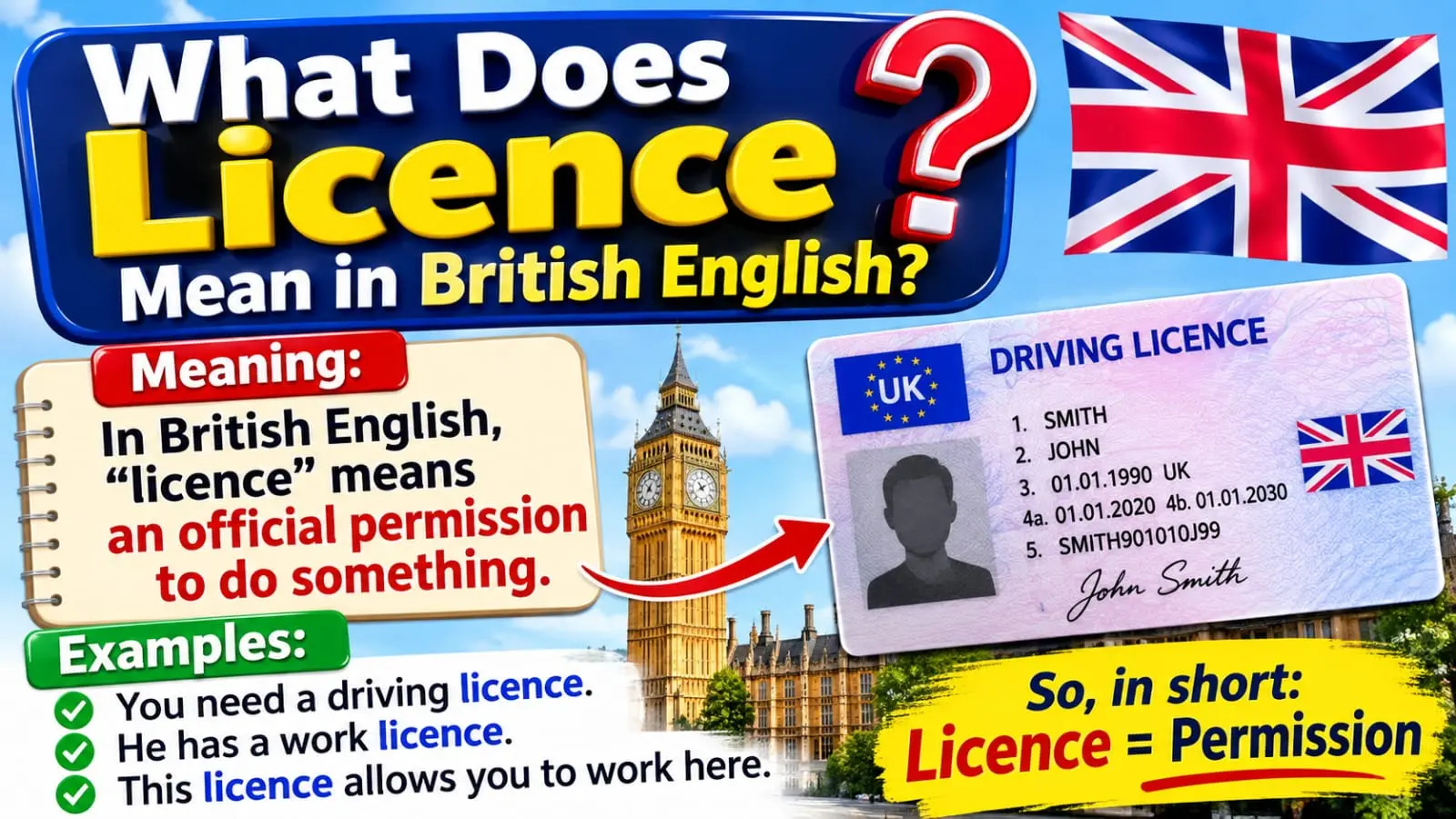
In British English, licence is a noun that refers to official permission or a document that allows someone to perform a particular activity. A government department, local authority, or authorised organisation may issue a licence to an individual or business.
People commonly use this spelling when discussing driving, fishing, broadcasting, business activities, and professional qualifications.
For example:
- She renewed her driving licence last week.
- You need a fishing licence to catch fish legally.
- The restaurant received its alcohol licence.
- He applied for a professional licence.
- The company obtained a licence to use the technology.
In each sentence, licence refers to a document, permission, or official authorisation. Therefore, it functions as a noun.
What Does License Mean in English?
The spelling license has two important uses. In American English, it works as both a noun and a verb. In British English, it is generally used as a verb.
As a verb, license means to grant someone official permission to do something or operate a particular business.
For example:
- The government will license the new company.
- The authority licensed the business last year.
- The organisation licenses its technology to other companies.
- The state licenses professional drivers.
- The company is licensed to manufacture medical equipment.
In American English, license can also describe the official document itself.
For example:
- I need to renew my driver’s license.
- She received her business license yesterday.
The grammatical role and regional spelling convention determine which form you should choose.
British English Rules: When to Use Licence and License
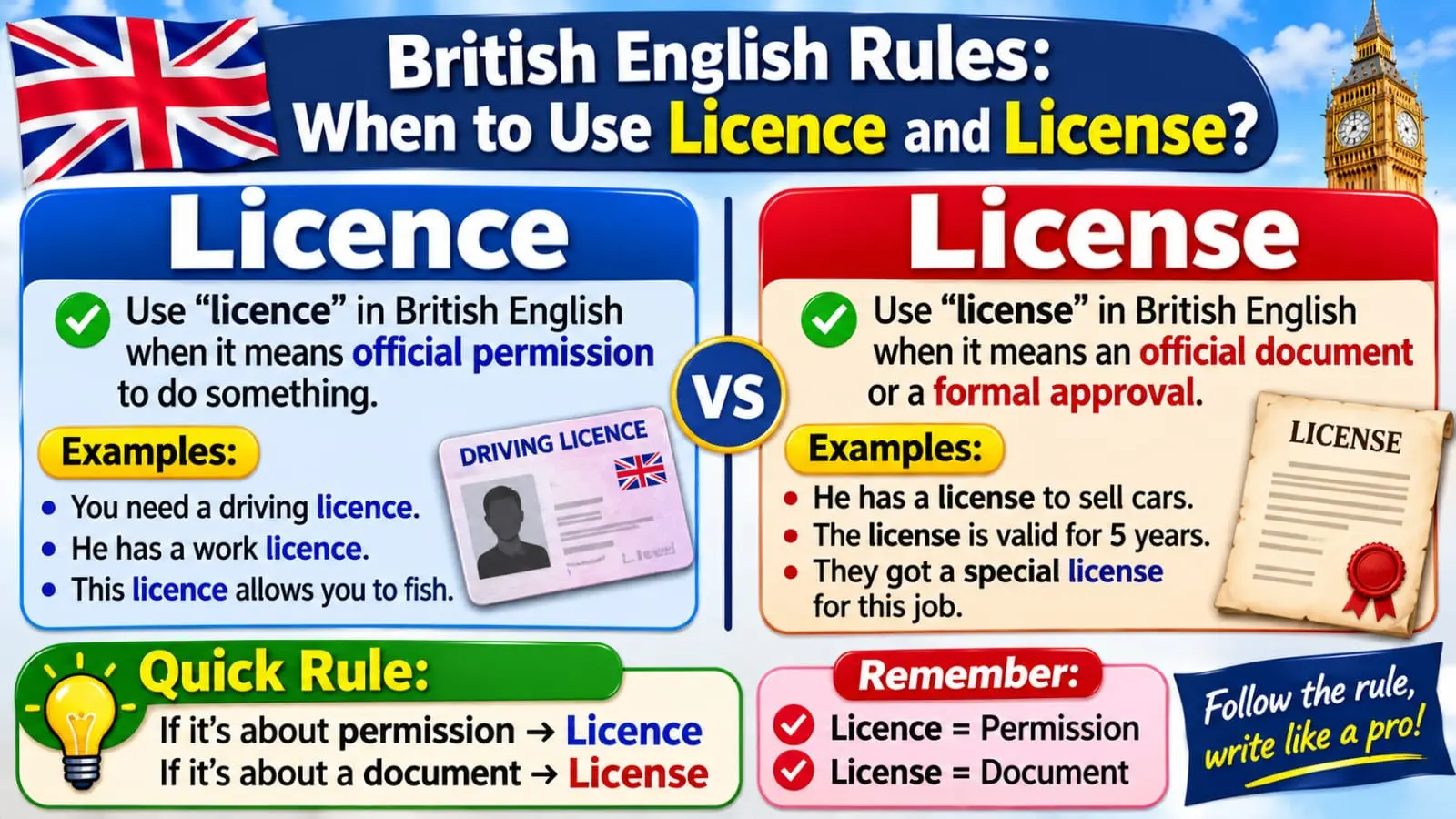
British English follows a straightforward spelling distinction between these two words. The spelling changes according to whether you are using the word as a noun or a verb.
Use licence as a noun.
A noun identifies a document, permission, or official authorisation.
Examples:
- My driving licence expires next month.
- The shop needs a special trading licence.
- She received her television licence.
- His fishing licence is valid for one year.
Use license as a verb.
A verb describes the action of giving someone official permission.
Examples:
- The council will license the new restaurant.
- The government licensed the organisation.
- They are authorised to license private businesses.
- The authority licenses qualified professionals.
Remember this simple British English rule: Licence is the noun, while license is the verb.
American English Rules: Why License Is Used for Both
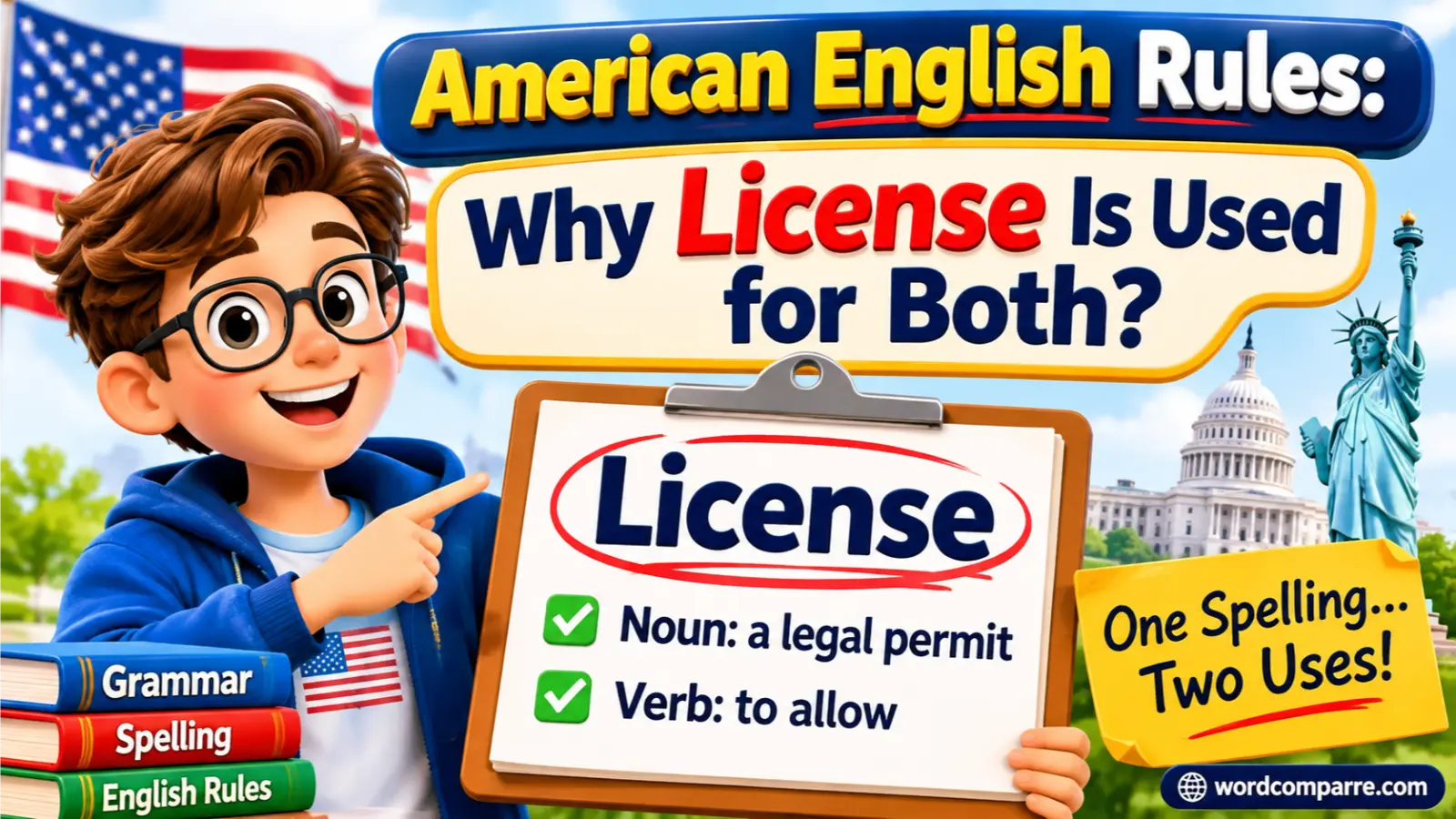
American English does not normally maintain the same noun-and-verb spelling distinction as British English.
Instead, American writers use license in both situations.
When it functions as a noun, it refers to official permission or a document.
Examples:
- He renewed his driver’s license.
- The business received a new license.
- You need a fishing license to participate.
- Her professional license is still valid.
When it functions as a verb, it describes the action of granting permission.
Examples:
- The state will license the business.
- The authority licensed the new company.
- The government licenses qualified professionals.
Therefore, American writers do not need to switch between licence and license according to grammatical function.
What Is the Difference Between Licence and License?
The difference is not in pronunciation or basic meaning. Instead, it relates to regional spelling conventions and grammatical usage.
In British English, licence identifies the noun, while license identifies the verb. In American English, license serves both purposes.
Consider these examples:
British English:
- She has a valid driving licence.
- The government will license the company.
American English:
- She has a valid driver’s license.
- The government will license the company.
Both varieties communicate the same basic meaning. However, using the appropriate spelling makes your writing more consistent and professional.
History and Origin of Licence and License
The word has an interesting history that explains why both spellings exist.
Licence entered English through Old French and ultimately comes from the Latin word licentia, which refers to freedom, permission, or liberty.
Over centuries, English spelling conventions developed different ways of distinguishing certain nouns and verbs. British English adopted the spelling distinction between licence and license.
American English gradually established a more uniform spelling system, using license for both grammatical forms.
Noah Webster played an influential role in standardising American spelling. His dictionaries helped establish several spelling conventions that distinguish American English from British English.
Today, both spellings remain established, and neither is universally incorrect.
What Do Major Dictionaries Say?
Major English dictionaries recognise these spellings and explain their differences according to region and grammatical function.
| Dictionary | Usage Guidance |
|---|---|
| Oxford Learner’s Dictionaries | Licence as a British noun; license as a British verb and American noun/verb |
| Cambridge Dictionary | Licence is the British noun; license is the American noun and the verb |
| Collins Dictionary | Recognises the British noun-and-verb distinction |
| Merriam-Webster | Uses license for American noun and verb forms |
These dictionary recommendations demonstrate why writers should consider both grammar and regional preferences before choosing a spelling.
For British publications, consult British English dictionaries. For American publications, Merriam-Webster provides useful American spelling guidance.
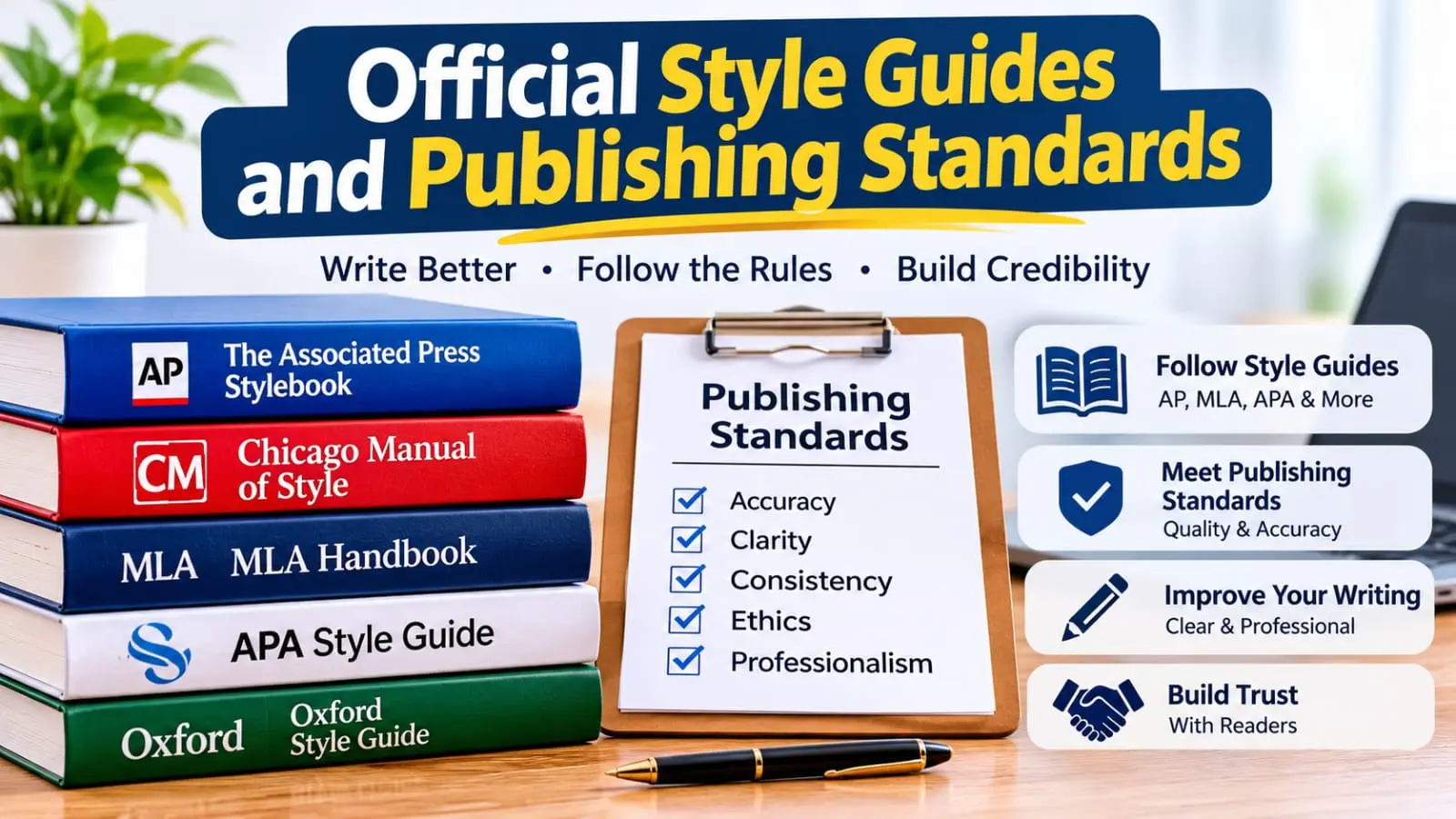
Official Style Guides and Publishing Standards
Professional writing requires consistent spelling. Different organisations may follow different editorial standards depending on their audiences.
Oxford University Style Guide
Oxford follows British English conventions, distinguishing between the noun licence and the verb license.
Microsoft Writing Style Guide
Microsoft uses American English conventions in its US English content, including license for nouns and verbs.
GOV.UK Style Guide
UK government publications follow British English spelling and editorial conventions. Writers preparing government-facing content should follow the relevant UK guidance.
Publishing standards
Books, newspapers, magazines, and online publications generally maintain their own house styles. Writers should check the publication’s requirements before submitting content.
The safest approach is to choose one English variety and apply it consistently throughout the document.
Licence or License in Academic Writing
Academic writing requires accuracy, consistency, and attention to institutional guidelines.
British universities and academic publications generally use licence as a noun and license as a verb. American universities generally use license for both grammatical forms.
Examples of academic usage include:
British academic example:
The researcher obtained a licence to access the restricted database.
American academic example:
The researcher obtained a license to access the restricted database.
When preparing research papers, dissertations, journal articles, or university assignments, always check the required spelling conventions.
Licence or License in Business Writing
Businesses frequently use these words in contracts, legal documents, software agreements, and professional communications.
The appropriate spelling depends on the company’s location and preferred writing style.
British business examples:
- The company holds a valid operating licence.
- We need to license the software to another organisation.
- The business licence expires next month.
- The council issued a new trading licence.
American business examples:
- The company holds a valid operating license.
- We need to license the software to another organization.
- The business license expires next month.
- The city issued a new business license.
Using consistent spelling helps prevent confusion in professional documents and makes communication more suitable for the intended audience.
Licence or License in International Communication
International communication often involves readers from countries that follow different English spelling conventions.
For example, British spelling is commonly used in the United Kingdom and is also followed in many other English-speaking contexts. American spelling is standard in the United States.
For international websites, businesses, and educational publications, consider the following recommendations:
- Use British spelling when targeting UK readers.
- Use American spelling when targeting US readers.
- Follow the required style guide for international organisations.
- Maintain consistent spelling across your website.
- Avoid switching between British and American conventions without a clear reason.
These practices make your writing easier to understand and help establish a consistent editorial identity.
Real-World Examples of Licence and License
The following examples show how the spellings work in everyday situations.
| Situation | British English | American English |
|---|---|---|
| Driving document | Driving licence | Driver’s license |
| Fishing permission | Fishing licence | Fishing license |
| Business document | Business licence | Business license |
| Marriage document | Marriage licence | Marriage license |
| Software permission | Software licence | Software license |
| Granting permission | To license a business | To license a business |
Notice that the noun spelling changes between British and American English, but the verb spelling remains license in both varieties.
Common Mistakes to Avoid
Writers sometimes confuse these words because they sound exactly alike. However, a few simple rules can prevent common spelling mistakes.
Mistake 1: Using license as a British noun
Nonstandard in traditional British English: She renewed her driving license.
Correct: She renewed her driving licence.
Mistake 2: Using licence as an American noun
Nonstandard in standard American English: He applied for a driving licence.
Correct: He applied for a driver’s license.
Mistake 3: Using licence as the British verb
Traditional British English: The government will license the company.
Less common British variant: The government will licence the company.
Mistake 4: Mixing spelling conventions
Avoid using licence in one section and American license as a noun in another unless you are deliberately comparing regional usage.
Always proofread your writing before publication.
Related Word Forms and Grammar
Understanding related forms can make the distinction easier to remember.
| Word Form | British English | American English |
|---|---|---|
| Noun | Licence | License |
| Verb | License | License |
| Third-person verb | Licenses | Licenses |
| Past tense | Licensed | Licensed |
| Present participle | Licensing | Licensing |
The spelling distinction mainly affects the base noun form. Other common verb forms generally use the letter s.
Examples:
- She licenses the software to other companies.
- The company licensed its technology last year.
- The organisation is licensing its products internationally.
How to Remember the Difference
A simple memory trick can help you remember the British English distinction.
C = Certificate: Think of licence as a noun referring to an official document.
S = Service: Think of license as a verb describing the action of granting permission.
For American English, remember one straightforward rule: use license for both the noun and the verb.
This small trick can help you avoid spelling mistakes when writing articles, reports, emails, and professional documents.
Current Usage and Spelling Trends
Both spellings remain established in modern English. Their usage largely reflects regional writing conventions rather than a change in meaning.
British publications continue to distinguish between the noun licence and the verb license. Meanwhile, American publications generally use license for both grammatical purposes.
Digital publishing platforms, international businesses, and educational institutions usually follow a specific regional style guide.
There is no need to replace one spelling with the other simply because it appears more frequently in a particular country. The correct choice depends on your audience, grammar, and editorial standards.
Frequently Asked Questions (FAQs)
1. Is licence or license correct?
Both are correct. British English uses licence as a noun and license as a verb. American English uses license for both nouns and verbs.
2. Is driving licence British or American?
Driving licence is the standard British English expression. American English generally uses driver’s license.
3. Is license a verb or a noun?
It can be both. In British English, it is generally a verb. In American English, it works as both a noun and a verb.
4. Do licence and license have the same pronunciation?
Yes. Both are pronounced /ˈlaɪ.səns/. Their spelling differs, but their pronunciation is the same.
5. Is licence wrong in American English?
Licence is not the standard American spelling. American English uses license for both noun and verb forms.
6. Which spelling should I use for an international audience?
Choose the spelling that matches your primary audience. Use British conventions for UK readers and American conventions for US readers. For a global publication, maintain one consistent style.
7. Why does British English use licence and license?
British English traditionally distinguishes between the noun licence and the verb license. This spelling convention helps identify the grammatical function of the word.
8. Is software licence British English?
Yes. Software licence is the traditional British English noun spelling. American English generally uses software license.
9. Is licensed correct in both British and American English?
Yes. Licensed is the standard past-tense and past-participle spelling of the verb in both British and American English.
10. What is the plural of licence?
The British English plural is licences. In American English, the plural of license is licenses.
Conclusion
The difference between licence or license depends on regional spelling conventions and grammatical usage. British English uses licence as a noun and license as a verb, whereas American English uses license for both.
Neither spelling is universally incorrect. The important thing is to understand your audience, follow the appropriate dictionary and style guide, and maintain consistency throughout your writing. Once you understand this simple distinction, choosing the correct spelling becomes much easier.