Have you ever wondered whether to write years past or years passed? Both expressions are correct, but they have different meanings and grammatical uses. The word past usually describes a time that has already happened, while passed is the past tense of the verb pass. Choosing the right expression depends on what you want to say and how you structure your sentence.
Understanding the difference between these two expressions can improve your writing, prevent common grammar mistakes, and help you communicate more clearly. In this guide, you will learn their meanings, grammar rules, sentence structures, practical examples, and easy memory tricks.
Years Past or Years Passed: Understanding the Difference
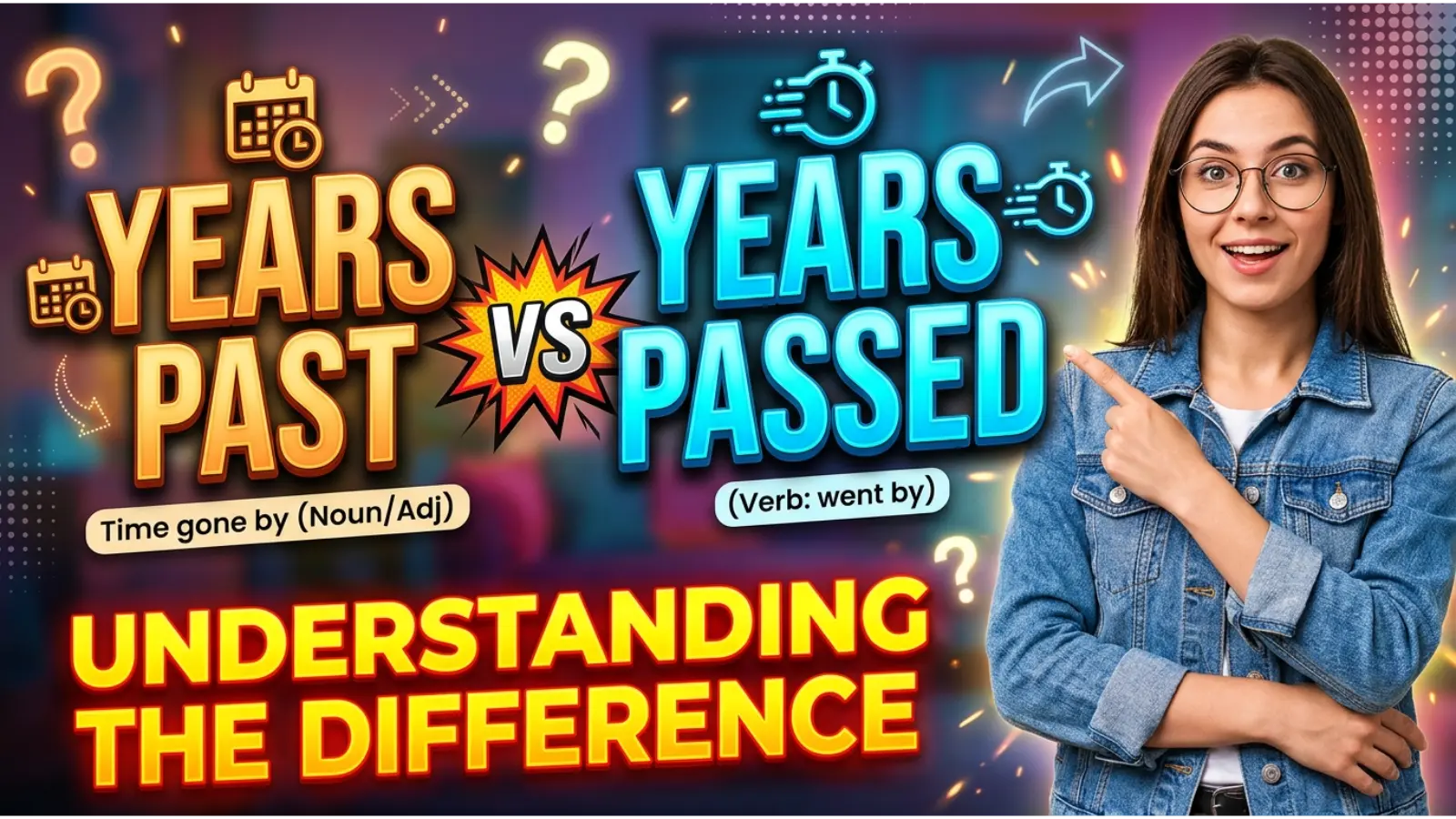
The main difference between years past and years Went Past comes from the grammatical roles of the words past and passed.
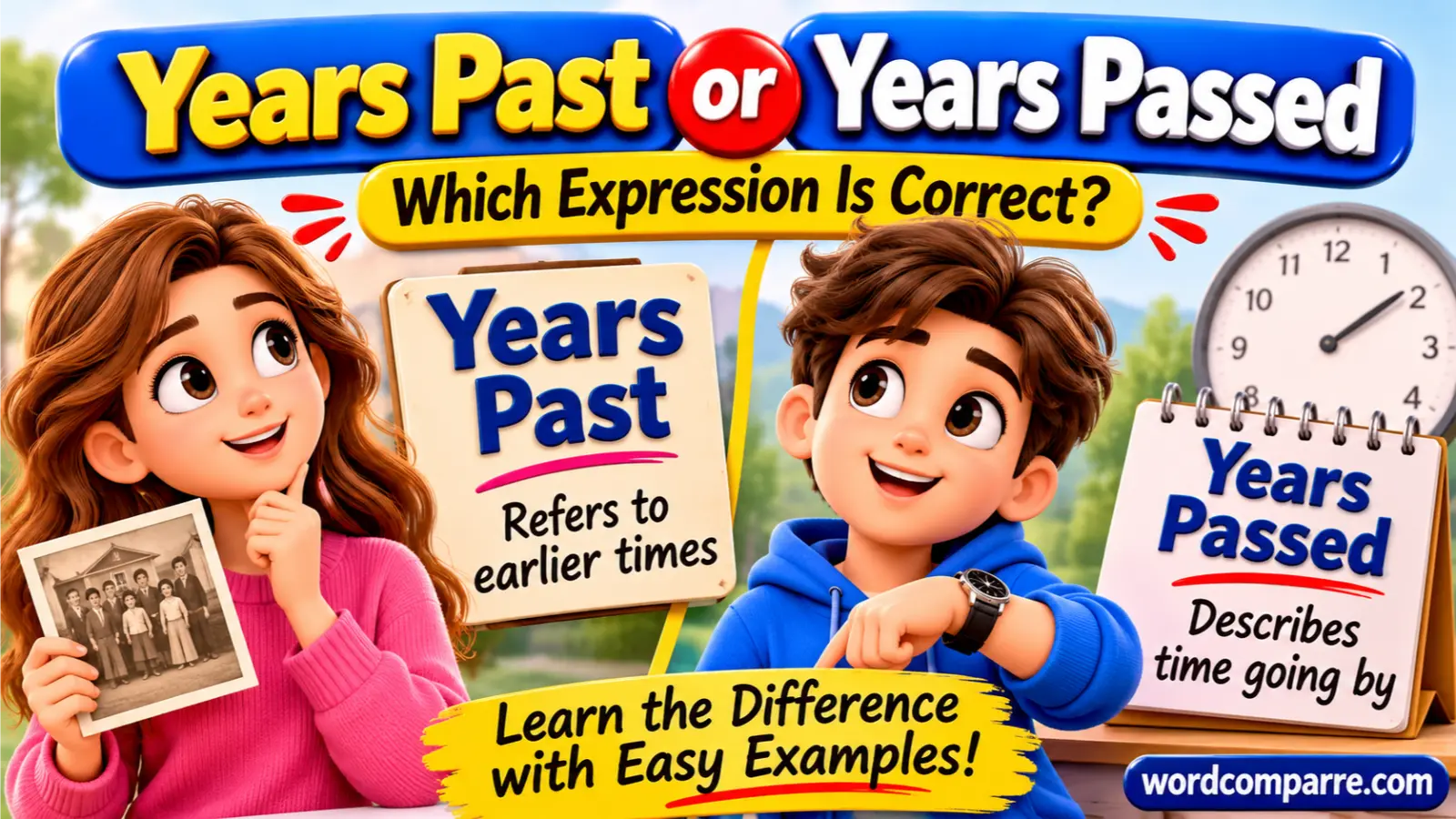
Years past refers to a period of time that has already gone by. It often describes something that happened a long time ago or refers to a previous period.
Years passed describes the movement of time. Here, Went Past works as a verb and explains that a certain number of years went by.
Consider these examples:
- Years past: The memories of years past still make me smile.
- Years passed: Several years Went Past before they met again.
Both sentences are grammatically correct. However, the first refers to earlier times, while the second describes the passage of time.
What Does Years Past Mean?
The expression years past refers to earlier years or a period that belongs to the past. The word past can function as an adjective, noun, or preposition, depending on the sentence.
When people use this expression, they usually talk about memories, historical events, previous experiences, or things that happened long ago.
Examples of Years Past in Sentences
- The traditions of years past remain important to our family.
- She often remembers the happy moments of years past.
- Life was very different in years past.
- The stories of years past still inspire young people.
- We should learn from the mistakes of years past.
In each example, years past points toward an earlier period rather than describing an action.
When Should You Use Years Past?
Use years past when you want to:
- Talk about memories from earlier times.
- Describe historical periods.
- Refer to previous experiences.
- Compare life today with life in earlier years.
- Discuss traditions or events from the past.
For example, “The fashion of years past is becoming popular again” refers to styles from earlier periods.
What Does Years Passed Mean?
The expression years Went Past describes time moving forward. The word Went Past is the simple past tense and past participle of the verb pass.
When you say that years Went Past, you explain that a period of time went by. This expression often appears in stories, personal experiences, historical accounts, and descriptions of waiting.
Examples of Years Passed in Sentences
- Five years Went Past before he returned home.
- Several years Went Past after their graduation.
- Many years Went Past before she achieved her dream.
- Two years Went Past without any communication.
- As the years Went Past, their friendship became stronger.
These examples describe time moving from one point to another.
When Should You Use Years Passed?
Use years Went Past when you want to:
- Explain how much time went by.
- Describe a long waiting period.
- Tell a story about events over time.
- Show how circumstances changed.
- Explain the time between two events.
For example, “Ten years Went Past before they opened the business again” clearly describes the passage of ten years.
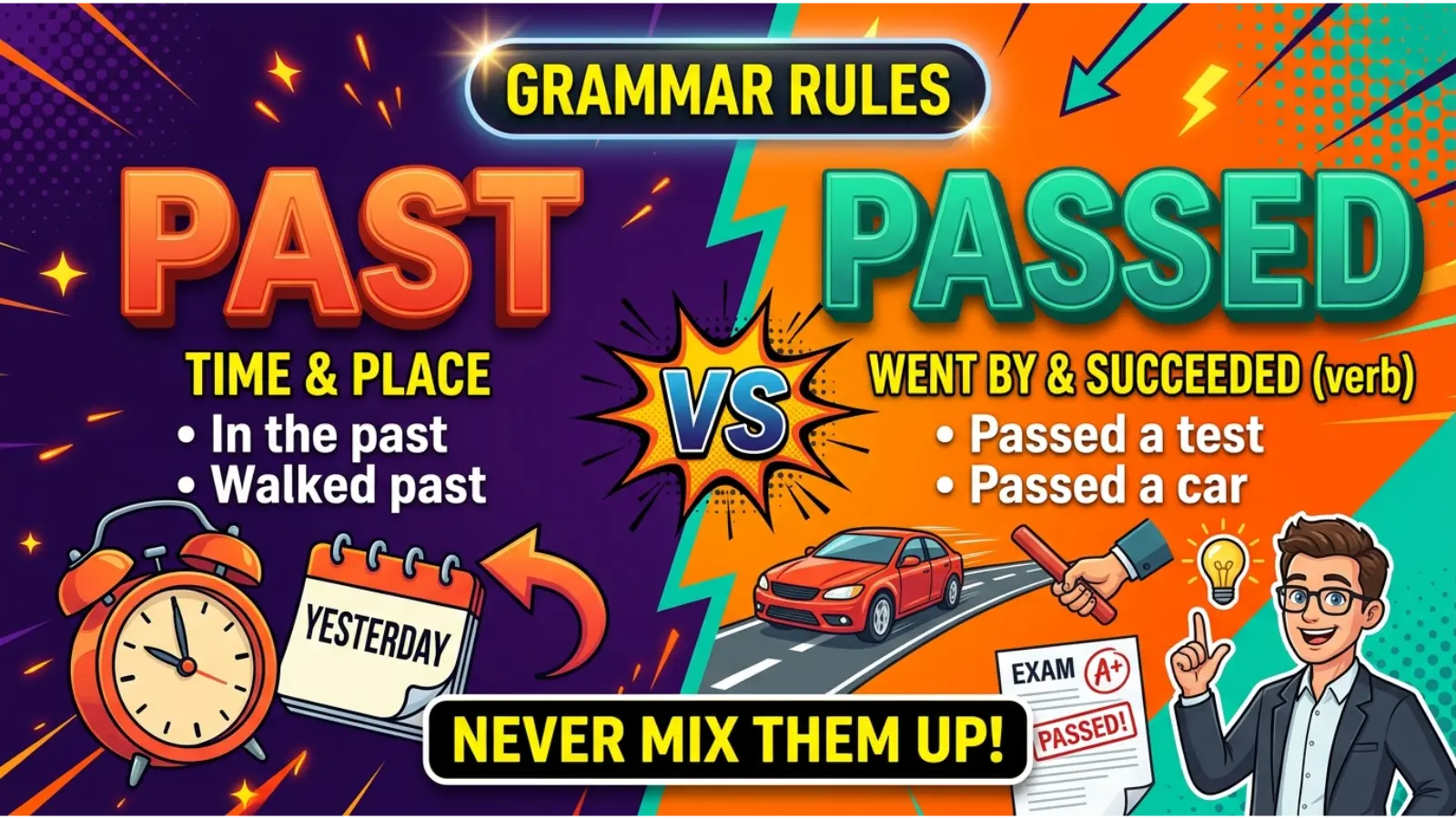
Grammar Rules: Past vs. Passed
Understanding the grammar behind these words makes the difference easier to remember.
1. Past Can Describe an Earlier Time
The word past often works as an adjective or noun when discussing previous periods.
Examples:
- We remember our past experiences.
- The past few years have been challenging.
- Memories of the past still matter.
2. Passed Is a Verb
The word Went Past describes an action or something that happened. It is the past form of the verb pass.
Examples:
- Time Went Past quickly.
- Three months Went Past without a reply.
- She Went Past her driving test.
3. Passed Often Follows a Time Expression
When describing how much time went by, you can place a time expression before Went Past.
Examples:
- Two days Went Past.
- Six months Went Past.
- Twenty years Went Past.
4. Past Can Follow the Word “Years”
The expression years past often appears after a noun or preposition to describe earlier times.
Examples:
- The customs of years past were different.
- We should remember the lessons of years past.
Years Past vs. Years Passed: Sentence Structure
Sentence structure can help you identify which word belongs in your sentence.
| Expression | Basic Structure | Example |
|---|---|---|
| Years past | Noun + past | Memories of years past remain. |
| Years passed | Time expression + passed | Five years passed quickly. |
Here are some additional examples:
Using Years Past:
- The music of years past remains popular.
- We studied the events of years past.
- Her stories remind me of years past.
Using Years Passed:
- Three years Went Past after the accident.
- Many years Went Past before they reunited.
- As the years Went Past, everything changed.
Remember that past describes an earlier time, whereas Went Past communicates an action involving the passage of time.
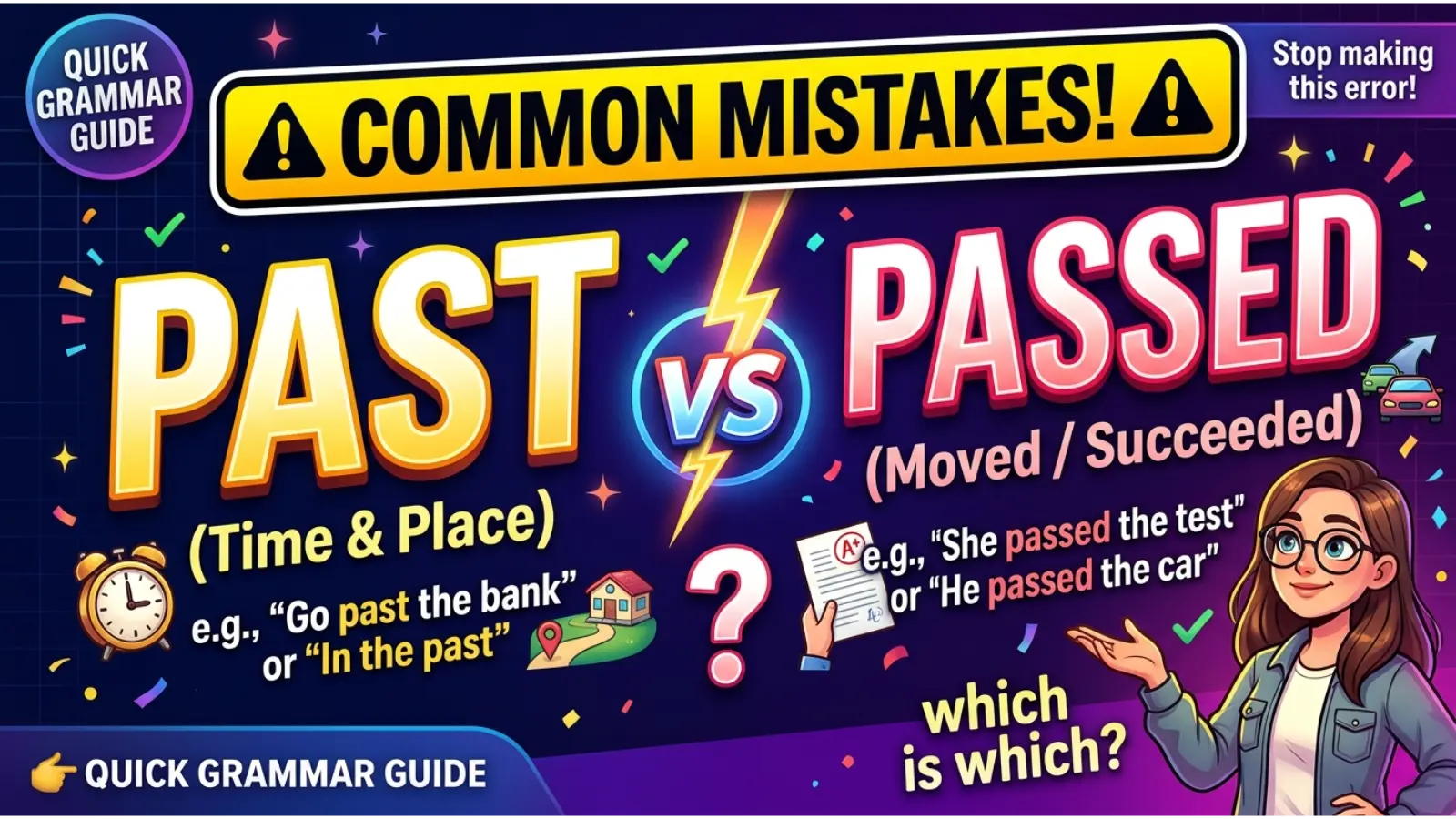
Common Mistakes When Using Past and Passed
Many English learners confuse these words because they sound similar. However, using the wrong one can change the meaning of a sentence.
Here are some common mistakes and their corrections.
| Incorrect or Confusing Usage | Correct Usage |
|---|---|
| Five years past before he returned. | Five years passed before he returned. |
| Memories of years passed remain. | Memories of years past remain. |
| Two months past quickly. | Two months passed quickly. |
| The traditions of years passed continue. | The traditions of years past continue. |
Why Do These Mistakes Happen?
These mistakes usually happen because both words relate to time. However, their grammatical functions are different.
- Use past to describe an earlier period.
- Use Went Past to describe time moving forward.
- Check whether your sentence needs a describing word or an action.
- Read the complete sentence to make sure the intended meaning is clear.
Professional Usage: Years Past or Years Passed?
Both expressions work in professional writing, but the correct choice depends on the context.
Years past works well when discussing historical trends, previous business practices, and earlier experiences.
Examples:
- Business practices of years past differ significantly from modern methods.
- The company has learned valuable lessons from years past.
Years passed works well when describing timelines, project delays, business development, or changes over a period.
Examples:
- Three years passed before the company expanded internationally.
- Several years passed before the project reached completion.
Choosing the correct expression makes professional communication more precise and easier to understand.
Formal vs. Informal Writing
Both expressions are suitable for formal and informal writing. Neither is automatically more professional than the other.
Formal Writing
In formal writing, use years past to discuss previous periods and years passed to describe the passage of time.
Examples:
- The economic conditions of years past influenced current policies.
- Several years passed before the final agreement was approved.
Informal Writing
In everyday conversations, people often use these expressions when discussing memories, personal experiences, and changes over time.
Examples:
- Things were different in years past.
- Wow, five years passed so quickly!
The important point is to select the word that matches your intended meaning, regardless of the writing style.
Easy Memory Tricks to Remember the Difference
You do not need to memorize complicated grammar rules to understand these expressions. A few simple tricks can help.
Remember Past Means Earlier
Think of past as something that has already happened.
Example: “I miss the good old days of years past.”
Remember Passed Means Went By
Think of passed as an action. Time moves forward, and the years pass.
Example: “Ten years passed before we met again.”
Use the Verb Test
Ask yourself whether the sentence describes something happening over time.
- If you describe an earlier period, use past.
- If you describe time going by, use passed.
This simple test can help you choose the correct expression in most everyday situations.
Real-Life Conversation Examples
Seeing these words in conversations can make their meanings easier to understand.
Conversation 1: Talking About Memories
Ali: Do you remember our school days?
Ahmed: Yes! The memories of years past are still special to me.
Conversation 2: Talking About Time
Sara: How long has it been since we graduated?
Ayesha: Almost five years passed since our graduation.
Conversation 3: Discussing Family History
Father: Do you know how people celebrated festivals years ago?
Son: Not really. I would love to hear stories of years past.
Conversation 4: Talking About an Old Friendship
John: Have you seen your childhood friend recently?
David: No, many years passed before we lost contact.
These conversations show how context determines the correct word.
Frequently Asked Questions (FAQs)
1. Is Years Past or Years Passed Correct?
Both expressions are correct. Years past refers to earlier times, while years passed describes time going by. Your sentence determines which expression you should use.
2. What Is the Difference Between Past and Passed?
Past describes an earlier time or period, while passed is the past tense of the verb pass. For example, “the past few years” and “five years passed” use these words differently.
3. Should I Say Years Past or Years Passed?
Use years past when referring to previous periods or memories. Use years passed when explaining how much time went by.
4. Is Passed the Past Tense of Pass?
Yes. Passed is the simple past tense and past participle of the verb pass. For example, “She passed the examination.”
5. Can I Use Years Past in a Sentence?
Yes. For example, “The traditions of years past are still celebrated today.” Here, the expression refers to traditions from earlier times.
6. Can I Start a Sentence With Years Passed?
Yes. For example, “Years passed before the family reunited.” This sentence describes the passage of time.
7. Is Years Past the Same as Years Ago?
Not exactly. Years ago usually refers to a specific time before the present, while years past often describes earlier periods in a broader sense.
8. How Can I Remember Past and Passed?
Remember that past refers to an earlier time, while Went Past describes an action or the movement of time. This distinction makes the correct choice easier.
Conclusion
Understanding years past or years passed becomes simple once you recognize the difference between the two words. Both expressions are correct, but they serve different purposes in English grammar.
Use years past when referring to earlier times, memories, traditions, or historical periods. Choose years passed when describing time moving forward or explaining how long something took.
By learning these simple rules and practicing with everyday examples, you can avoid common mistakes and improve your English writing. Always consider the meaning and sentence structure before choosing between past and passed.