
The question of whether the Zoap strain indica or sativa often comes up among cannabis enthusiasts researching modern hybrid varieties. Zoap generally belongs to the hybrid category because its genetic background connects indica and sativa cannabis varieties. However, different breeders may describe their versions differently depending on their genetics and breeding selections.
Zoap Strain Indica or Sativa is a common question among cannabis enthusiasts who want to understand this strain’s classification, genetics, and characteristics. The Zoap Strain Indica or Sativa debate often comes from its unique hybrid background, which makes its classification interesting. If you are wondering whether Zoap Strain Indica or Sativa is the correct description, understanding its genetic lineage and reported characteristics can help clarify the answer. In this guide, we explore its classification, genetics, and key features in simple terms.
Is Zoap an Indica or Sativa?
Zoap generally falls into the hybrid cannabis category rather than the pure indica or pure sativa category. Its reported genetic background includes Pink Guava and Rainbow Sherbet.
Some breeders describe their Zoap versions as balanced hybrids. For example, Barney’s Farm lists its version with an approximate 50% indica and 50% sativa ratio.
However, this percentage does not represent every Zoap product. Different breeders may develop their own versions, and those selections can have different genetic characteristics.
Therefore, the simplest answer is that Zoap is generally a hybrid strain. Its exact indica-sativa classification depends on the specific version and the breeder’s description.
What Does Hybrid Mean in Cannabis?
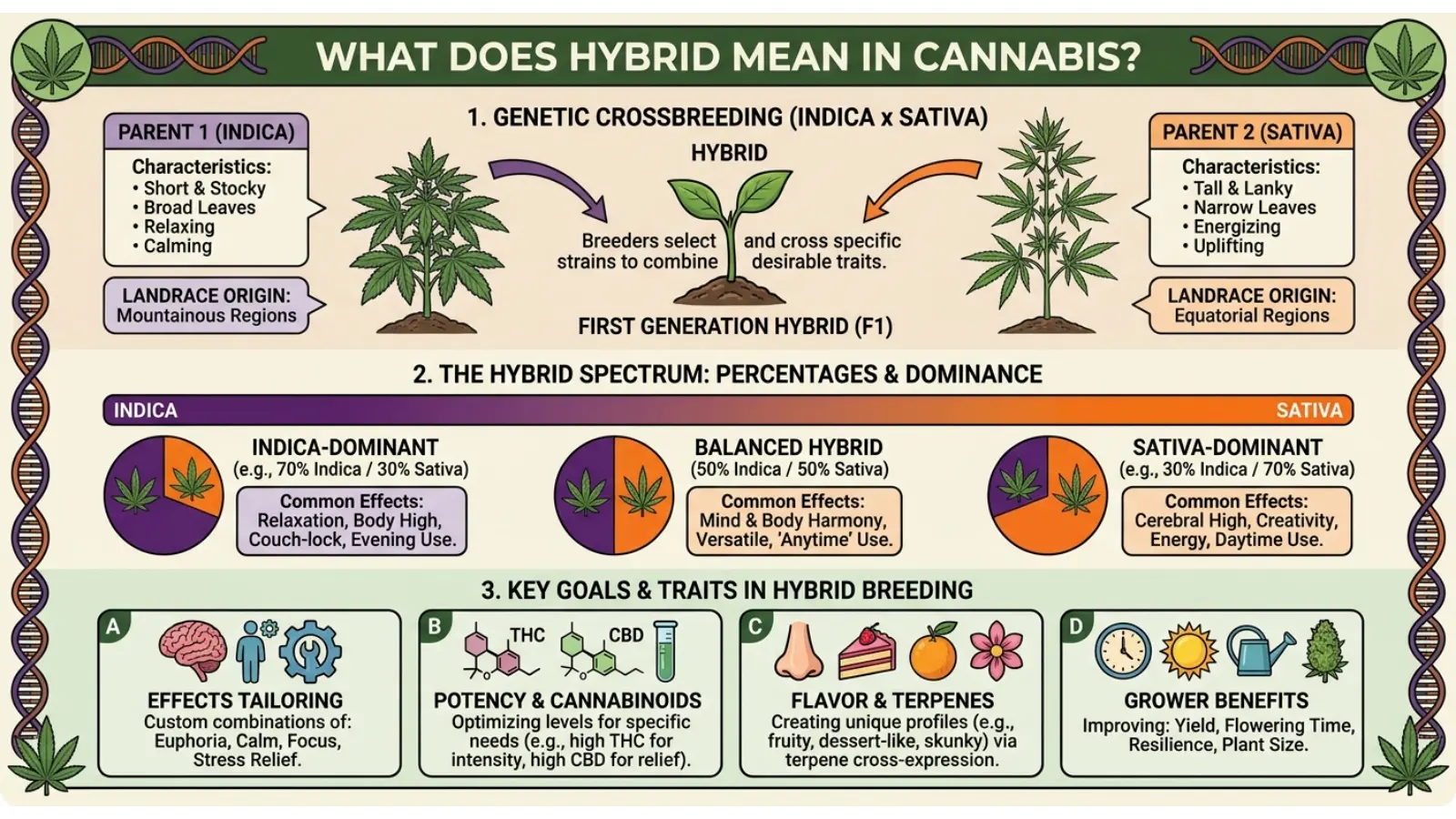
A hybrid cannabis strain combines genetic ancestry from indica and sativa varieties. Breeders create these varieties by crossing selected cannabis plants with different genetic backgrounds.
Traditionally, growers use the indica and sativa labels to describe differences in plant appearance and growth patterns. However, these categories cannot reliably predict the effects of a particular cannabis product.
Here is a simple explanation:
- Indica: Traditionally describes shorter plants with broader leaves and compact growth patterns.
- Sativa: Traditionally describes taller plants with narrower leaves and more elongated growth patterns.
- Hybrid: Describes cannabis varieties with genetic ancestry from both categories.
Zoap belongs to the hybrid group because its reported genetic background includes different cannabis lineages.
Furthermore, plants with the same strain name can display different characteristics. Their genetics, growing conditions, and chemical compositions can influence their appearance and overall profiles.

What Are the Genetics of the Zoap Strain?
Zoap has a reported genetic connection to Pink Guava and Rainbow Sherbet. DEO Farms, also known as Deep East Oakland Farms, receives credit for developing the original selection.
However, its breeding history involves more than a simple two-parent cross. The original Zoap selection connects to the Rainbow Sherbet breeding family, particularly the RS #16 line.
Its commonly reported genetic background includes:
- Pink Guava: A genetic line associated with the wider Rainbow Sherbet family.
- Rainbow Sherbet: A breeding line connected to Zoap’s genetic background.
- DEO Farms: The breeder associated with the original Zoap selection.
- Wizard Trees: A grower associated with the cultivation and wider recognition of the original selection.
These connections explain why cannabis enthusiasts often discuss Zoap alongside other modern California varieties.
Nevertheless, commercial versions may have different breeding histories. Always check the specific breeder’s information before assuming that every product shares identical genetics.
Zoap Indica vs. Sativa: Main Differences
Although Zoap generally belongs to the hybrid category, comparing it with traditional indica and sativa classifications helps explain its genetic background.
| Feature | Indica | Sativa | Zoap |
|---|---|---|---|
| Classification | Indica | Sativa | Hybrid |
| Genetic background | Indica ancestry | Sativa ancestry | Mixed ancestry |
| Traditional plant height | Shorter | Taller | Varies |
| Traditional leaf shape | Broader | Narrower | Varies |
| Growth structure | Often compact | Often elongated | Depends on phenotype |
| Genetic balance | Indica-dominant | Sativa-dominant | Often listed as balanced |
| Characteristics | Vary by variety | Vary by variety | Depend on breeding line |
As the table shows, Zoap does not belong exclusively to either traditional category. Instead, its hybrid background connects it to both genetic groups.
However, these traditional classifications provide only a general description. They do not establish a reliable prediction of a cannabis product’s effects.
What Does the Zoap Strain Look Like?
Zoap often attracts attention because of its distinctive flower appearance. Growers and strain descriptions commonly mention dense flowers with noticeable resin coverage.
Its reported visual characteristics include:
- Dense flower formations.
- Visible trichome coverage.
- Green shades with occasional purple tones.
- Orange or amber-colored pistils.
- A frosty appearance from resin-producing trichomes.
Additionally, individual plants may display different colors and structures. Genetics, temperature, lighting, and cultivation conditions all influence their final appearance.
Therefore, not every Zoap product will display exactly the same visual characteristics.
What Does Zoap Smell and Taste Like?
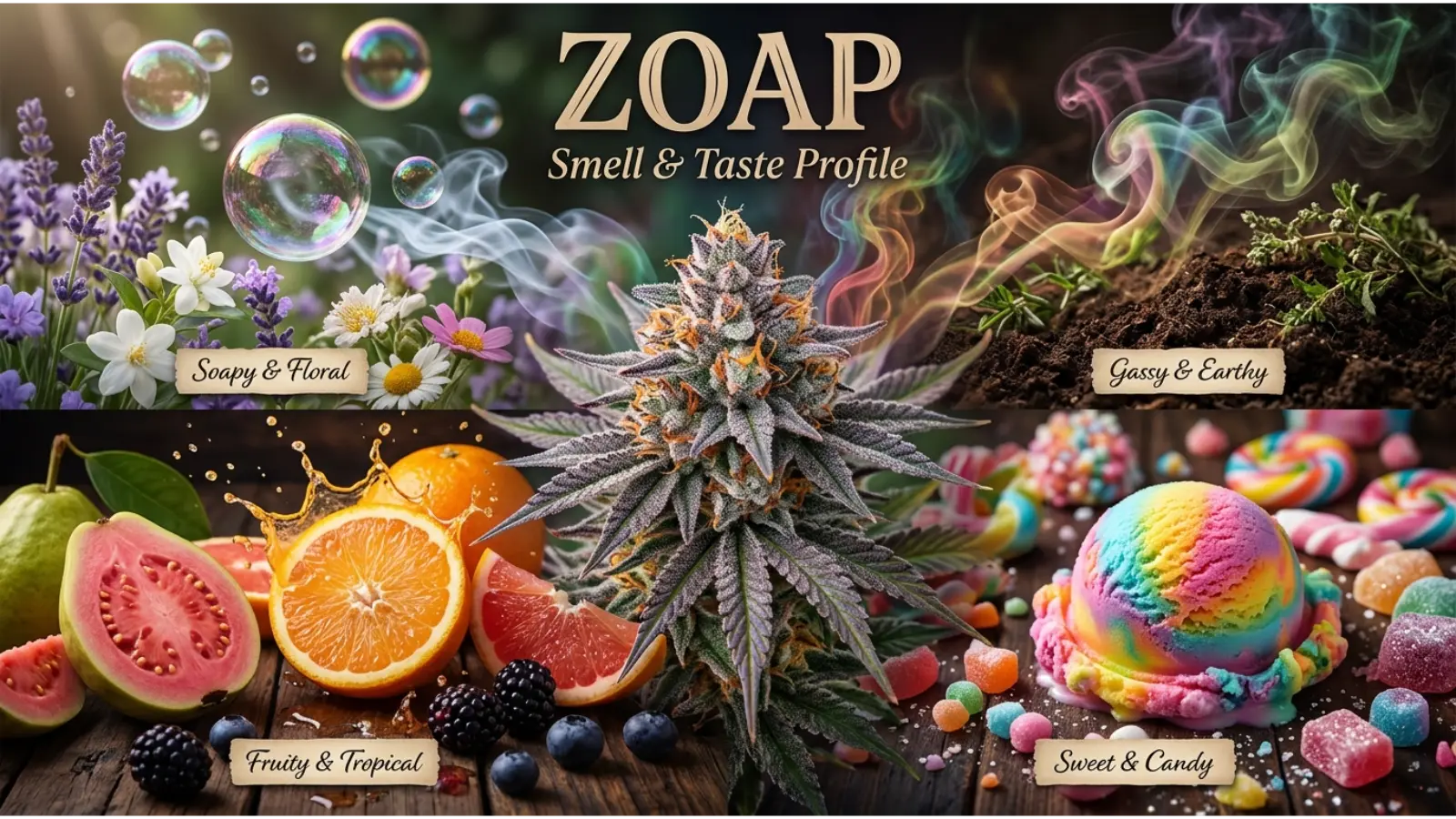
One of Zoap’s most recognizable characteristics is its unusual aroma. Many descriptions associate its fragrance with sweet, fruity, floral, and soapy notes.
Commonly reported aroma and flavor descriptions include:
- Sweet and fruity aromas.
- Floral notes.
- Citrus-like characteristics.
- Tropical fruit scents.
- Earthy undertones.
- A distinctive soapy fragrance.
Some descriptions also mention berry, cherry, and candy-like notes.
Moreover, terpenes contribute to the aromatic differences between cannabis varieties. These natural compounds occur in many plants and help create their characteristic fragrances.
However, the exact aroma and flavor profile can vary between growers, phenotypes, and individual batches.
What Are the Commonly Reported Effects of Zoap?
Cannabis consumers often describe Zoap in terms of both uplifting and relaxing experiences. Nevertheless, individual responses can differ considerably.
Commonly reported experiences include:
- Relaxation.
- Euphoria.
- Happiness.
- Giggly feelings.
- Increased appetite.
These descriptions reflect consumer reports rather than guaranteed outcomes or established medical benefits.
Several factors can influence an individual’s experience. For example, cannabinoid concentration, terpene composition, personal sensitivity, and the amount consumed can all make a difference.
Additionally, cannabis can cause unwanted effects such as dizziness, dry mouth, anxiety, and impaired coordination. It can also affect memory, judgment, and reaction time. Anyone using cannabis should avoid driving or operating machinery.
Why Do Some Sources Call Zoap Indica-Dominant?
Different websites sometimes describe Zoap as a balanced hybrid, while others use the term indica-dominant. This difference can confuse readers who want a straightforward classification.
Several factors explain these variations.
Different breeding versions: Breeders may develop separate varieties under the same strain name. Consequently, their genetic backgrounds and characteristics may differ.
Phenotype differences: Plants from related genetic lines can develop different physical and chemical characteristics.
Different classification systems: Breeders, retailers, and cannabis databases may use different methods when assigning indica or sativa labels.
Product-specific descriptions: One breeder may describe a particular release as balanced, while another grower may classify a different selection as indica-dominant.
Therefore, readers should check the specific breeder and product information instead of assuming that every Zoap product has the same classification.
Common Mistakes When Researching the Zoap Strain
Cannabis strain descriptions sometimes contain confusing or inconsistent information. As a result, readers can easily misunderstand Zoap’s classification and genetic background.
Here are some common mistakes to avoid.
1. Assuming Zoap is a pure indica.
Zoap generally belongs to the hybrid category. Therefore, describing every version as a pure indica does not accurately represent its commonly reported classification.
2. Assuming every version has a 50/50 ratio.
Some breeders advertise a balanced ratio. However, that figure does not automatically apply to every product carrying the Zoap name.
3. Confusing Zoap with RS11.
Zoap and RS11 are separate selections associated with the wider Rainbow Sherbet breeding family. Although they share genetic connections, they are not identical varieties.
4. Treating reported effects as guaranteed.
Consumer experiences vary from person to person. Therefore, strain descriptions cannot guarantee a particular experience.
5. Assuming every product has identical THC levels.
THC concentrations can vary between products and batches. For accurate information, readers should consult laboratory results for the specific product.
How to Identify Different Zoap Strain Versions
If you find different Zoap classifications online, check the following details before reaching a conclusion.
- Check the breeder: Identify the breeder or company responsible for the particular version.
- Review the genetics: Look for published parent strains and breeding information.
- Read the classification: Check whether the breeder describes the version as balanced or indica-dominant.
- Compare product information: Different versions may have different cannabinoid and terpene profiles.
- Check laboratory results: Where legally available, review independent testing for the specific batch.
These steps help readers distinguish the original selection from later commercial versions and related hybrids.
Frequently Asked Questions
Is Zoap an indica or sativa?
Zoap generally belongs to the hybrid cannabis category. Some commercial versions have a balanced classification, while others may receive different descriptions depending on their genetics.
Is Zoap a 50/50 hybrid?
Some breeders, including Barney’s Farm, describe their Zoap version as approximately 50% indica and 50% sativa. However, this ratio does not necessarily apply to every Zoap product.
What strains make up Zoap?
Zoap is commonly associated with Pink Guava and Rainbow Sherbet genetics. Its original breeding history connects to DEO Farms.
Who bred the original Zoap strain?
DEO Farms, also known as Deep East Oakland Farms, receives credit for developing the original Zoap selection. Wizard Trees is also associated with its cultivation and wider recognition.
Is Zoap the same as RS11?
No. Zoap and RS11 are separate selections associated with the wider Rainbow Sherbet breeding family. Their related genetic backgrounds do not make them identical.
What does Zoap smell like?
Zoap is commonly described as sweet, fruity, floral, citrus-like, and soapy. However, its aroma can vary between phenotypes and products.
What are the commonly reported effects of Zoap?
Consumers commonly report relaxation, euphoria, happiness, and giggly feelings. Nevertheless, these experiences are subjective and are not guaranteed.
Does Zoap have a fixed THC percentage?
No. Zoap does not have one universal THC percentage. Concentrations vary according to the breeder, cultivation conditions, and individual product batches.
Why is Zoap called Zoap?
The name is commonly associated with its distinctive soapy aroma. This unusual fragrance helps distinguish it from many other cannabis varieties.
Is every Zoap strain the same?
No. Different breeders may develop their own versions, crosses, and selections. Consequently, their genetics, physical characteristics, and chemical profiles may differ.
Conclusion
So, is the Zoap strain indica or sativa? The most accurate general answer is that Zoap is a hybrid because its reported genetic background connects indica and sativa cannabis varieties.
Its commonly reported genetics include Pink Guava and Rainbow Sherbet, while DEO Farms receives credit for the original selection. Moreover, Zoap stands out for its distinctive sweet, fruity, floral, and soapy aroma.
However, different breeders may offer different versions with varying characteristics and classifications. Therefore, readers should check the specific breeder and product information rather than assuming that every Zoap version has an identical indica-sativa ratio.
Understanding these differences provides a clearer picture of Zoap and explains why most general strain references classify it as a hybrid rather than a pure indica or sativa.